|
Last week ended on a sentence I have now written so many
times I am starting to sound like a broken record: you
cannot govern what you cannot observe. I meant it as a
complaint. The agent economy was being run out of edge
configuration and response bodies, and the only way to see
any of it was to impersonate a crawler and read a status
code.
This week the observability arrived. I did not expect it
to arrive nine days later, and I did not expect it to
arrive in this shape.
Cloudflare Gateway can now spot Model Context Protocol
traffic crossing your network. Fingerprint published a
guide to working out which AI tool is calling your MCP
server. OWASP has an MCP Top 10, and Apollo went through
it in public. The network layer learned to see the agent
layer.
Cloudflare identifies MCP requests "by inspecting
protocol-specific headers and payload
characteristics" — what their own security post calls
protocol-level heuristics. That is not a declaration. That
is a very good guess about what a payload probably is. We
have built the entire visibility layer for agent traffic
on inference, for the same reason we ended up with
User-Agent as a billing identity: the traffic will not
tell us what it is, so we squint at it.
And then, in the same week, Google did the opposite thing.
|
|
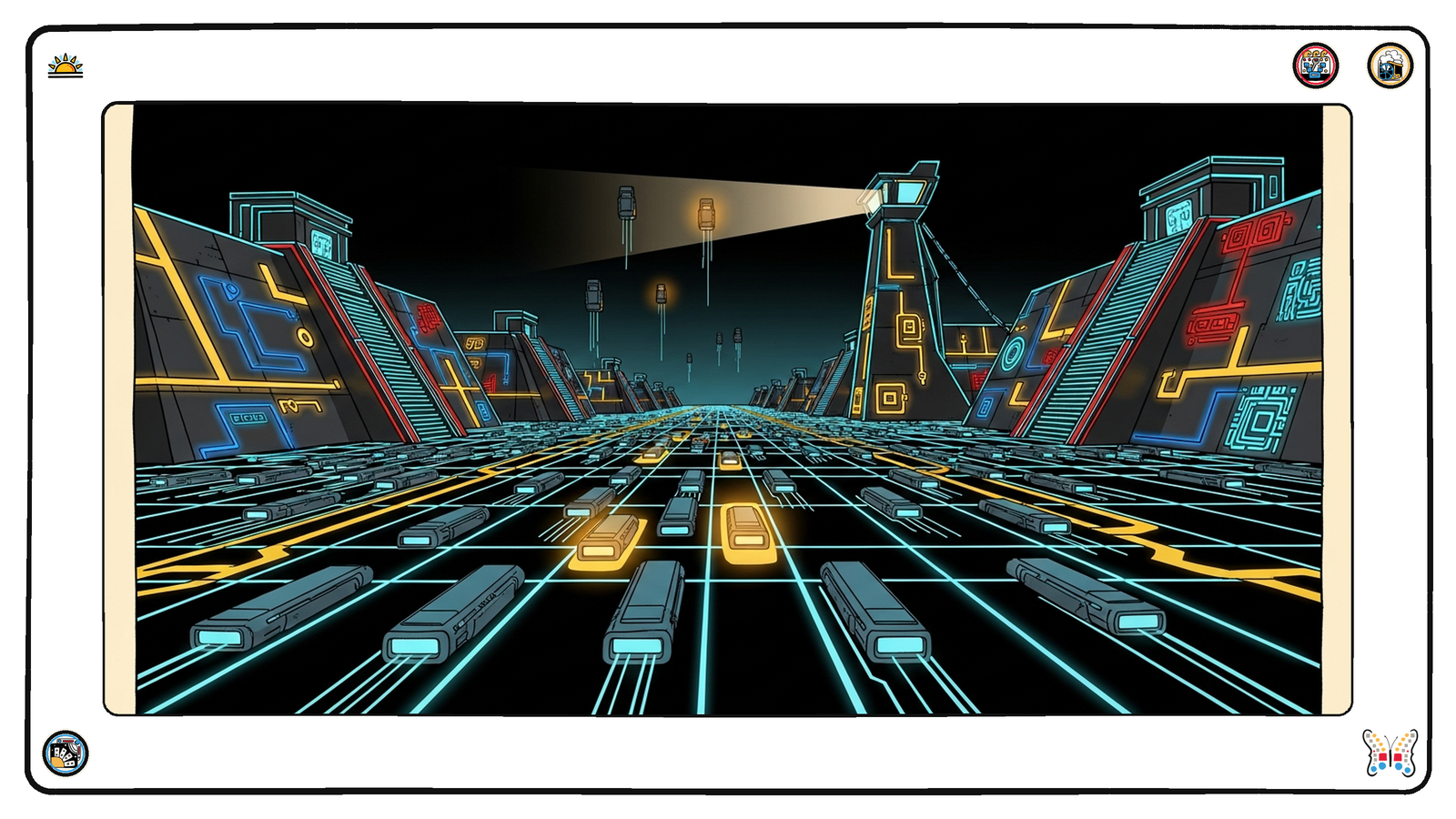
A vast dark neon grid at night with thousands of
identical unmarked glowing light-vessels streaming
along channels, one tall angular watchtower sweeping
a wide pale beam across them, a few vessels lighting
up amber inside the beam while identical ones beside
them stay dark.
|
The Network Learned to See MCP, and It Sees by Inference
For a year MCP traffic has been invisible to the people
responsible for the network it crosses. This week that
stopped.
-
Cloudflare Gateway now automatically detects MCP
traffic, shipped alongside an AI Security dashboard. The
changelog is refreshingly plain about the method:
Gateway "identifies MCP requests by inspecting
protocol-specific headers and payload
characteristics."
-
The longer security write-up is the one to read, because it names the actual customer
problem: shadow MCP traffic. Security
teams can use the detection signal to find MCP servers
nobody told them about, enforce Portal-only access for
approved ones, and block direct connections on managed
networks. Shadow IT has been rebooted, on a
fifteen-year cycle, exactly on schedule.
-
Fingerprint went one level deeper — how to detect which AI tool is calling
your MCP server. Not whether it is an agent. Which
agent.
-
Apollo published where its MCP Server stands
against the OWASP MCP Top 10. The headline here is not Apollo's scorecard,
it is the existence of the list. A protocol gets an
OWASP Top 10 when enough people have been hurt by it
to sort the wounds into categories.
-
Gravitee walked through securing the GitHub MCP
server, opening with a platform team whose triage agent
read issues, labelled them, and assigned owners — the
kind of quietly over-privileged agent that is now in
production everywhere.
-
Kiteworks put a "Secure MCP Server" on
Anthropic's Connector Marketplace, with a framing I thought was honest: most
enterprises did not decide to expose sensitive data to
models, they backed into it one well-intentioned
prompt at a time.
-
And the identity thread from last week kept
running. WorkOS wrote the sharpest piece of the week on how
an MCP client should tell your OAuth server who it
is: Dynamic Client Registration is deprecated, Client
ID Metadata Documents answer only half the question,
and auth.md covers the user delegation both leave out.
Put the WorkOS post next to the Cloudflare one and you can
see the seam. WorkOS is working on how a
client declares itself. Cloudflare is working on
how the network deduces what a client is, because
most clients declare nothing. Both are necessary. Only one
of them is a foundation. Heuristics are how you cope with
an undeclared world, and every control built on top of
them inherits their error rate — a false negative is
shadow traffic you never saw, and a false positive is a
blocked request from a service that merely looked like an
agent. We are going to spend the next two years
discovering the base rates.
|
|
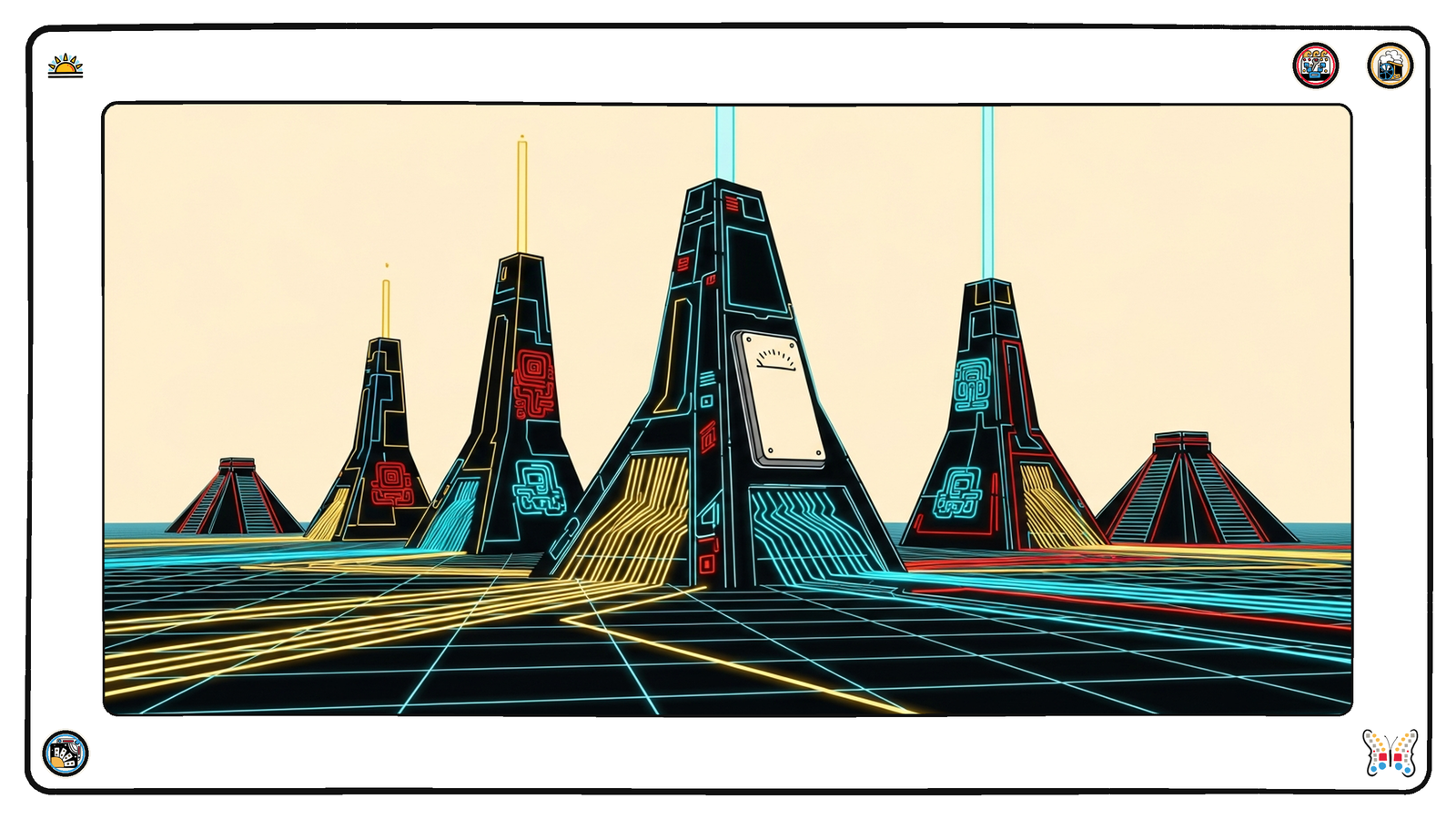
Four separate tall angular control spires on the
dark neon grid merging into one enormous single
spire, many differently-coloured light-streams
entering its base and one clean cyan stream leaving
its top, a smooth blank meter plate glowing on its
side.
|
The AI Gateway Consolidated, and Google Put the Router in
an OpenAPI
Two weeks ago the MCP gateway became a product category.
This week the model gateway consolidated, and the
interesting part is where the configuration ended up.
-
Google Cloud API Gateway shipped model routing in
Public Preview — dynamic routing to Gemini, Claude, or
OpenAI's OSS-GPT without hardcoding endpoints or
running your own proxy. And here is the line I want
you to notice: the routing rules are configured directly in your
OpenAPI 3.x specification, mapping virtual model names to backend targets. The
AI layer just became something you declare in an API
contract.
-
Cloudflare unified Workers AI and AI Gateway into a
single control plane — one binding and one REST API for first-party and
third-party models, with observability, logging,
caching, security, and billing in one
place. When access and billing unify, a category has
stopped being a feature.
-
Microsoft's new API Management AI Gateway
tier got a good practitioner write-up, and it is a useful
inventory of what this box now does: model access,
token limits, semantic caching, token metrics, and the
MCP traffic contract.
-
Kong applied NVIDIA's NeMo Switchyard across
model traffic in its AI Gateway, and NVIDIA published the underlying case for routing
agent workloads across models: each model has its own strengths and cost profile,
and those shift underneath you.
The through-line with the first section is exact, and it
runs the other way. Cloudflare's MCP detection asks
the network to infer what traffic is.
Google's model routing asks the provider
to declare where traffic goes, in a document that
already exists, in a format that already has tooling,
versioning, diffing, and governance. One of those
approaches degrades when the payload changes. The other
one is a contract.
I have spent years arguing that OpenAPI is the substrate
everything else should hang off. I did not expect the
strongest recent evidence to be an AI model router. But
that is what a substrate looks like when it works:
somebody solves a brand-new problem and reaches for the
boring document because it is already there.
I also spent an hour this week talking to someone who has
been building the box itself. My conversation with Lin Sun on gateways for the agentic AI era is below in the desk section, and her framing is the one
I keep returning to while writing this issue: AI workloads
are "microservices plus." Same policy,
security and observability problems, plus dynamic
protocols like MCP and A2A that change underneath you —
which is exactly why she thinks the gateway stays a
control point rather than getting designed away.
📄 Change on the Agent Surface — Governing versioning, breaking changes, and deprecation
for the MCP tools an agent binds to. Your API has a versioning policy. Your MCP server almost
certainly does not, and an agent that bound to a tool last
month has no way to learn that its arguments
moved. $25
|
|
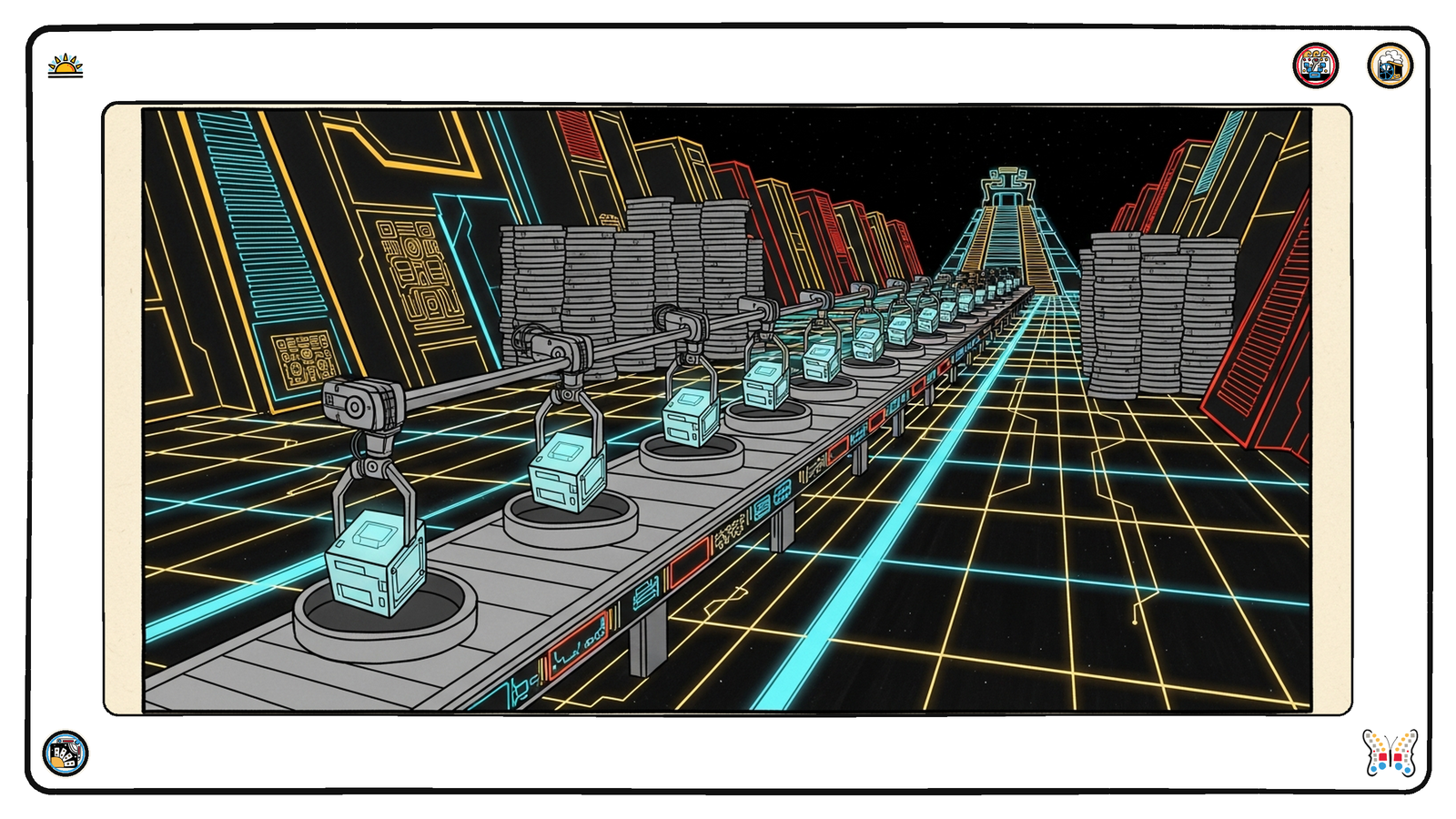
A long assembly line stretching across the dark neon
grid, identical small angular modules being fitted
onto plain vessels one after another by mechanical
arms, the modules glowing faint and utterly
ordinary, stacks of spares piled high in the
background.
|
MCP Servers Stopped Being Announcements
I counted twenty-four MCP server launches in the corpus
this week. I am not going to list them all, because the
point is that listing them has stopped being interesting.
-
The shape of the week: Zoho Expense, Kubeflow, Nutanix, Octopus Deploy, Songstats, Vitally, CompanyCam in beta, and Apache Camel folding MCP into Camel 4.22. An expense tool, a Kubernetes ML platform, a
hyperconverged infrastructure vendor, a deployment
tool, a music analytics service, and a construction
photo app. There is no longer a market segment where
this is notable.
-
The more telling ones are the second posts —
the features, not the launches. Alpaca's trading MCP server added
documentation access. Buildkite's can now find your slowest and
flakiest tests. Svix shipped an App Portal MCP server so your
customers can debug the webhooks you send them
without leaving their editor — which is a genuinely good product idea that
happens to be delivered over MCP. Cisco wired up Meraki and Catalyst Center, MuleSoft documented connecting its platform server
to Claude Code, and n8n made one-click connections to seventy of
them, with a section on when not to use them.
-
SmartBear put its MCP server on Amazon Bedrock
AgentCore as one interface across API contracts, test
coverage, and production signal, and separately argued
for reducing governance fragmentation with Swagger
across multiple protocols.
-
Then the bill arrived. Gravitee published "v2 to v4 Migration: Why
MCP and Agents Only Live on v4", and it opens on a scene every platform team will
recognise: someone asks to expose an API to an agent,
it sounds like a small ask, and then somebody checks
which API definition it is running on and the whole
conversation changes. MCP has become a forcing function for platform
upgrades people deferred for years.
-
And the measurement I have been waiting for: APImatic benchmarked OpenAPI versus MCP versus
context plugins across the same recurring-billing integration. Every
condition completed the functional task and passed the
contract checks. The differences were entirely
operational — resilience, error hygiene, configuration
behaviour, API-drift handling, wire coupling, and how
much effort it took to learn the API.
That last result deserves more attention than it will get.
When four different integration approaches
all work, the choice between them is not about
capability, it is about what happens on a bad day. Which
one survives a schema change. Which one fails loudly.
Which one you can debug at 2am. That is the entire
argument for specifications, and it is very hard to sell,
because the benefit only shows up in the incident you did
not have.
So I went looking for a market where the bad day is not
hypothetical, and republished The State of US Healthcare APIs at version 2.0 on Saturday. Twenty-one of the
seventy-five companies scored there run their own MCP
server — twenty-eight percent, ahead of most of the
catalog. Not one of them describes a multi-step
workflow. Consent and delegated identity, the semantics an agent
needs to act on behalf of a patient, is unsatisfied across
96% of the market. Documented idempotency — the guarantee
that a retried call does not book the appointment twice or
send the prescription twice — is unsatisfied at 91%. These
organisations have elaborate consent machinery and careful
retry handling. What almost none of them have done is
declare either one in a form a program can read, which
puts them back on the wrong side of the same seam: an
agent arrives, finds a tool it can call, and has to infer
everything that governs whether calling it is safe. The
companies making those mandates usable are the ones
publishing the most here, and the report names every one
of them.
|
|
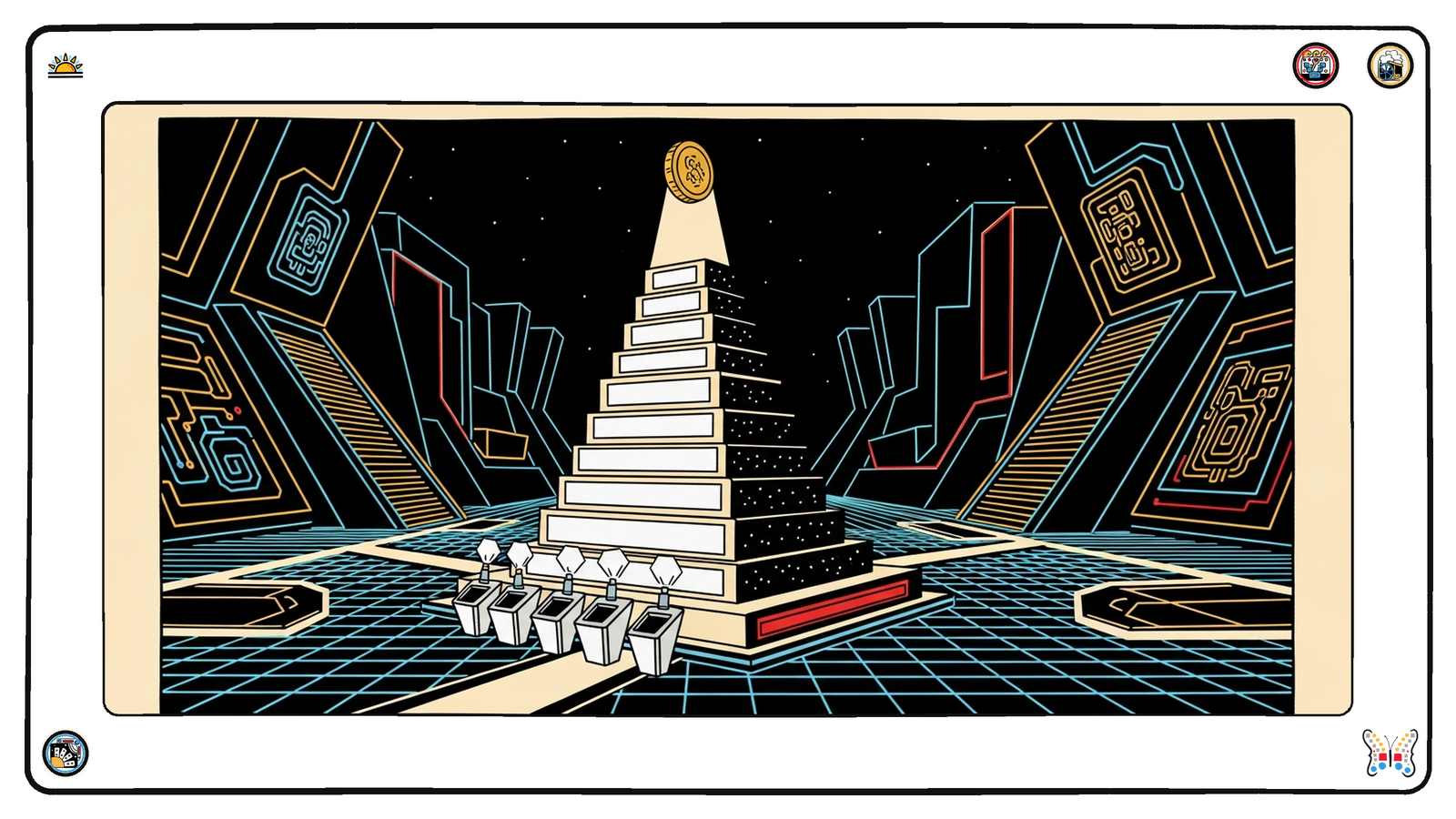
A tall tiered podium structure rising from the dark
neon grid with many blank glowing rungs ascending
it, small angular light-vessels queuing at its base
to be measured, a single coin-like golden disc
hovering above the top rung casting light down the
tiers.
|
HTTP 402 Grew a Leaderboard
Two weeks ago I went looking for ads served to AI agents
and instead found publishers using HTTP 402 Payment Required as a toll gate — 17% of media properties gating at least
one AI vendor. That was 402 used as a wall. This week I
watched the other version of 402 mature, and it is a
market.
-
Algorand published a best-practices guide for
enabling x402 payments — integrating the payment flow, using a facilitator
to verify and settle, making the service discoverable,
and standing up a demo. Note the last item in their
list: gating an ordinary Web2 API behind crypto payment
instead of API keys or subscriptions. That is a direct swap of the entire access-control
model.
-
Then the sentence that made me sit up. Algorand also published a troubleshooting guide
titled "Is your x402 endpoint showing up in the
facilitator leaderboard?" — written because the same question kept landing in
their inbox: payments settle, the API responds
correctly, and yet the endpoint does not
appear. There is now a discovery layer for machine-payable
endpoints, and providers are already filing support
tickets about their ranking in it. I have spent fifteen years asking for an API
discovery layer. One materialised in a month because
money was attached.
-
NOWNodes wrote the clearest explainer of the
protocol: an open standard letting a site, an API, or an
agent charge for a request directly over HTTP,
settling in stablecoins, by finally using the status
code the web reserved and never shipped.
-
The enterprise version showed up too. Solv Labs built verifiable, auditable agent
payments on Amazon Bedrock AgentCore — every transaction authorized, attested in a Nitro
Enclave, priced for risk, and anchored to a public
chain before settlement. That is what "an agent
spent money" has to look like in a regulated
environment.
-
And the demand side got named: Algorand on what enterprise leaders need to know
about agentic commerce — a buyer that does not browse, does not hesitate,
and does not need a checkout page built for humans —
with Stitch reporting from South Africa that AI-referred shoppers convert at nearly 50%
higher rates than organic search.
Hold the two 402s side by side, because they are the same
status code pointed in opposite directions. The publisher
402 is defensive: an incumbent using payment-required to
keep an agent out until somebody signs a licensing deal.
The x402 402 is generative: a provider using
payment-required to let an agent in without ever creating
an account. One is a wall with a lawyer behind it. The
other is a door with a price on it. My honest read is that
the second one is a far bigger deal for anyone who
publishes an API, and it is getting a fraction of the
attention, because it arrived wearing crypto clothes that
a lot of sensible people have learned to walk past.
|
|
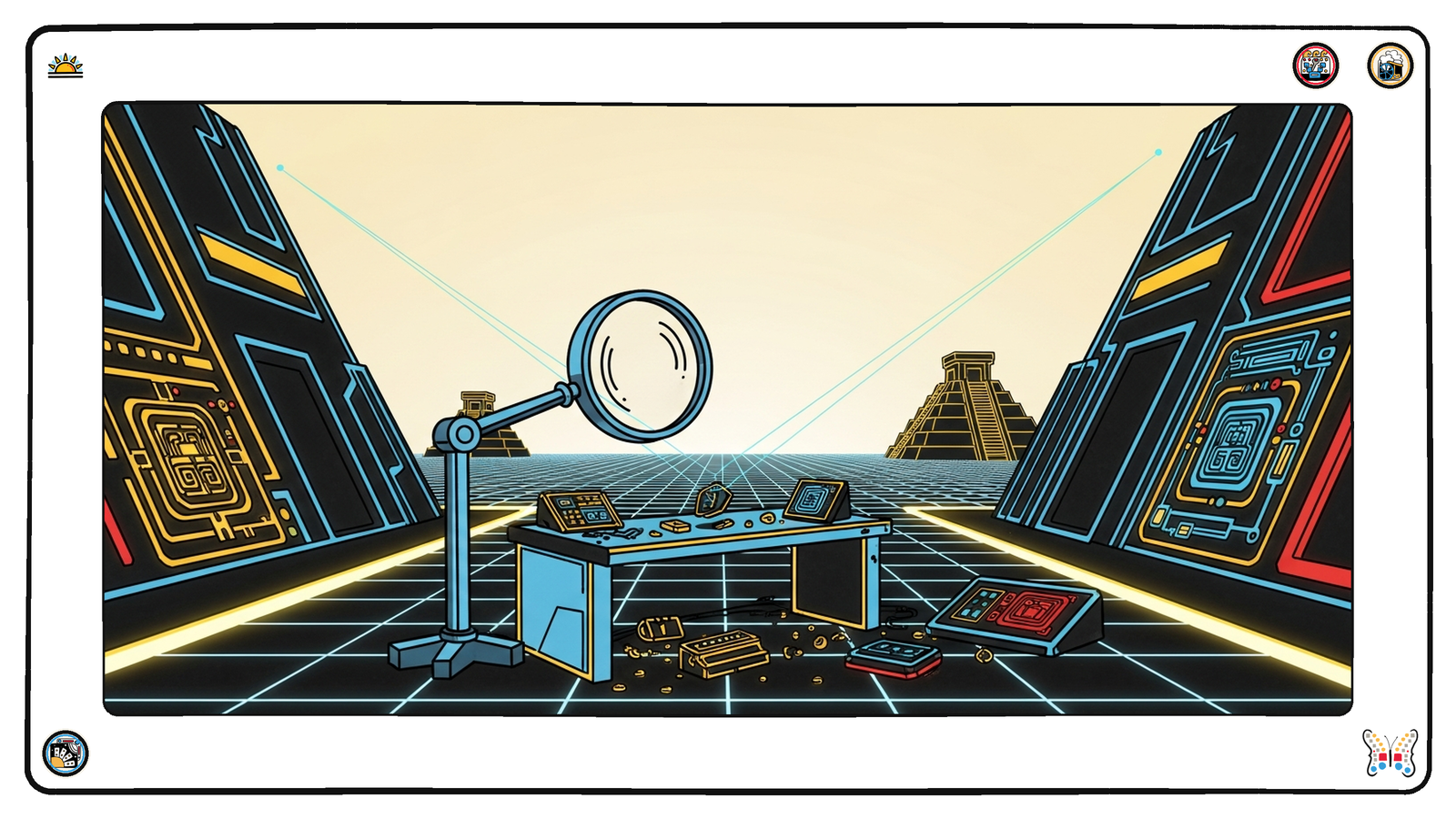
A lone angular workbench on the dark neon grid
strewn with disassembled glowing components, a large
magnifying lens on a stand focused on one small dark
fragment, faint diagnostic beams radiating outward
across an empty quiet plain.
|
From My Desk: I Pointed the Crawler at Myself
After two weeks auditing how other people serve agents, I
ran the same tooling against my own network. It did not go
well, and that was the useful part.
-
Every ad on my network was invisible to agents. I had spent an afternoon documenting how Time
serves ads to AI agents and forming strong opinions
about which parts nobody should copy — then I looked
at my own properties and found my advertising rendered
in a way no agent ingesting my pages would ever see. I
have been writing about the agent surface for a year
while my own commercial layer was human-only.
-
A conversation with Lin Sun on gateways for the
agentic AI era, open source, and donating projects
to the CNCF. Lin is Head of Open Source at
Solo.io, an Istio co-founder, a recent CNCF Technical
Oversight Committee member, and a KubeCon co-chair. We
covered the leap from fifteen years at IBM to a
thirty-person startup, donating Gloo to the CNCF as
kgateway, launching kagent, and building Agent Gateway
from the ground up for MCP and A2A rather than
retrofitting an HTTP proxy. The part I did not expect:
her argument that a gateway can absorb a breaking
specification change on behalf of its users — which,
in a protocol still moving this fast, is a real answer
to the versioning problem I have been complaining
about all year. She closes on hard-won advice for
taking a project through CNCF sandbox, incubation and
graduation.
-
The onboarding series ran all week and it is becoming
a genuine body of evidence: Kinde has the plumbing and skips the front door, Cloudflare hands you a token only after you click
through the dashboard, Akamai can mint its own credentials if you already
have one, even Stripe makes you click a button — and then, finally, Twilio is what programmatic onboarding looks like
when a company means it. Every company in this industry says agents are the
future. Almost every one of them opens with a CAPTCHA.
-
The Overlays series continued with monetization and plan tiering from one spec, MCP and AI-agent enrichment, and deprecation and migration choreography — that last one directly relevant to the Gravitee
migration story above.
-
The Specification Layer launched — a second weekly newsletter, out Mondays, covering
what actually changed inside the thirty specification
repositories the Linux Foundation stewards, rather
than what vendors wrote about them. Nobody else covers
that, so now I do.
-
The Germany series finished with a playbook for US agencies and a playbook for Europe on eIDAS, sovereignty, and a
shared GovTech ecosystem. Nine posts, one blueprint, and a conclusion I keep
landing on: the US owns nearly every ingredient and
has assembled none of them.
-
Two pieces on where governance actually lives: context engineering is governance, and Agent Skills as a bridge between engineering and
product. Plus the excuses file — we have partner APIs, not public APIs and if we publish our documentation our competition
will copy us — alongside does your API game live up to your AI hype, markdown became the control plane for AI, your AI bill will be your cloud bill on steroids, GraphQL as connective tissue, the tools that actually execute your Arazzo
workflows, why isn't the surface area of a VC portfolio
programmable, agents turn broken auth into a breach at machine
speed, and Swagger was a config file until we made it a
format.
The thing I take out of my own audit is the thing this
whole issue keeps circling. I could not see my own
commercial layer through an agent's eyes until I
built a tool that looked. Cloudflare's customers
could not see MCP crossing their networks until Gateway
learned to guess at it. Algorand's developers cannot
see whether their paid endpoint is discoverable without
checking a leaderboard. Every one of these is the same
gap: we are operating a machine-to-machine economy with
instrumentation built for humans, and we keep discovering
the gap by accident, one audit at a time.
The fix is not more detection. Detection is the
workaround. The fix is the thing Google quietly did this
week — put the fact in the contract, where it can be read,
versioned, and checked, instead of inferred from the shape
of a payload.
See you next week.
📄 The State of US Healthcare APIs — Republished at version 2.0 this week. 75 US
healthcare companies scored on the same rubric applied to
Stripe, Twilio and GitHub — every one named and banded.
The most standardized market in this research and the
least programmable one: a Kin Score median
of 38.9 against 53.8 for revenue software
and 49.1 for marketing, neither of which is regulated at
all. 57% publish a machine-readable contract, 28% run
their own MCP server, 31% document an event surface,
and none describe a multi-step workflow.
Thirty years of mandated machine-to-machine standards
produced clearinghouses, not APIs — and the report maps
exactly where the programmable layer sits. $500
|