|
For three weeks this newsletter has been tracking an
argument about control — who the agent is, what it is
allowed to do, and whether anyone is checking. That
argument is still running and I will get to it.
But something else happened this week, and I think it
matters more, because it is the first time the agent
conversation has been settled by arithmetic rather than by
opinion.
Redocly published a measurement: letting the model write
code against your API, instead of chaining MCP tool calls
through the context window, cuts LLM costs by up to eighty percent. Vonage published a second one from a completely
different angle — the JSON Schemas you ship in your tool
definitions carry a token tax, paid on every single call,
that almost nobody has costed. And cData put a number on
the spread between models doing the same
job: 178x.
Two weeks ago
Jens Neuse told me on the podcast that past about five
MCP tool calls you are gluing them together with
inference, and inference is slow, expensive and
unpredictable,
so the architecture is simply wrong. I wrote at the time
that models are good at writing code and we should let
them. It was an architectural argument and you could
reasonably have disagreed with it.
It is not an architectural argument any more. It is a line
item.
That is a different kind of pressure, and it moves faster.
Nobody rewrites a working integration because a
specification is more elegant. Plenty of people rewrite
one when somebody shows them the bill.
|
|
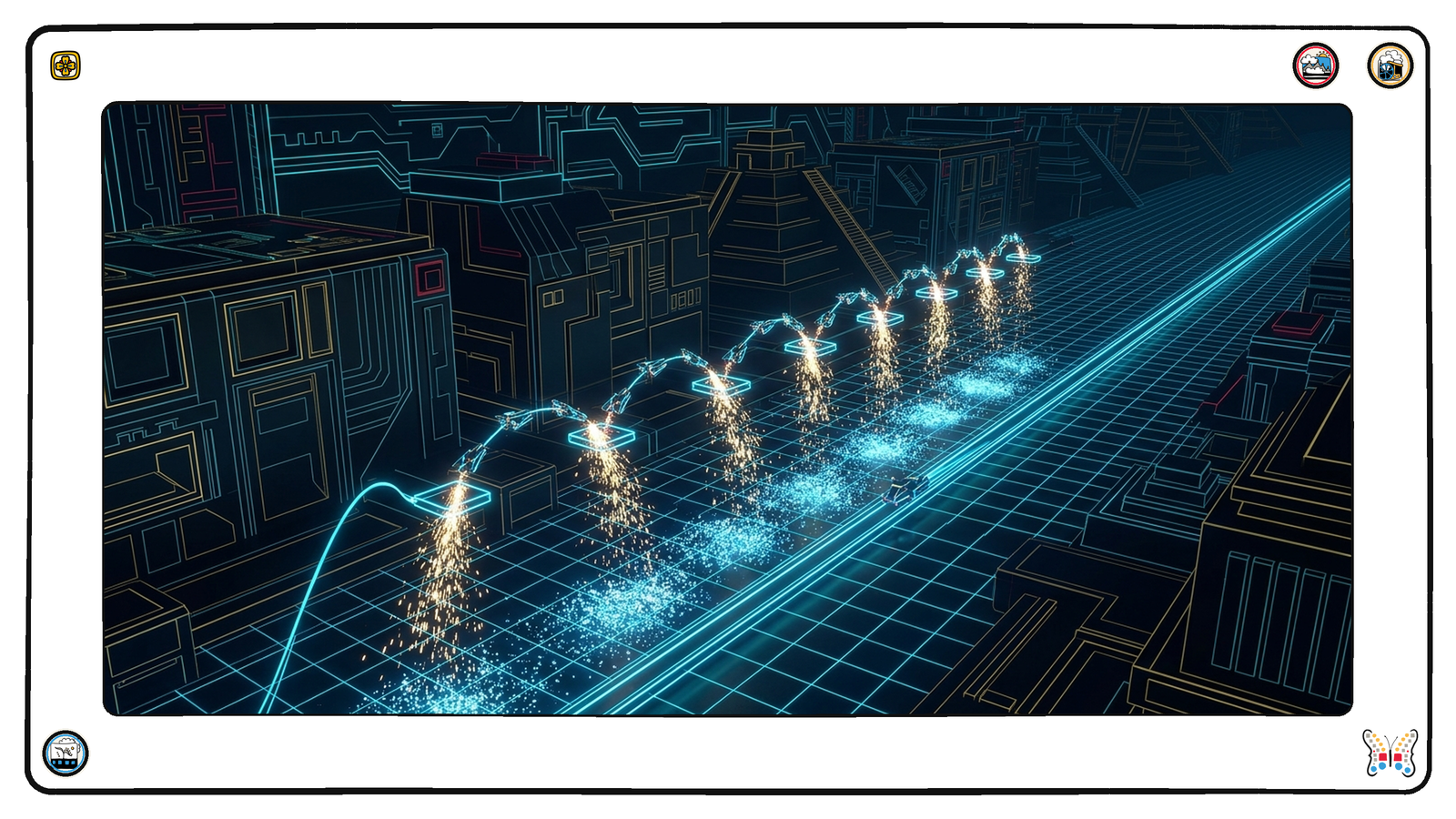
A vast dark neon grid where a long chain of small
angular light-vessels hops between glowing
waypoints, each hop shedding a bright shower of
spark-motes that drift down and pile into a deep
luminous drift on the ground, while beside them one
vessel runs a single continuous rail and sheds
almost nothing.
|
The Agent Bill Arrived
Here is the part I want to flag, because it cuts against
the last month of this newsletter. Everything above
rewards a smaller surface — fewer tools, thinner
schemas, less context, code instead of chained calls.
Everything in the section below rewards
a richer one — identity, policy, audit,
provenance, governance metadata attached to every call.
Those two pressures are now pulling on the same protocol
from opposite ends, and I do not think anyone has noticed
they are in tension yet.

|
|
An immense dark neon grid where an enormous
newly-lit gateway arch stands open with a dense
stream of small angular light-vessels flowing
through, and above the arch a vast bank of empty
badge-holders hangs unfilled, each slot dark and
waiting, while far to one side four older beacons
burn brightly casting no light on the arch at all.
|
Meta Shipped MCP for WhatsApp Business, and the Agents
Still Have No Identity
-
The launch: Meta announced Business Messaging MCP — set up and
manage WhatsApp Business from your AI agent. That is one of the largest messaging surfaces on
earth becoming agent-configurable.
-
The catch, and it is the same catch as the last three
weeks: Meta lets Claude and Codex configure WhatsApp
Business via MCP, but the agents do not get their
own identity. The agent acts as you. Every action it takes is
indistinguishable, in the log, from an action you
took. I have now written some version of this sentence
four weeks running, and the pattern is not that
vendors are careless — it is that shipping the
capability is a quarter's work and shipping the
identity model is somebody else's roadmap.
-
The vendors kept shipping the identity model
anyway. Auth0 launched Agent Gateway, an identity control
plane for customer-facing AI — in beta, and note it is a gateway, which
puts it in the same rack as the three other gateway
categories I flagged a fortnight ago. WorkOS extracted its Atlas experiment into Airlock,
a shipped agent governance product. JumpCloud argued the agentic era demands a unified
identity strategy.
-
The sharpest thinking came from Traefik, twice. The two questions behind every agent authorization
standard is the clearest framing of this problem I have read,
and agentic telemetry is not an audit trail names a confusion I see constantly — that having
logs is the same as having accountability. It is not.
A trace tells you what happened. An audit trail tells
you who authorized it.
-
Cequence, consistent with what they said last week,
argues agentic AI requires governing actions and
behavior rather than identity. And Palo Alto's Unit 42 went and looked at
AgentCore harness credentials — the uncomfortable space between a vault and a heap
you can read. That is the research end of the same
problem, and it is the kind of work that eventually
forces the roadmap.
📄 Fundamentals of Context Engineering — If the first section of this issue is right, then what
you put in front of a model is now a cost centre, not a
convenience. Agents do not magically understand your API.
Somebody has to curate what they need, decide what to
leave out, and know which of your existing artifacts
already carry that weight. This is the practical version:
what context an agent actually requires from a provider,
where it should come from, and how to stop paying a token
tax on material the model never needed. $25

|
|
A dark neon help-desk hall where a single service
window has grown an enormous fan of twenty-odd
glowing document panels arrayed around it in a dense
arc, dwarfing the handful of plain single panels
above every other window along the counter.
|
One Company Published Twenty-Three Help Pages, and the
Real Count Went Down
I count 86 third-party posts naming MCP
in a title this week, up from 77. That looks like
acceleration. It is not, and this is the kind of number I
would rather correct in advance than have you quote.
Twenty-three of those 86 are Botify,
published across two days — an overview, FAQs, troubleshooting, example prompts, a migration guide, and sixteen
individual use-case pages. Take that one help centre out
and the count is 63, down from 77 the
week before.
So the honest read is: MCP publishing fell this
week, and one company's documentation sprint
disguised it.
-
But Botify doing that is itself the story, and it is
the arc I flagged three weeks ago completing. MCP
documentation is now a shipped product deliverable
with its own information architecture — overview, FAQ,
troubleshooting, use cases, migration — not a launch
post. Drata shipped a setup and usage guide. Thoropass documented connecting to its server. Frontify published use cases and prompts. Knak published five separate integration pages in a
week.
-
And the tell I have been waiting for: Rippling MCP is down. A status-page incident. Not a blog post, not a
comparison, not a framework — an outage, on the status
page, like any other production dependency. You do not
get an incident page until customers are paged when
you break.
|
|
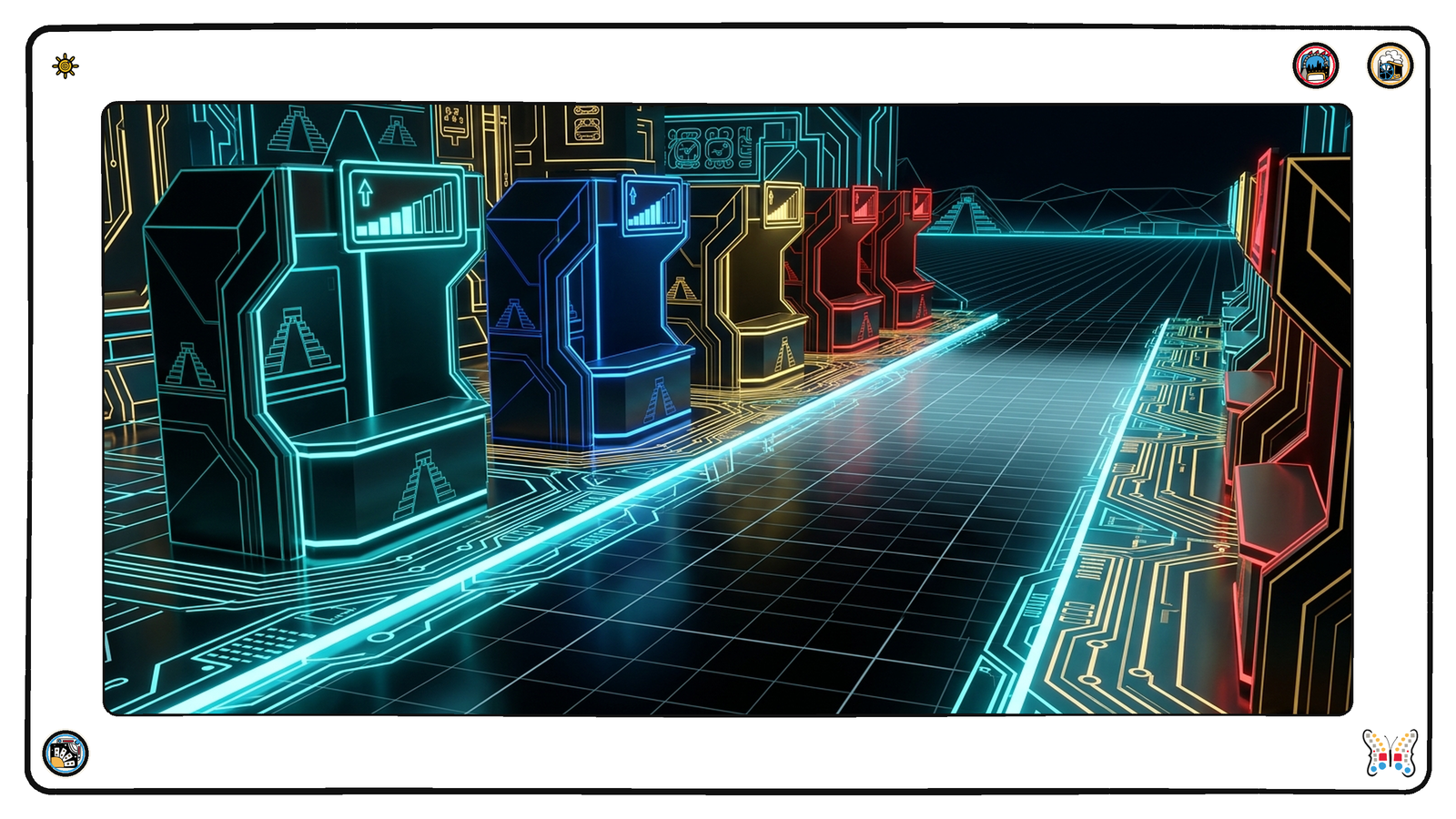
A dark neon marketplace avenue lined with tall
angular service kiosks, each carrying a small bright
rising meter on its face, the row receding into
darkness along a single lit causeway.
|
MCP Grew a Price List and Lost Its State
|
|
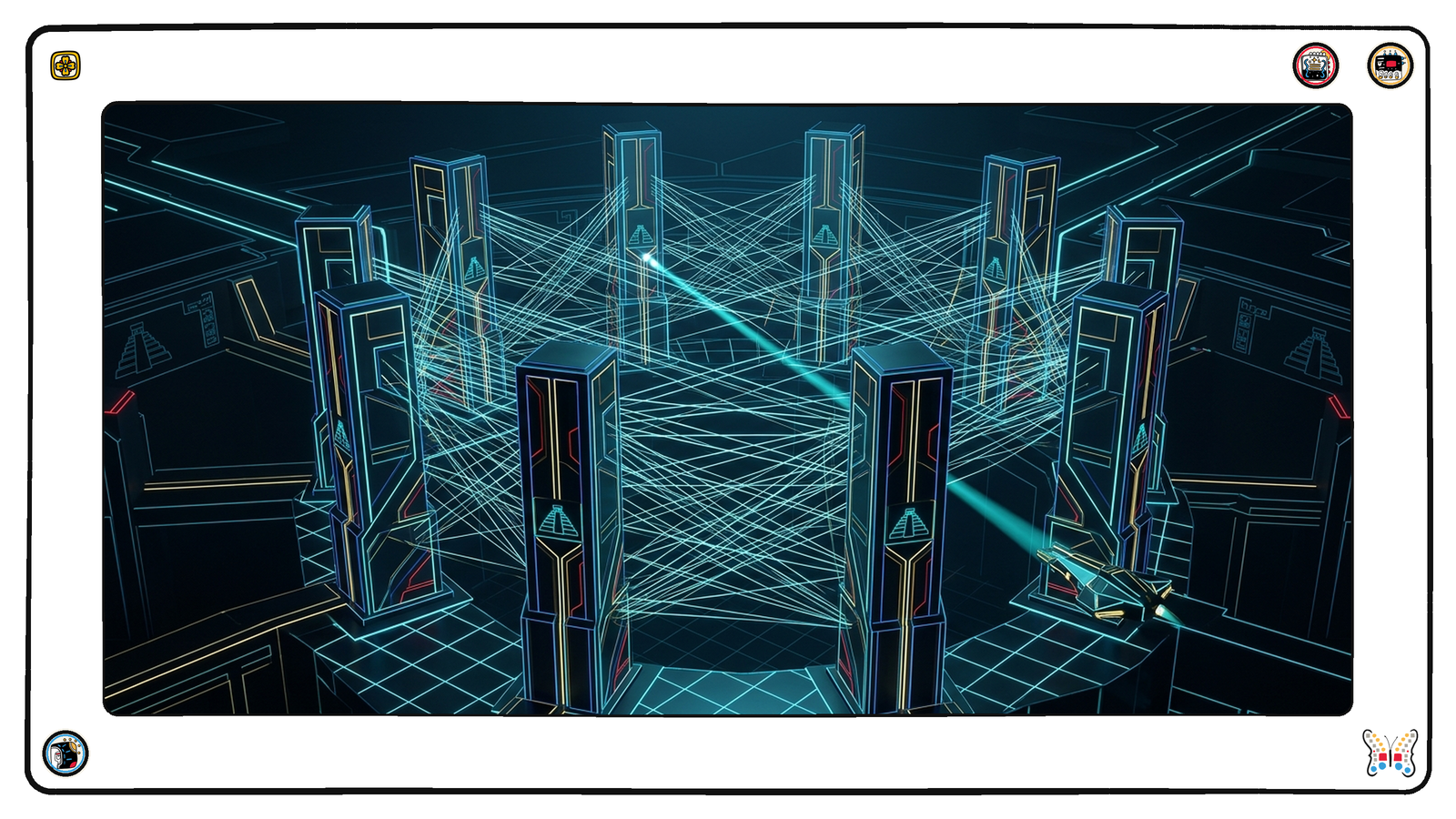
A long dark neon gallery where nine tall luminous
pillars stand in a loose ring, each joined to
several others by fine bright filaments, the
filaments crossing the open centre in a dense
legible lattice, while a single small angular
light-vessel hovers at the ring's edge tracing
one filament with its beam.
|
From My Desk: A Week Spent Inside the Specifications
I spent this week almost entirely in the specification
layer, and I should be straight with you about the
contrast. Across 7,556 third-party posts, OpenAPI was named in exactly one title — Redocly's, on generating OpenAPI from real
traffic. That is three weeks running at one. The layer
everything above depends on remains almost entirely
undiscussed by the people depending on it.
-
Arazzo had a real week, and it is the
most active I have seen that specification. Arazzo is adding SOAP, and the pull request wants
comment before the release. Arazzo wants to pause a workflow and wait for
you — which is elicitation, arriving in the workflow
specification rather than the protocol, and worth
reading next to the MCP version. One review turned the Arazzo gRPC pull request into
an RPC pull request, which is governance working exactly as it should,
in public, in a day. And Big City Storytelling: Arazzo.
-
The vocabulary thread turned into findings. Sixty-two companies declared an OpenAPI in Agent
Resource Discovery and spelled it eleven different
ways. Windmill produced the first real collision in the
MCP vocabulary. Zoho quietly shipped the largest MCP vocabulary
deployment anywhere. Wistia built the best agent vocabulary nobody knows
about. Eleven spellings of one word is what an
unregistered namespace looks like from the inside.
-
On specifications themselves: I mapped how nine API specifications point at each
other, which is the piece I would point at first. API specifications are living. APIs.json is an anthropological specification. VS Code is finally catching up with JSON Schema
2020-12.
-
Elsewhere: Onboarding shipped as an agent skill. Is OpenAPI still relevant when you tell Claude
"make me an API"? Fern puts SDK design decisions in the contract and Mintlify does a lot with one OpenAPI extension. Federation aligns schemas, but it cannot align
people. The business and politics of API portals and
gateways. And Microsoft works in the open with 70,000 engineers —
you can publish your API documentation.
No conversation this issue — the second week without one,
and I will have new ones shortly.
I want to end where I started, because the two halves of
this issue are the same story told from opposite ends. The
cost people are about to tell you to send the model less.
The governance people are about to tell you to attach more
to every call. Both are right. Nobody is going to
reconcile them for you, and the place that reconciliation
has to happen is the description layer — the thing that
can say, once, what an operation is and what it needs, so
the runtime does not have to re-explain it on every
request and pay for the privilege.
See you next week.
🔌 APIs.io — what every provider charges, free to
read — This issue is about the bill, so here is the part of
the catalog that speaks to it, and the honest framing is
that most of it costs you nothing.
I hold 9,429 pricing-plan profiles, 9,680 rate-limit profiles
and 6,875 FOCUS-aligned FinOps profiles across the catalog, and reading any of them is free. No
key, no tier — cardinality is the line, so everything
about one provider stays open.
The operation worth your week: before you
commit to a provider, read what it actually charges and
what it actually limits, rather than the marketing page.
curl "https://apis.io/api/v1/plans?limit=50"
curl "https://apis.io/api/v1/finops?limit=50"
Same data as the find_plans and find_finops MCP tools. What is not free is ranking or
comparing across the set — leaderboards, cohorts and the
scored dataset are Understanding, $199/mo. There is also a per-call Access tier
at $0.01 in the plans table; it is listed as not yet
purchasable, so treat it as a preview rather than
something to budget for.
|