|
There is a rhythm to how a technology enters the API
world. First somebody ships it. Then everybody reprints
it. Then, eventually — usually years later, usually after
enough people have been burned — somebody builds the thing
that tells you whether yours is any good. Agent Skills
compressed that whole arc into about six days this week,
and that compression is the story.
6,229 posts went out in the last seven days across the
3,652 API-bearing providers I track, and 4,447 of them
carried an API-related signal in the title. Last week I
wrote that MCP had grown an economy — auth, cost, tool
design, incidents. This week the spotlight moved one layer
up the stack, to Agent Skills, and it moved fast enough
that the quality layer showed up before the hype cycle
finished.
|
|
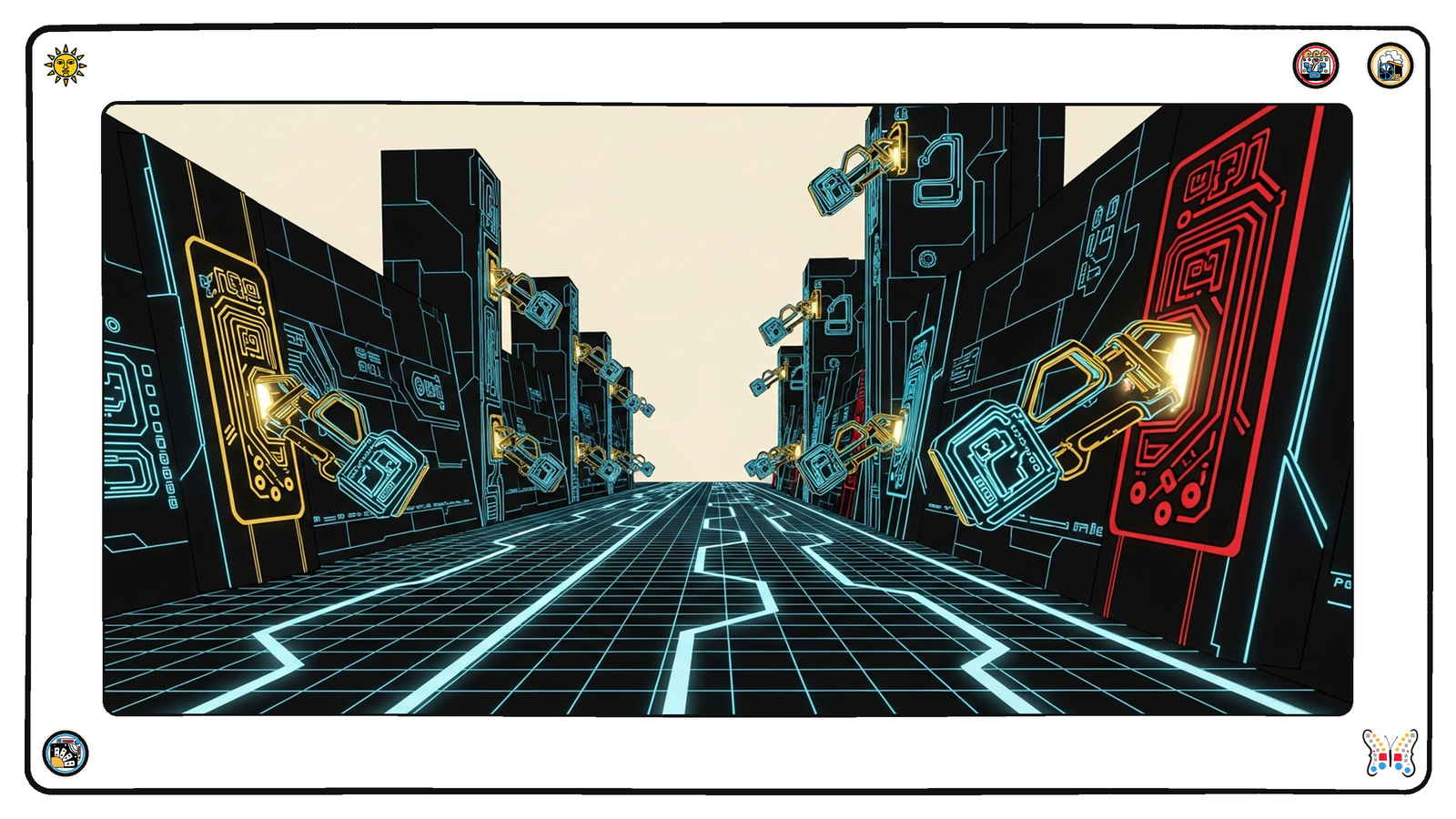
A vast neon workshop-hall on the dark grid where
angular tool-forms are being fitted directly into
the walls of glowing IDE-monoliths, each tool
locking into place with a pulse of light —
capability being built into the workbench itself.
|
Agent Skills Land in the Toolchain
Last week Agent Skills were something providers published.
This week they became something your development
environment ships with.
Here is what I want you to notice. An Agent Skill is
documentation that executes. It is the how-to-use-my-API
knowledge that used to live in a getting-started guide,
packaged so a machine can act on it. When JetBrains and
Microsoft build that into the IDE, they are making a claim
about where API knowledge belongs — not on your developer
portal where a human goes to read it, but inside the tool
where the work happens. If your API's usage knowledge
only exists as prose on a docs site, you are publishing to
an audience that is quietly moving out of the room.
|
|
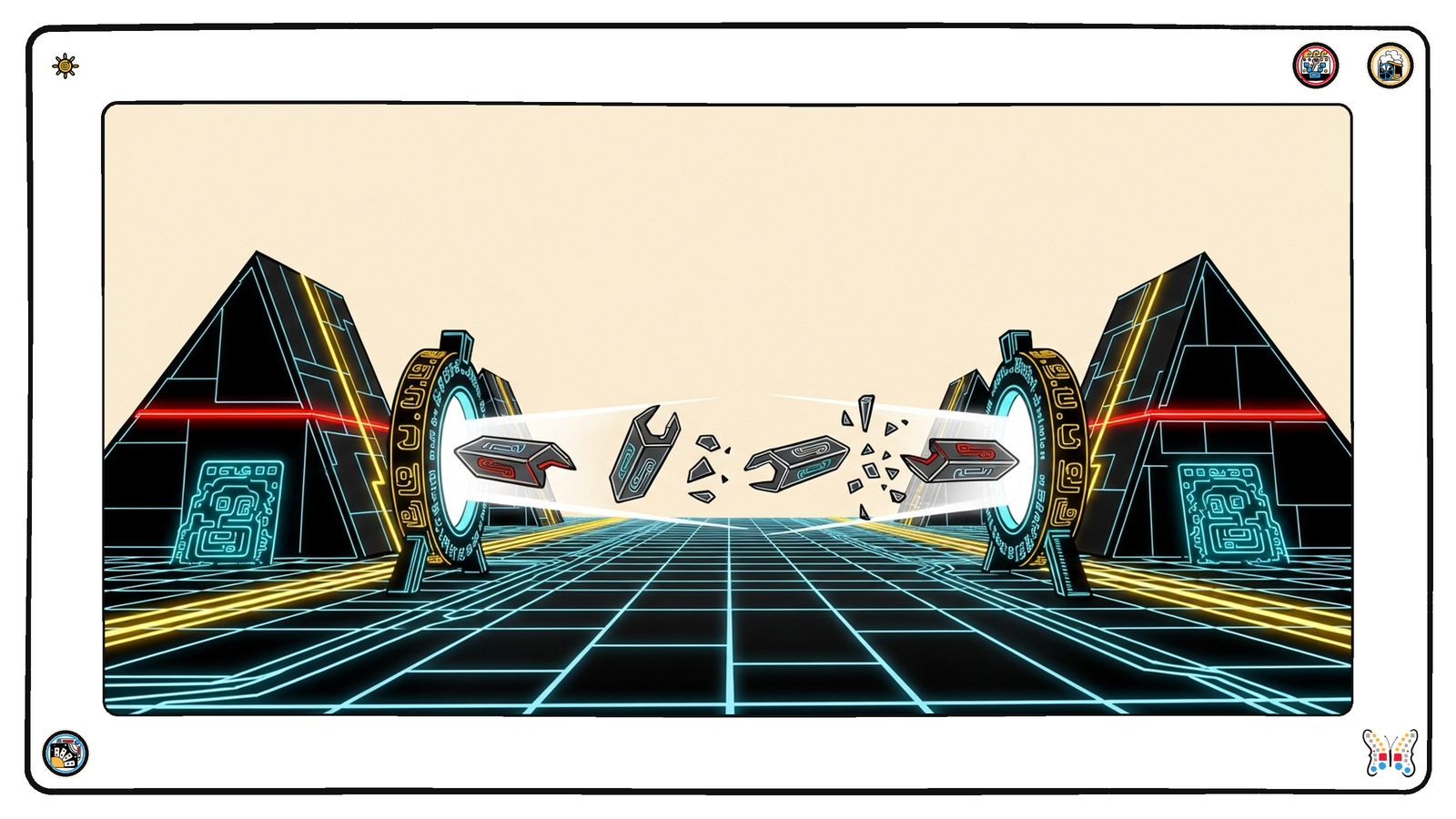
A luminous proving-ground on the grid where
identical angular tool-forms pass one by one through
a ring of measuring beams, some emerging bright and
intact while others dim and fracture — capability
being tested rather than assumed.
|
And the Quality Layer Arrives With Them
This is the part that genuinely surprised me. Normally the
"is yours any good" tooling trails the
technology by years. This time it showed up in the same
news cycle.
Benchmarks are how a format stops being a vibe. SkillBench
and a testing methodology in the same week as four major
vendors shipping skills means the people building this are
not waiting for the reckoning — they are front-running it.
I have spent sixteen years watching API formats arrive
without a way to evaluate them, and watching the
evaluation arrive a decade late, after everyone had
already shipped something unmeasurable. This is better. It
is also a warning: once a benchmark exists, "we
shipped an Agent Skill" stops being the
accomplishment and starts being the entry fee.

|
|
A neon substation buried beneath the grid's
surface, thick light-conduits routing power through
automatic valves that dim to near-dark and flare
back to full brightness as demand arrives —
infrastructure that scales itself down to nothing
and back.
|
MCP Settles Into Infrastructure
MCP did not slow down; it just stopped being the headline
and started being the plumbing, which is the more
meaningful promotion.
-
Solo.io demonstrated warm scale-to-zero MCP servers
with agentgateway and Agent Substrate — the cost-control argument from last week turned
into an actual runtime pattern.
-
Microsoft showed how to build long-running MCP
tools on Azure Functions — because the first generation of MCP tools all
assumed the work finished inside one request, and real
work does not.
-
Meta made its ads MCP server available to
developers — campaign creation, performance insights, and
catalog management through natural language, from one
of the largest advertising APIs in existence. I added
it to Facebook Business Manager's profile this
week.
-
Spike introduced its MCP server for incident payloads, root-cause digging, and
on-call schedules — incident response becoming
conversational, which is either wonderful or
terrifying at 2am.
-
GoDaddy launched a developer platform explicitly
framed as "domain APIs for developers and their
agents" — note the "and their agents" in the
launch title itself. That phrasing was a novelty a
year ago.
-
And Bump.sh white-labeled the MCP server, which I wrote about, because when your docs vendor
generates the MCP server for you, the bottleneck stops
being production and becomes discovery.
Scale-to-zero, long-running jobs, and white-label
generation are all late-stage concerns. You do not
optimize the cold-start cost of something nobody runs. The
interesting problem is no longer building an MCP server —
it is finding the right one, which is exactly the
discovery gap I have been building toward.

|
|
A colossal neon forge-complex on the grid where
separate glowing components — a lens, a ledger, a
seal, a gate — are being fitted together into one
continuous illuminated machine, its parts clearly
distinct but linked by light.
|
From My Desk: The Governance Toolchain Got Built
I keep saying there is no platform for API governance.
This week I stopped complaining and shipped the pieces —
nine days, and it hangs together as one argument.
-
I stated the thesis outright: there is no platform for API governance, and laid out the OpenAPI governance toolchain as the alternative — many small sharp tools instead
of one product nobody will buy.
-
Memory and provenance: on API governance needing memory, then governance memory in practice, running OWASP across
my own APIs, plus a registry of adoptable, provenanced governance
rulesets and a federated API governance rule registry.
-
Rules that mean something: a grounded Spectral ruleset for the OWASP API
Security Top 10, from a prose style guide to a grounded Spectral
ruleset, and the uncomfortable question how much of your API do your rules actually
check?
-
Process and proof: a reference pipeline for API governance in CI/CD, scoring your Spectral CI setup against a maturity
rubric, making governance exceptions sanctioned, owned, and
expiring, and tamper-evident certificates for API governance.
-
Tying it together: binding governance building blocks into one
navigable graph, and every schema property has a history worth
documenting.
The through-line: governance fails not because the rules
are wrong but because it has no memory, no provenance, no
measure of its own coverage, and no honest way to say
"we are knowingly breaking this rule until
March." A waiver that expires is worth more than a
rule nobody can follow. And a certificate you can verify
beats a dashboard you have to trust.
I also made some of this commercial, which I will say
plainly rather than bury: you can now hire me to score your API's agent
readiness, APIs.io is the first to license the API Evangelist
rating system, and I explained why I am doubling down on API discovery and
governance and how I am monetizing my APIs and MCP without walling off
the map.
|
|
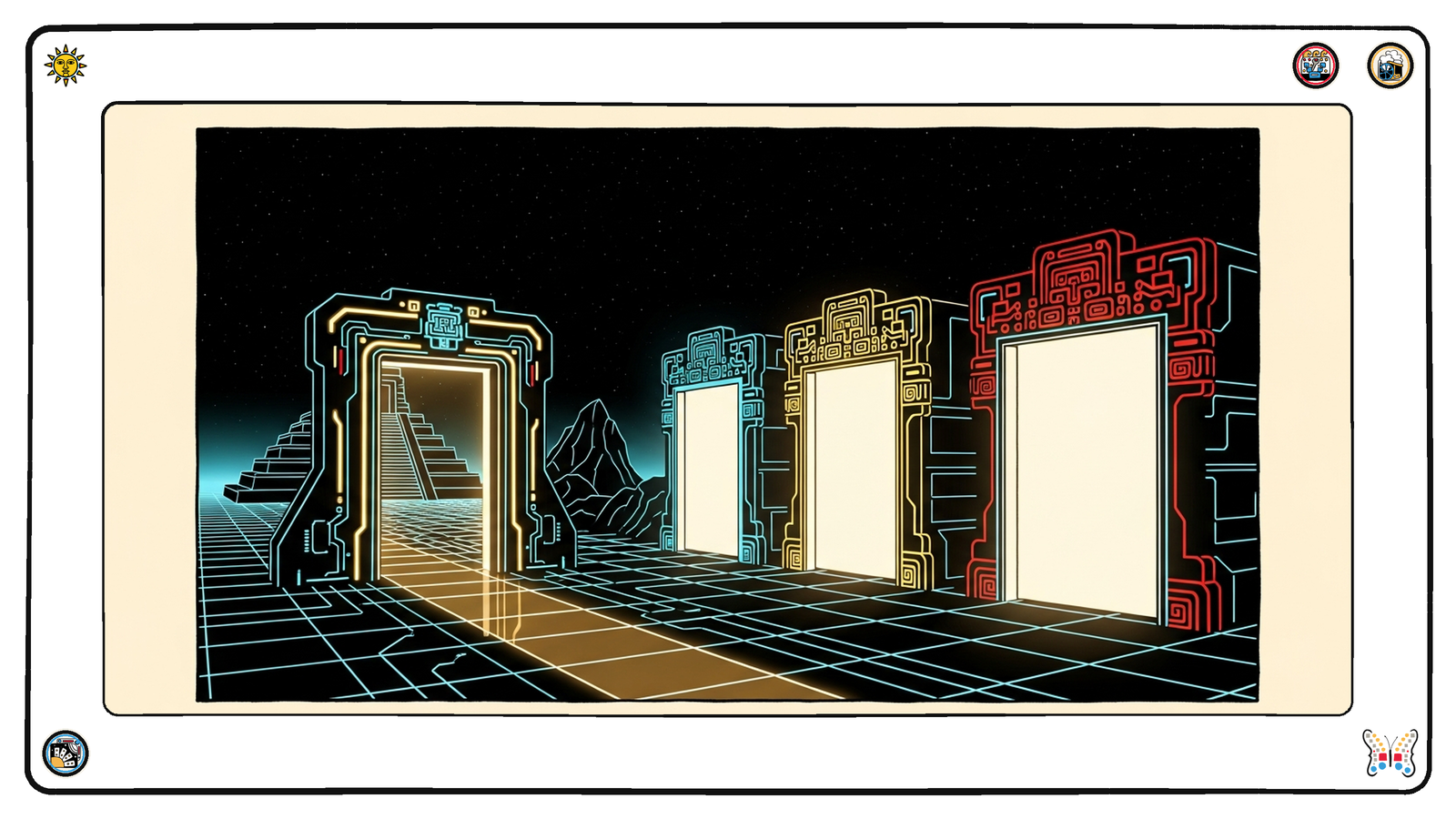
A grand neon entryway standing open on the grid with
a clear illuminated path leading through it, while
beside it several ornate false doorways glow just as
brightly but open onto solid unlit wall — the
difference between a real front door and a
decorative one.
|
Profiling, Onboarding, and the Front Door
I ran two long threads alongside the governance work: how
deeply you can profile a provider, and whether anyone can
actually get in the door.
-
Profiling: what actually goes into profiling Stripe, using Stripe as the blueprint for a deeper
profiling process, then what goes into profiling Twilio and how Twilio stress-tests the blueprint I built on
Stripe. Building a process on your best example and then
breaking it on your second one is the only way to
learn what the process actually is.
-
Onboarding: Gravitee gets closer than most, what programmatic onboarding looks like when the
gateway is Tyk, WSO2 API Manager already speaks programmatic
onboarding, IBM API Connect has a real consumer API but not a
real front door, and Zuplo has the onboarding API, it just points it at
the wrong door.
-
Overlays, still the most underused
tool in the box: for adding tool-specific content without polluting
the spec, for SDK generation prep, and for separation of concerns when you do not own the
spec.
The onboarding reviews keep landing on the same finding,
and it connects straight back to the top of this
newsletter. Four of the five platforms I looked
at have the onboarding API. They just point it at
an internal audience, or behind a console, or at the wrong
door. An agent cannot navigate a wrong door any better
than it can click "Generate API Key." You can
ship built-in Agent Skills and a scale-to-zero MCP server
and still be unreachable, because the credential path at
the very start still assumes a human with a mouse.
|
|
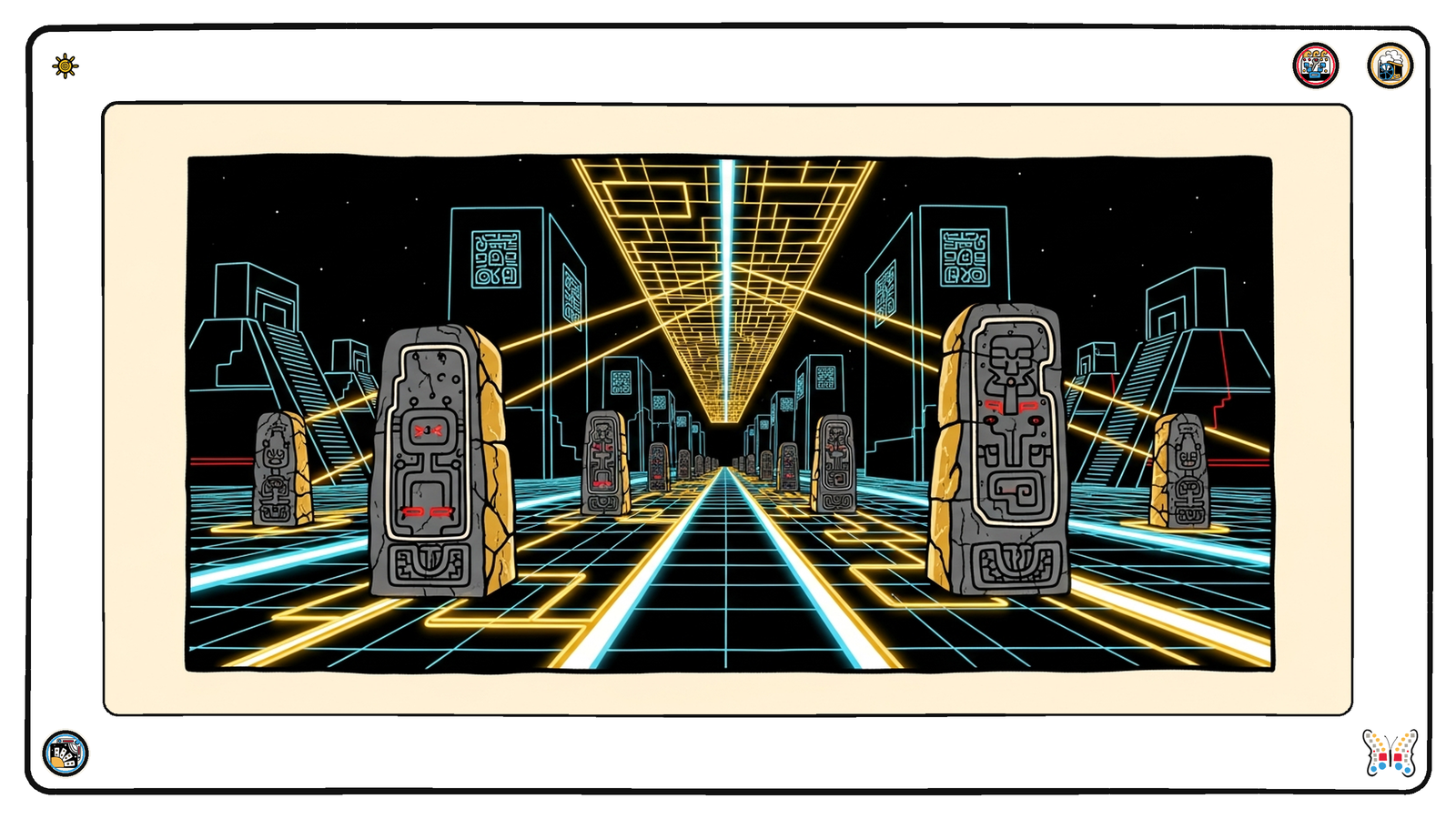
Ancient carved boundary-stones scattered across a
dark plain, each one being traced by a beam of neon
light that links it into a single glowing lattice —
inherited fragments being surveyed into one coherent
public record.
|
Sprawl, Specs, and the Public Record
The last thread was the structural one — what we have
collectively built, and who gets to keep it.
That is the week. Agent Skills moved into the toolchain
and brought their own benchmark, MCP quietly became
infrastructure, and I spent nine days building the
governance toolchain I keep insisting no vendor is going
to hand you. Next week I will be watching whether
SkillBench gets adopted or ignored — because a benchmark
nobody runs is just a blog post, and the difference
between those two outcomes tells you whether Agent Skills
are a format or a fashion.
If you want this analysis applied to your own API
operations, that's what I do.
|