|
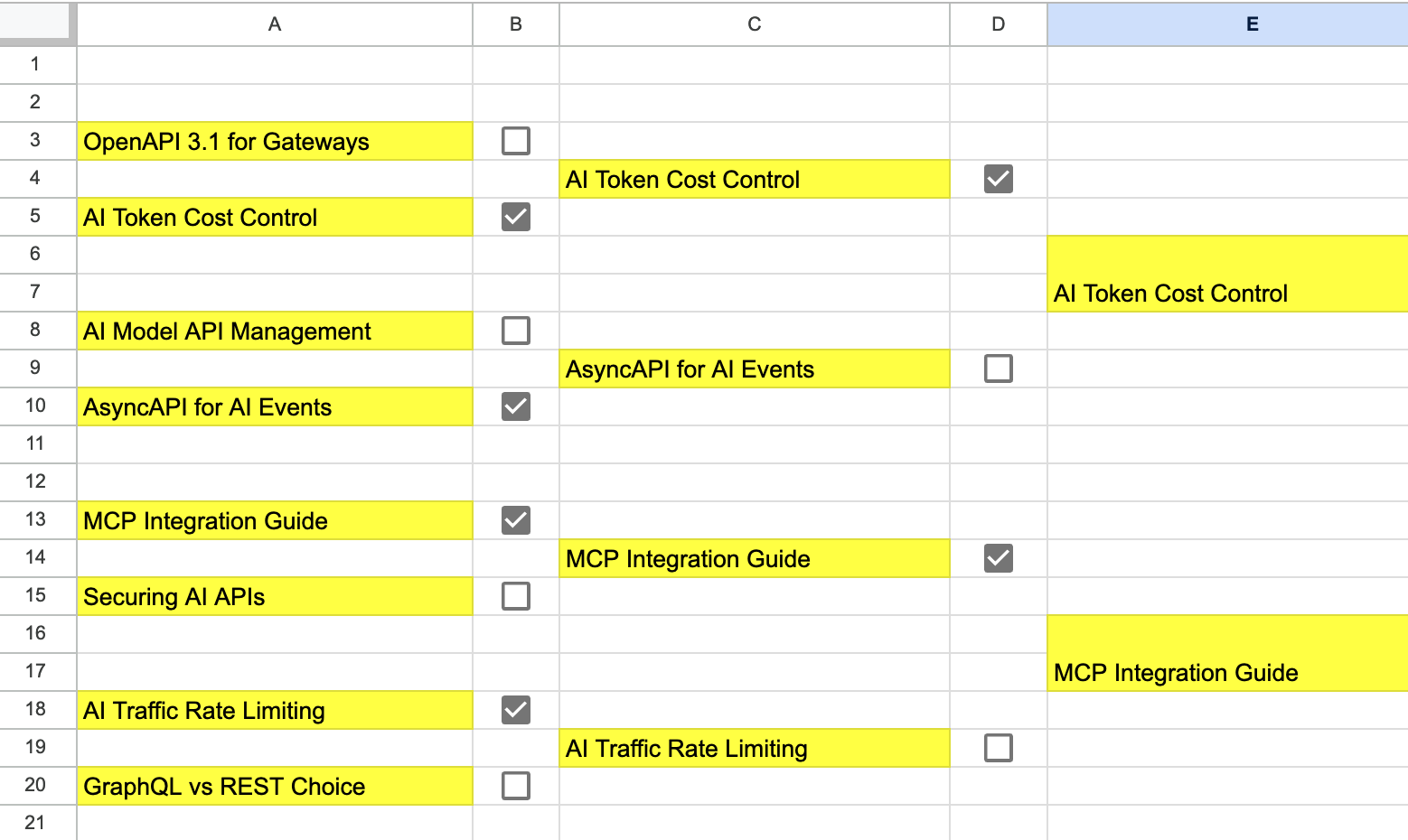
Hey Reader, For the first time since Milli Vanilli was on the Billboard charts, Michigan won the college basketball championship. Is that what you had in your bracket? Every March and April, basketball fans fill in the "March Madness" brackets, attempting to guess the winners of every match-up. But these are handy decision devices that can be used year-round. I've put them to work choosing favorite candies. And you can use the same idea for your technical content. Take a list of potential topics, put them head-to-head, and decide which ones advance. It’s a simple way to prioritize what to create next. Here’s what that can look like:
You don’t need 64 ideas (unless you want to go full March Madness). Even a smaller bracket can help you compare topics more clearly. The goal is to force decisions:
If you want to be more strategic, group your ideas into “divisions” by content concept. That way, you’re comparing similar ideas instead of unrelated ones. It’s a simple exercise, but it creates clarity fast. One more way to think about your “winning” content Winning your bracket doesn’t always mean winning in the real world. Developers are increasingly asking AI tools what to build, how to solve problems, and which tools to use. The content that gets surfaced in those answers often looks different from what we think should win. That’s where a second layer of bracketology comes in: 👉 Not just which content should you create 👉 But which content actually gets surfaced by AI If you’re curious how your product shows up in those conversations, our LLM Reach Assessment evaluates how visible your developer tool is inside AI systems like ChatGPT, Claude, and Gemini when developers describe real problems. Sound useful? Adam |
EveryDeveloper
Which content ideas become national champions?

Adam DuVander
5mo·3 min read

Enjoyed this article?
See more from EveryDeveloper