|
We’re trying something that frankly we should have been doing for 10 years. Our weekly newsletter. The basic format is simple- a small personal note from moi (Sean), the meat: Things we’re seeing; Things we’re hearing; Things we’re doing. On a personal note...Aloha! What are you supposed to do for the first missive for a newsletter? Let's go with a bit of a personal journey/origin story. About 15 years ago, after multiple group conversations, Speakeasy Dinner series (happy to explain more later... a guest was invited to join a group of us and share their personal beliefs and stories, and the only rule was the guest talked, we listened and asked questions), philosophy classes, debates, and more... I gathered that I had a gift/knack for asking questions that were on people's minds. For a long time I thought I was annoying. Always asking questions when someone said "does anyone have any questions?". Always having "one more thing" to say. Often having the impulse to have the last word. I blame growing up in a family of 5 kids, all 7 of us extroverts. Anywho, my shame shifted when I repeatedly started hearing things like "thank you for asking that question, I wasn't sure how to ask it and that was perfect" and "listening to you go back and forth with them really helped me follow along". So, I started thinking I potentially would go into public speaking, or politics, (or becoming an outdoor education PhD student) Enter: seanspeaks You may (or may not) have noticed my handle in about everything I could claim. Sean Speaks. Sean's Peaks. Fun little wordplay. To wit:
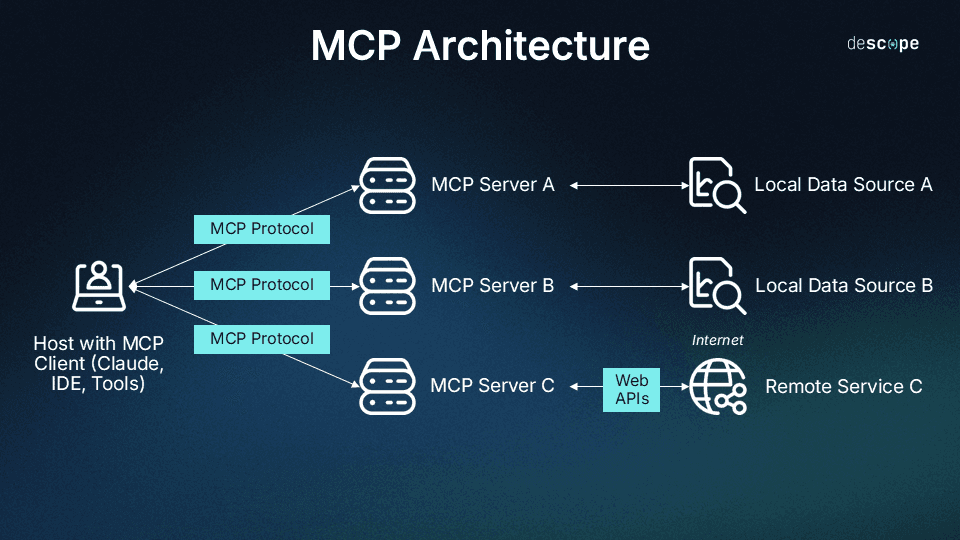
So, here I was, pretty convinced I had a gift to share. A bunch of handles and domains primed and prepped. Annnnd I never did anything with it. I'm happy to unpack why, I've got a few theories/explanations. But I'm here to change that. So what’s changed? Basically, I’m getting over my impostor syndrome. I thought for sure I didn't have much to share as I got deep into a niche area of expertise. I've been working daily with people who are experts in their respective fields, who know more than me and who have responsibilities that far eclipse mine. Turns out that I've been building my own little area of expertise now going on 10 years. And I haven't shared any of it publicly! Instead of sharing and building together, we've just been letting everyone figure out their own way, no notes. For example, I'm not sure how many people are working on a diagram like this: As they try to answer the question from their brother in law "are you automating anything in your personal life right now?" Consider this newsletter as an attempt to course correct. I would love to hear more from you as we do this, and possibly do some guest interviews where we talk through strategy questions and insights. I know this newsletter will have a diverse audience with different backgrounds, job responsibilities, company and product types… but I think we can find the through line at the API and integration layer. So take a look at what we’ve got, give me feedback please, and feel free to unsubscribe at any point or forward this along to other people you think might find it valuable. Thanks! See you next week! Best, ~Sean What we’re seeingIt's going to be hard to write this newsletter without repeatedly discussing MCP, AI in integrations, and the impact of all of it on product development and company building. We'll try to mix it up a bit. But... I gotta start with MCP. Model Context Protocol. (If you're deep into the MCP weeds already with me, just scroll to the last paragraph of this section where I make my "so what" case) Let me summarize for those who don't know what it is- it's a protocol (a set of APIs you build, with certain responses) that has two parts... the server and the client. The server's job is to expose a pre-determined set of APIs, and the responses must be formatted in a certain way in order so that a client LLM can understand and use the tools it exposes. To make it even simpler- ChatGPT and Claude (et al) can use external tools, but they have a hard time understanding pure API documentation etc. Instead of trying to just shove a spec at an LLM ("Here, read this, good luck!"), we can give it context in a format it understands, and then give it some code it can run to take advantage of a tool. So now we say "Hey, here's a set of tools, like 'Search HubSpot Deals', that you can use if you think the user is looking for it. And if you determine you want to use the tool, here are the actual values you need to provide in order to properly use the tool." And by "we say", I mean that whoever built the MCP Server makes it say that in a predesigned formatted response. And the MCP Client (Claude Desktop, ChatGPT, Cursor, etc.) know how to use that server and response to feed their LLMs. Here's a little diagram:
Okay, so what. And what does this mean for me as a product owner, a product user, or someone who's just trying to get a thing done. My bet is you've used ChatGPT or Claude in the past month. Or you use AI regularly. If you've installed an "integration" onto Claude, you've likely already installed an MCP server reference. Ditto ChatGPT for any of the deep research connectors. The way we see it... 10% of the population will ever care or need to care about what an MCP is. The same way they need to ever care what an API is. MCP is an enabling technology for a new sub-type of integration. So, what does that mean for you, the product owner? Or you, the engineer? Or you the partnerships person? It means that you should come to the party not only with your API well built and documented, but also your MCP server. I'd bet my house that in 3 years, the developer experience of most of the major app marketplaces will include places for you to define tools you want an AI to be able to use, or to "BYOMCP"... plug in your MCP server and whitelist the tools you want to make available as part of your integration to that platform. In the future, your "HubSpot app", once installed, will give HubSpot's Breeze AI superpowers on top of the rest of the integration workflows and code. Be ready, explore it for your own AI assistant, and let's talk about more if you'd like :-) What we’re hearingThe past few weeks we have been having a lot of conversations about when and if you should be building integrations. Specifically in the case of "as a software product owner, when/if should I build integrations for my end users?" You would think the answer is “now” and “of course, all of them”. Especially from someone who makes money off of them existing. And yet! There are absolutely times when you shouldn’t be building a bunch of integrations. Let’s lay out a few:
On the flip side, I think a lot of product owners and devs are slow to catch up to how much AI has changed the game on developing integrations for their products. Or, if they've caught up, they're also not fully aware of the pain they may be vibe-coding themselves into going forward. I've got thoughts on both counts. Ask me anything :-) What we're doingThis part is fun. If you haven't been following along on my LinkedIn posts, then a quick recap-
We're in the lab daily. Hit us up with questions. Let's talk! Thanks for reading the first edition of our inaugural newsletter! Reply to let me know your thoughts. What do you want to know more of? Smash that unsubscribe button below if you don't like it. Forward to a friend if you do! Until next time!~ Sean Matthews |
Left Hook
What’s Cookin’ in Hook-land? (First Edition! Feedback wanted)

Sean Matthews
1y·14 min read
Enjoyed this article?
See more from Left Hook