An ‘agentic’ agenda is now moving across organizations where daily tasks, products, or mindset of employees are being ‘aligned’ with this shift.
But agentic means a lot of things
Delegating work to agents to complete. For engineers, they’re encouraged to leverage AI code gen. For Marketing, the value is more automation than actual autonomous, non-directed actions (no I’m not talking about web fetch for news alerts)
Embedded AI models live inside the product as core functions, e.g. models learning behavioral patterns, so that the product has the ability to take smart actions on its own without being directed by heavy manual configs
Product provides an agentic interface, in its most basic form as a chat widget to help users delegate tasks using natural language, or MCP serves/API to help plug-in agents of choice.
Voilà, the agentic stack we’re arriving at: at the core lives the underlying AI models. It’s built upon a codebase which is now also largely created by AI. And the agent-native UI wrapper is the outer shell.

This layered architecture is what many companies are now trying to manifest their Agentic AI adoption into existence, which I can’t help thinking about its uncanny resemblance to Russian nesting dolls.
Shifting from buy to build and agentic interoperability
AI still have many limitations, but the one thing it has delivered so far is making companies shift from buy to build.
In other words, many companies believe they now have the powers to build internal micro-SaaS that is better than a packaged solution from vendors.
And that their own fleets of agents need to operate across these ecosystem and infrastructure seamlessly. Dare I say it brings forth the agentic interoperability between internal and vendor software.
Many people have now referred to this concept as ‘Web of Agents.’
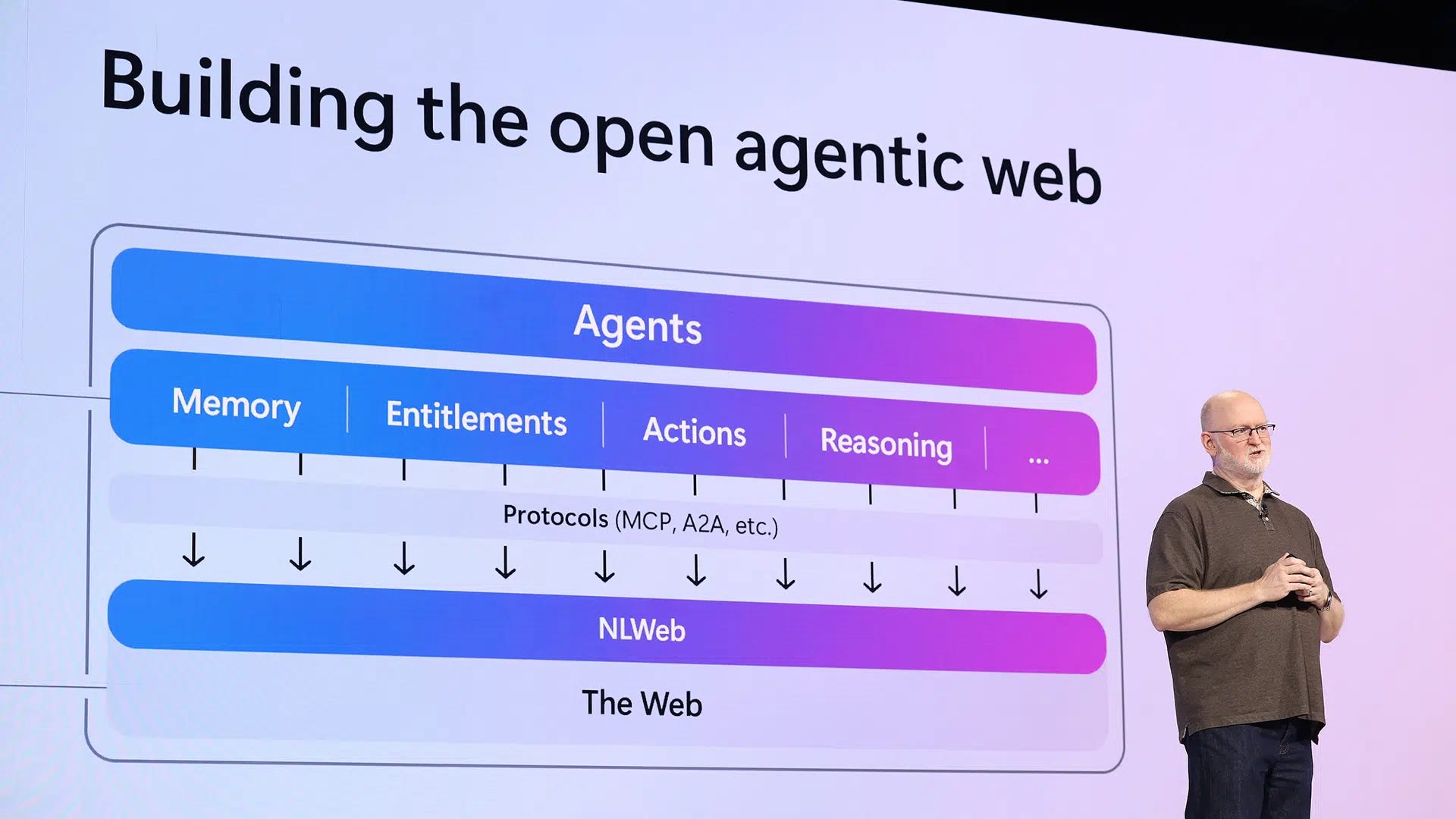
As a vendor, a few things to think about:
If every company has their own agents, the need from vendors’ solutions does not go away. Instead, vendors will still be able to create complex solutions serving specific tasks that customers need to get done.
But now that tasks are delegated to customers’ agents, the ‘agentic’ aspect of vendors’ solutions is the fact that they’re designed more for agents and less for human end-users.
This concept of agentic has a great impact on product design decision, pricing structure, or even PMF.
In this way, it’d rather concern MCP servers for external apps and official connectors on popular models (GPT, Claude, Gemini, etc.)