|
This is the ninth issue of The Specification Layer.
This newsletter window: September 27
through October 4. Thirty-three specification repositories
and twenty-five feeds, all read clean for the ninth
consecutive week — no source errored. 207 pull requests merged. 6 releases cut. 25 posts
published. Fourteen of the thirty-three specifications did not
move. The two release-path dependencies merged 3 between
them.
Two things are different this week. The
registry grew by one: MCP joins, as I
said it would, reported alongside the established thirty
rather than inside them. And I attended none of the
working-group calls — I was at apidays London all week —
so everything in From the Room comes from the groups'
own public recordings and published notes, which, as it
turns out, is enough to report a week.
That 207 is not a jump in activity, and I would rather
say so than let the number stand. Merges are up 63 on last week. Twelve of those are MCP,
newly counted. Fifty-three are one repository,
CALM's, which went from 10 merges to 63 — and, as the
second section explains, that repository is not the
specification I thought it was.
Predictions from last week, graded:
|
Prediction
|
Result
|
|
MCP's repository joins the registry, reported
alongside the established thirty
|
Done. It is in the table below
and in the lead.
|
|
The OpenAPI security proposal (sig-security #54) gets its complete OpenAPI description example
before its first approval
|
Open. No commit, review or
comment since September 25.
|
|
Arazzo 1.2 by mid-November
|
One of four landed. SOAP
support, #533, merged September 30.
|
|
The schema-date question comes back the next time
a 3.2 schema changes
|
Open. No 3.2 schema changed.
|
|
|
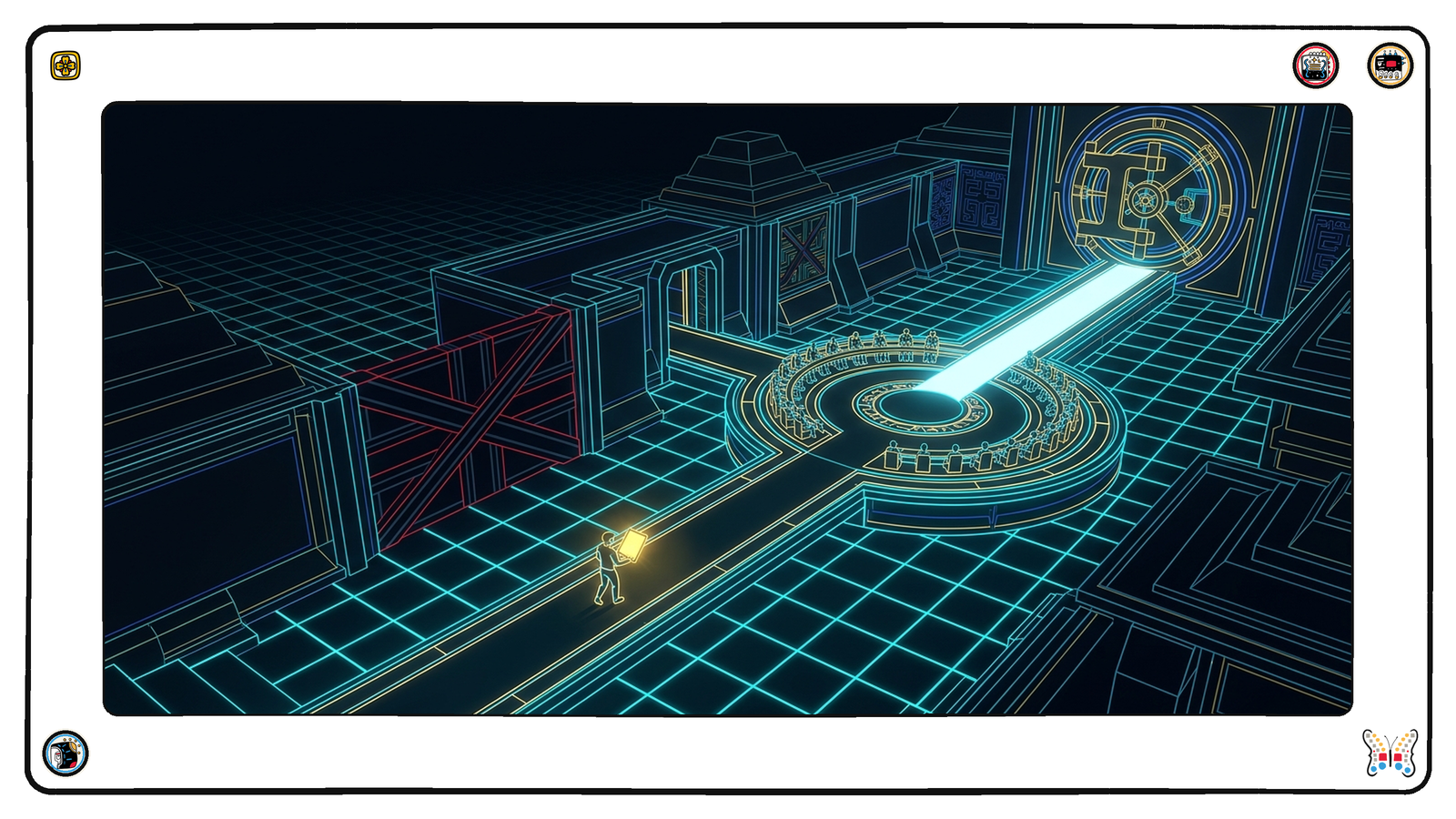
Beneath the neon grid, a small figure carries a
glowing gold tablet down a corridor toward a heavy
round vault door, the only way to it running through
a round lit council chamber where tiny figures sit
in a ring, a side passage sealed off.
|
The Lead: MCP Put the Room in Front of the Proposal
Every specification in this newsletter has a way for an
idea to become a change. For the Model Context Protocol it
is the SEP — a Specification Enhancement Proposal, opened
as a pull request. Until this week, the SEP guidelines mentioned talking to a working group first only as a tip
inside a note. As of September 28 it is a requirement.
#3336, "Require WG/IG discussion before SEP
submission," merged at 22:47 UTC on Sunday the 28th. What it changes,
from the pull request:
-
Prior discussion with the relevant working or interest
group is required. SEP authors bring
the idea to the group before opening the SEP, and link
that discussion — a Discord thread, meeting notes or a
GitHub Discussion — in the pull request.
-
The sponsor confirms the discussion
happened and is linked before a SEP moves to in-review.
-
#general or GitHub Discussions is the fallback when no
relevant group exists.
It is live: the published guidelines now open with "Discuss with the relevant group: Bring your idea
to the matching working or interest group and refine it
there."
Where it came from
The rule did not come out of nowhere, and the record now
shows the whole path.
|
|
|
|
Sep 1
|
#3336 opened. Its description records it was "Requested by Den Delimarsky" in the maintainers' Slack, and it ends "Generated by Claude Code."
|
|
Sep 15–16
|
MCP's core maintainers meet in person in
Amsterdam.
|
|
Sep 28
|
@localden requests changes, then approves, and
merges #3336.
|
|
Sep 30
|
The Amsterdam notes are published: the core maintainer meeting and maintainer day.
|
The maintainer-day notes record a wider decision than the
one that merged:
"Working group sponsorship becomes a requirement
for SEPs; until now any maintainer could sponsor.
Working group leads hold access to the review queue,
and larger ideas have a pre-review path before anyone
writes a SEP. Pull requests on the specification
repository are now limited to maintainers, and the
backlog of stale SEP pull requests will be
closed."
The same notes add that conformance tests are now part of SEP
acceptance — "this is the first full cycle with that
requirement" — and that SEPs should arrive with a failing conformance
test. And the core maintainers' notes from September
30 add a written path for questions before a SEP:
a working-group lead "writes the question down (a doc, a PR, or a
decision record in the WG repo) and puts it in the same
queue."
Read together, that is a specification closing its front
door to drive-by proposals and routing every idea through
a room first. It is the most significant governance change
I have seen land in this newsletter's nine weeks —
and it happened in the week MCP started being counted.
The release cycle is now a public proposal
Last week, from a working-group call, I held back a change
to MCP's release timing because it had not been
published. It now has. SEP-3398, "Release Cycle Updates", is an open pull request whose text reads: "Specification releases occur every six months,
generally on the last Tuesday of March and
September," and "the proposed transition moves the December 2026
release target to late March 2027." The Amsterdam notes describe an eight-month cycle
overlapped to ship every six months, and record that "the room welcomed the shift from December to
March 2027." The September 30 notes put it at: comments this week,
vote next week.
That is a proposal, and I am reporting it as one. If it
passes, there is no MCP specification release in December.
Two notes I want to make flatly
The rule was written by an agent. Both of
the merges in MCP's repository this week that came
from claude[bot] — #3336 and #3408, which lists the conformance repository's
maintainers in MAINTAINERS.md — carry a line naming the
maintainer who requested them in Slack, and both were
reviewed and merged by that same person; #3336 was sent
back once before it was approved. I count them as bot
merges in the split below, for consistency, though they
are better described as a maintainer's change with an
agent doing the typing. Last week the OpenAPI security
proposal arrived with a "Generated with Claude
Code" line too. That makes four specification bodies
since the end of August — SLSA, FDC3, the OpenAPI
Initiative and now MCP — where agent authorship is visible
in the record. The pattern is no longer worth flagging as
unusual. It is worth counting.
MCP's first week in the count: 12
merges, 7 by bots (2 of them claude[bot]), 5 by people. Mostly documentation: SEP redirect pages,
a Ruby SDK Tier 1 assessment, dead-link fixes, a CLI added
to the client matrix. The governance change is the one
that matters.
|
|
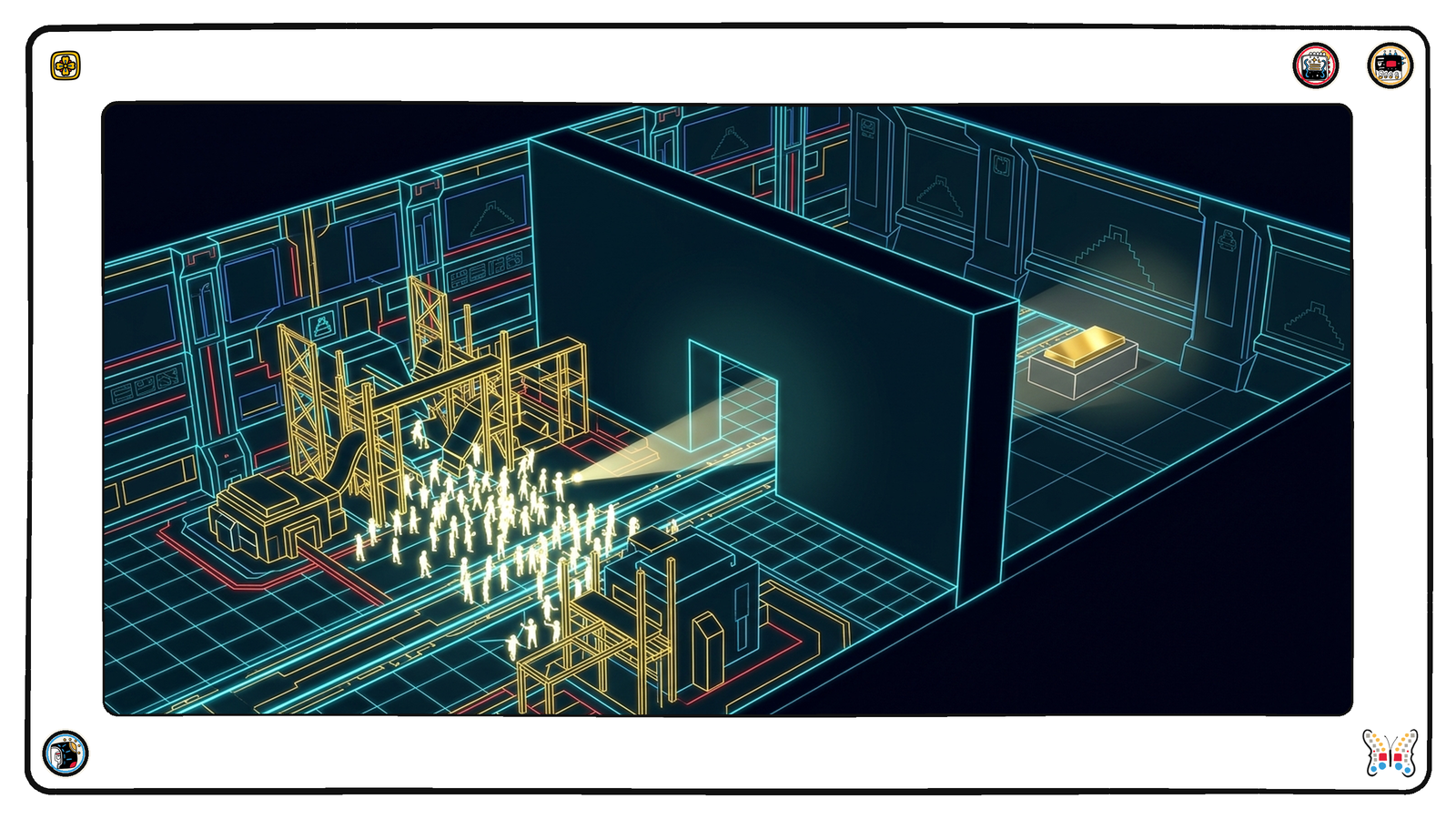
Two parallel underground halls beneath the grid
separated by a thick wall: a bright crowd of tiny
figures swarms over gold scaffolding in the near
hall, while through an opening the far hall holds a
single quiet gold slab, and a lantern beam has just
swung toward it.
|
A Finding About My Own Registry: I Have Been Reading
CALM's Tooling
This week CALM #3201 updated the project's security metadata to say the
project spans three repositories, and named finos/calm-schema as the home of the CALM specification.
The repository this newsletter has read as
"CALM" since its first issue, finos/architecture-as-code, is the tooling — the CLI, CALM Hub, the VS Code
extension, now CALM Lab. finos/calm-governance holds governance.
The schema repository was created July 29, before this
newsletter's first issue. Its history, from its merged pull requests:
-
August 4–7: the schema history
migrated in stages — the 2025-03 draft, 1.0-rc1,
1.0-rc2, 1.0, 1.1 and 1.2 — and @finos/calm-schema 1.0, 1.1 and 1.2 were published to npm on August 7.
-
Since then, nothing that changes the
schema: OpenSSF Baseline parity work and a dependency bump
on October 2, and an examples migration on October 4.
So every CALM line I have printed for nine weeks measured
the tooling. The conclusion I kept repeating — tooling
releases every week "while the schema has not changed" — turns out to be true, and this week
the tooling started consuming the released schemas from
npm (#3244, #3247, #3249), which is exactly what a clean separation looks like.
But I was right by luck. I never read the repository that
would have shown it.
And it matters to the numbers. CALM's tooling merged 63 pull requests this week,
59 by people — busy, well run and almost entirely human.
Counted as a specification, it lifts the established layer
to 54% human, the best reading in five weeks. Take it out,
and the other twenty-nine established specifications
were 31% human. The split below shows
both.
What changes: from next issue, the CALM
row in the registry points at finos/calm-schema, and finos/architecture-as-code moves out of the specification count. The nine published
issues are not wrong about what they described; they
described the wrong repository under the
specification's name, and that is now on the record
here.
Two more registry gaps, found the same way. The Linux Foundation appointed an executive director for
the x402 Foundation on October 1 — "the neutral open standard for internet-native
payments," more than fifty member organisations — and x402-foundation/x402 merged 20 pull requests this week, all by people. It
joins the registry next issue, as MCP did this week.
And ONNX released v1.23.0, expanding
operator support for transformer and low-precision
workloads. ONNX is in the Linux Foundation inventory this
newsletter is built from and is not in my registry. Noted;
I will decide whether a model format belongs in a
newsletter about API specifications before I add it.
|
|
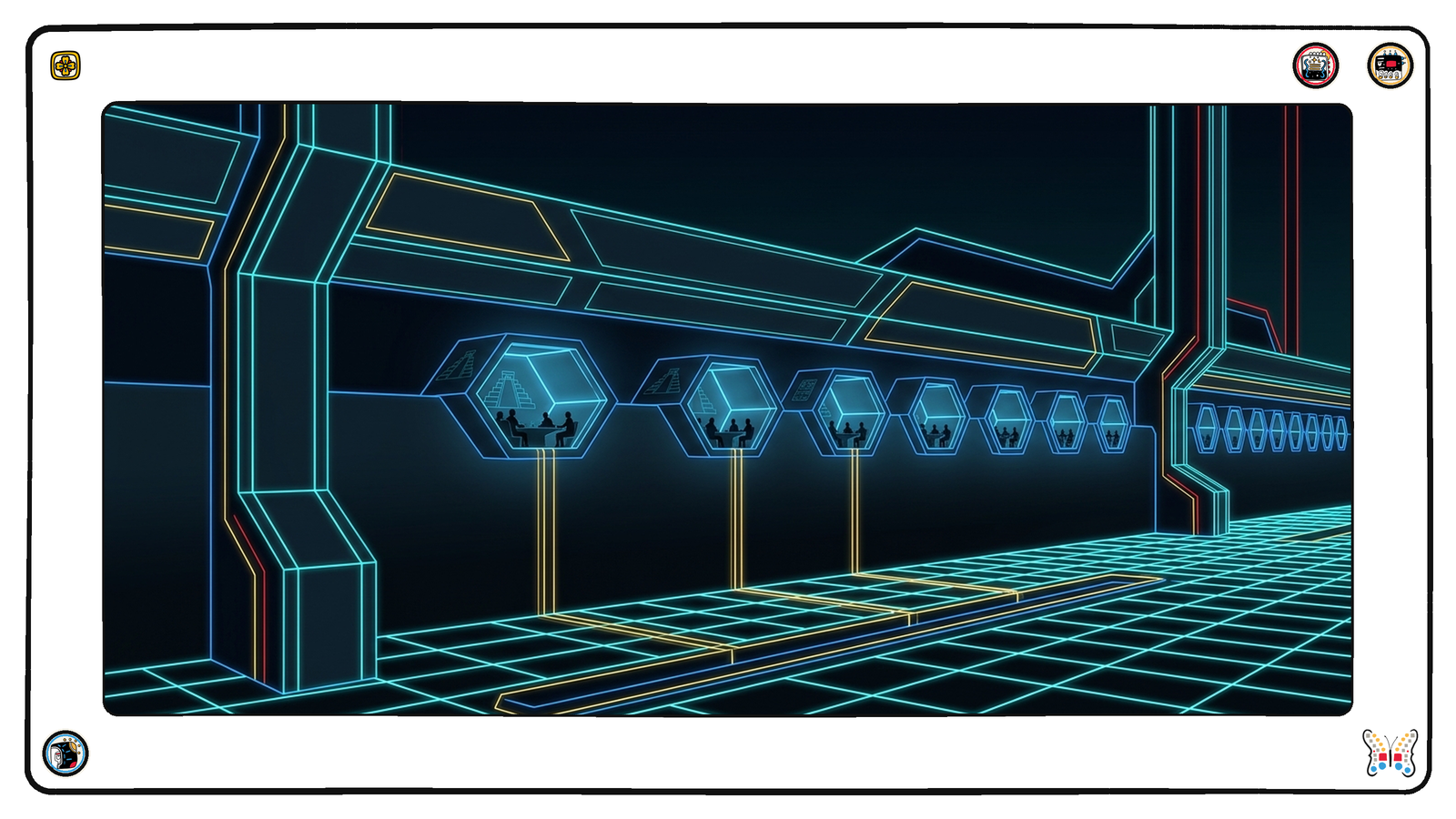
A long row of small hexagonal meeting chambers set
into a dark foundation wall beneath the neon grid,
tiny figures around tables in cool blue light, and
from three of the chambers a thin gold line running
down into a common channel in the floor.
|
🎙 From the Room: Thirteen Sessions, Read From the Record
Fifth week of this section, and the first where I sat in
none of the rooms. Thirteen sessions in the window: two
A2A, four OpenTelemetry, SLSA, a CNCF initiative on MCP
authentication, Envoy's AI gateway, OCI, and three
MCP working groups. Same rule as last week: outcomes only — something decided, merged, released or published, and
checked against the repository or the group's own
published notes.
|
Room
|
Outcome
|
On the record
|
|
A2A AI Catalog (Thu)
|
Four changes merged without a full TSC vote — the
trust-manifest restructuring (#105, #108, #109)
and a terminology follow-up (#79) — then #110, did:web verification for signed entries, merged during
the call
|
#109, #105, #108, #79, Oct 1
|
|
A2A TSC (Tue)
|
TSC vote on anonymous SDK usage telemetry passed
|
#1379, gitvote/passed, Sep 30
|
|
OpenTelemetry Semantic Conventions (Mon)
|
The Example Values column links to the full list
of enum values — merged during the call
|
semantic-conventions #4012, Sep 28
|
|
OpenTelemetry GenAI (Tue)
|
A gen_ai.main_agent entity, which the SIG said it would merge that
day
|
semantic-conventions-genai #270, Sep 30
|
|
OpenTelemetry Specification (Tue)
|
Declarative configuration degrades gracefully on
unknown resource detectors, announced for
"probably tomorrow"
|
spec #5323, Sep 30
|
|
SLSA (Mon)
|
"0.1 of the tools," planned on the call,
shipped by the end of the week
|
verifier v0.1.0 and attester v0.1.0, Oct 4
|
|
MCP core maintainers (Wed)
|
The Amsterdam notes published — the governance
changes in the lead
|
#3402, #3403, Sep 30
|
|
MCP Interceptors (Mon)
|
Interceptors are scoped to MCP JSON-RPC events,
including extension messages
|
the group's notes
|
On the AI Catalog merges, in the chair's own
words. Last week I reported #105, #108 and #109 as approved by
the chair and waiting on a second TSC vote, and said that
was not an outcome yet. On October 1 they merged, and
Darrel Miller left the same comment on each: "Merged to make forward progress even though TSC
votes are not quite sufficient. TSC members have been
informed and have the opportunity to oppose these
changes before we go V1." On #79: "I am taking the liberty of merging this without
full TSC approval as they are primarily
editorial." I am reporting that as the record shows it. A
specification approaching its first release, a chair who
states the trade-off in writing on every merge, and a
window for objection before V1 — that is a governance
decision made in the open, and the right thing for a
reader to know about it is that it was made.
What did not make the table. The rooms
also produced a published RFC for a Collector v1
distribution that is open for comment, not adopted; a
Files working group design for MCP uploads whose charter
merge and SEP replacement are recorded as decided but not
yet done; an Envoy AI Gateway 1.2 announced for "this
week" that had not shipped by Sunday; a scoping
agreement for the CNCF MCP white paper with no artifact
yet; and a great deal of good discussion. All of it is on
its way. None of it has landed.
The split
|
Who merged it
|
Count
|
Share
|
|
copybara-service[bot]
|
55
|
27%
|
|
dependabot[bot]
|
27
|
13%
|
|
renovate[bot]
|
6
|
3%
|
|
claude[bot]
|
2
|
1%
|
|
All bots
|
90
|
43%
|
|
Actual people
|
117
|
57%
|
Nine readings: 59% machine, 54%, 72%, 59%, 36%, 41%, 41%,
47%, 43%.
|
|
Merges
|
Human
|
Human share
|
|
TRACE + PDPP
|
28
|
21
|
75%
|
|
MCP (new row)
|
12
|
5
|
42%
|
|
The established thirty, as counted
|
167
|
91
|
54%
|
|
…of which CALM's tooling repository
|
63
|
59
|
94%
|
|
The other twenty-nine
|
104
|
32
|
31%
|
|
All thirty-three
|
207
|
117
|
57%
|
The honest reading of the established layer this week
is 31% human, not 54%. Protocol Buffers merged 49, every one imported by
copybara. gRPC merged sixteen, nine by people, most of
them backports. SPDX (5) and OSV Schema (2) were all
human.
|
|
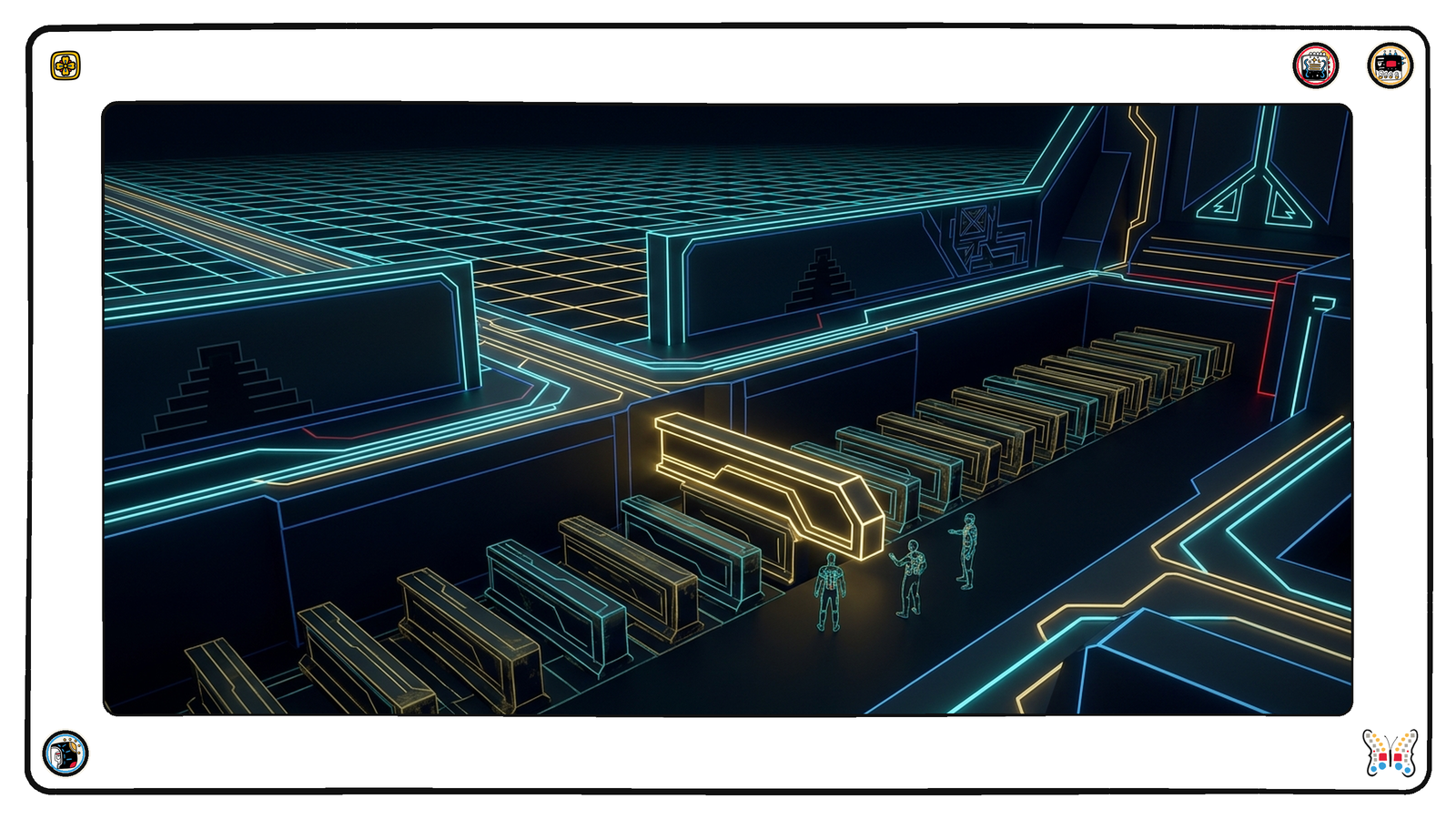
A deep foundation workshop beneath the neon grid
where a single new gold beam of a different shape
has just been slotted into a long row of older
beams, a small crew of tiny figures stepping back
from the joint.
|
📐 The Description Layer
MCP — the lead.
Arazzo merged SOAP. #533 from @frankkilcommins, approved September 16, merged
September 30. The pull request's own summary: SOAP
runs over HTTP, so most of Arazzo already worked for SOAP
workflows, and "only two things were broken: no valid source
description type for WSDL, and no valid way to reference
a WSDL operation from a step." Both are fixed, additively, in the 1.2 line. It is the
first of the four feature pull requests the group plans to
ship together; Protobuf RPC (#556), GraphQL (#567) and actor-in-the-loop (#568) are still open. In the 1.2 development line, not yet
released.
OpenAPI put publishing on its weekly agenda. #5557 from @lornajane: "As discussed in the TDC meeting today, we'll
add the spec/schema publishing pull requests as a link
to our weekly meeting agenda. The intention is that we
publish changes as soon as they can be made
ready." After a month in which a fixed schema sat unpublished
for five and a half months, the TDC has written down that
publishing is a standing agenda item. That is the right
fix, and it is a process change rather than a
specification change. Two boards, as project news: v3.3.0 at 19/39 for a sixth week, and v3.2.1 still open at 10/10 — now past its September 30 due
date, for a release that shipped September 10.
The security proposal was quiet. sig-security #54 has had no commit, review or comment since September 25,
and #51, the proposed move of the existing security objects, is
still open. One small merge, #55, fixed a self link on the moved proposal.
GraphQL installed its release tooling. @benjie merged #1237, adding wgutils "to aid with spec releases," and #1242, copying the published spec versions over from the gh-pages branch. That is preparation for cutting an edition, not
an edition; the newest is still September 2025.
Protocol Buffers merged 49, all copybara. gRPC merged sixteen, mostly xDS test backports across seven
release branches, and bumped to 1.85.0-pre1 on its release branch — cut, not published; the newest
gRPC release is still v1.84.0 from September 11.
AsyncAPI recorded its new board. #3640 marks three existing TSC members as governance board
members in the roster files — the election result, written
down. The specification repository merged nothing for a
third week.
JSON Schema merged nothing for a fourth week. Moonwalk:
ninth consecutive week, last merge March 31,
2025. There is still no OpenAPI 4.
|
|
An underground junction hall beneath the neon grid
where rows of glowing gold nodes stretch into the
distance and tiny figures move along the rows
fitting each node with a small point of identifying
light.
|
📡 Events, Telemetry and the Data Plane
OpenTelemetry made resource detection
entity-aware. #5147 from @jsuereth updates resource detectors to
produce entities rather than raw attributes, adds
an env detector for the environment-variable resource context
propagation defined for entities, and is stated as
non-breaking. It follows last week's entity SDK
startup specification — two weeks, two pieces of the same
model. #5323 lets declarative configuration degrade gracefully when
it meets a resource detector it does not recognise.
OTLP shipped v1.11.1 on September 29. The change worth knowing: every
protobuf field now documents the version it was introduced
in, and new fields must carry a since <version> comment. That is a wire-protocol specification making
its own history machine-readable.
Two OpenTelemetry blog posts, one of them worth a date
check. Go compile-time instrumentation reached v1, closing the gap that left Go without zero-code
instrumentation. And "Deprecating OpenCensus compatibility
requirements" is dated this week, but the specification change it
explains, #5138, merged on June 12. The post is new;
the decision is not.
Envoy shipped four security releases on October
1 — v1.39.2, v1.38.5, v1.37.7 and v1.36.11 — each
fixing CVE-2026-35189, a BoringSSL issue
where certificates with certain CRL distribution points
could be used for remote denial of service during TLS
handshakes. Envoy is an implementation, tracked here for
releases only, and it is on this list because this is the
data plane most of the specifications above run through.
CloudEvents, OpenMetrics and xDS merged
nothing. CloudEvents is stable at 1.0.2 — finished, not dead.
|
|
A long underground archive of stacked gold ledger
plates beneath the grid, where tiny figures slide a
newly cast plate into a freshly built shelf section.
|
🔐 Identity, Policy, Supply Chain
SPDX gave regulation its own annex. #1485 from @zvr moves sections K.2 and K.4 out of Annex K into
a new annex for compliance to regulatory
frameworks in 2.3.1, "as per the 2026-09-22 Tech call
discussion" — a decision from a call, recorded in the pull request
that carried it out. #1494 removed a non-mandatory field from the Minimum Elements
list, and #1382 makes the JSON schema enforce what the 2.3 specification
already said: SPDXID must match the documented identifier grammar and checksumValue must be lowercase hex. Until now, invalid documents
passed schema validation. All in the unreleased 2.3.1
line, whose board went from 35/45 to 48/56 in a week. 3.1-rc2 is still open at 34/49, a week past its due date.
SLSA shipped its first tools. verifier v0.1.0 and attester v0.1.0, both October 4. The specification repository itself
merged two dependency bumps.
TRACE merged 25, 18 by people, and moved
its test suite into the specification repository: #455 consolidates trace-tests into trace-spec/conformance, released as conformance-v0.6.2 with nine positive and eighteen negative
anchor-inclusion vectors and an independent JavaScript
cross-check. PDPP merged three, all
normative core changes from @tnunamak: #384 — one grant per subject, source and purpose, so each
purpose can be approved and withdrawn on its own, plus an
AI-training choice and credential revocation — and #382 adds ODRL and DPV vocabularies.
OSV Schema merged two documentation
changes, clarifying guidance on semantically neutral
identifiers. Sigstore protobuf-specs merged eight, six by bots.
SPIFFE, OpenFeature, OCI Image, OCI Runtime, OCI
Distribution, in-toto, TUF and Notary Project merged
nothing.
|
|
An underground hall beneath the neon grid where a
tall gold lattice framework stands nearly complete,
a few tiny figures on the scaffolding near its top
fitting the last pieces.
|
💹 Financial Services Data Standards
FDC3 3.0 is three issues from done. The 3.0 board went from 41/50 to 47/50 in a week. #2258 from @julianna-ciq makes the reference implementation
advertise 3.0 consistently through getInfo and both Web Connection Protocol handshake paths — the
follow-through on last week's version bump. #2257 reverted a context-dependent fdc3.open timeout behaviour, and #2232 stops bundling the validation runtime into every getAgent() consumer. Seven merges, four human. The board has no due
date, so I will give it one: I expect 50/50 by October 18.
CALM — see the registry finding above.
The tooling's week, for the record: an SDLC Common
Controls domain, standard and pattern in CALM Hub (#3253), snapshot versions for iterating before publishing (#3122), CALM Lab promoted to Active, and a run of OpenSSF
Baseline work across the project.
🏛 From the Foundations
The x402 Foundation got an executive director — and, as above, a place in the registry next week.
The Civil Infrastructure Platform reached IEC 62443 compliance, one of the first open source projects to do so — a
standard an open source project now conforms to, rather
than one it writes. LF Decentralized Trust published a report on institutional adoption of its technologies. The OpenSSF podcast talked MCP and agentic engineering with Angie Jones of
the Agentic AI Foundation, and the CNCF blog made the case for a cloud native agent harness.
SpecRef merged #969, which stops creating dated entries for W3C draft
versions — its w3c.json had grown to 12.1 MB because so many W3C publications
are now automatic. A dependency doing its own maintenance.
Its governance thread, #959, is quiet for a fourth week.
|
|
A long subterranean colonnade of tall plain dark
monoliths receding into blackness, their edges
traced in cold gold, most of them unlit and silent
while the load-bearing neon grid floor runs on past
them.
|
🤫 The Quiet Ones
Fourteen of thirty-three — 12, 19, 16, 13, 15, 19, 14, 15,
now 14. (The registry grew by one this week; MCP was not
quiet.)
Finished, not dead — stable, shipped,
carrying load: CloudEvents (1.0.2, February 2022), OCI
Image, OCI Runtime and OCI Distribution (all at v1.1.1),
Notary Project, xDS, TUF, in-toto.
Quiet and worth watching: JSON Schema — fourth week; the work is at the
IETF. AsyncAPI — third silent week in the
specification
repository. OpenFeature and SPIFFE,
both after small weeks. OpenMetrics.
Silence that is the answer to the question I get asked
most: Moonwalk. Ninth consecutive week.
|
|
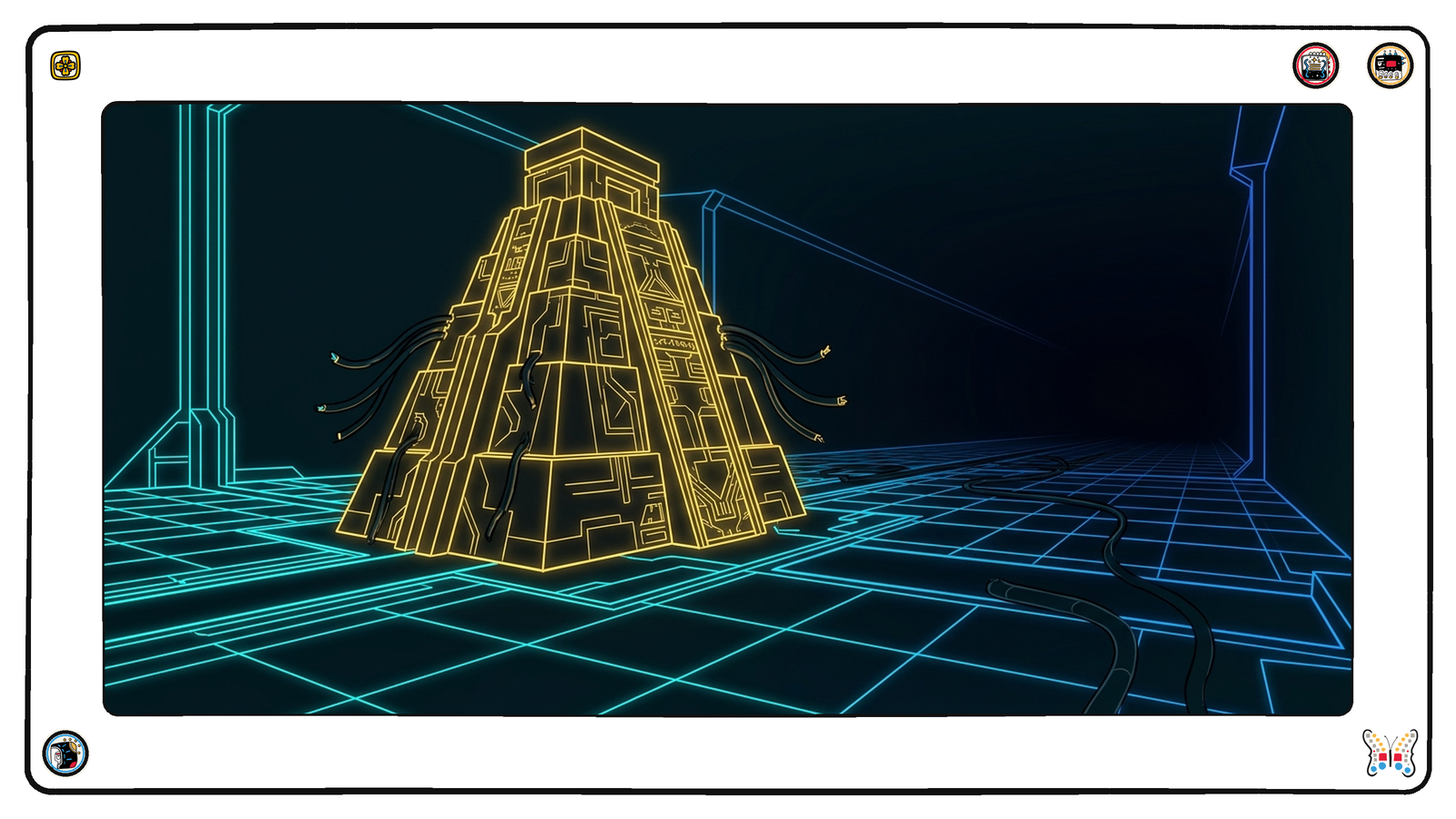
An intact glowing gold structure standing in a
foundation chamber beneath the grid, dark severed
conduits hanging off its sides and lying unlit
across the floor, reaching nothing.
|
📡 Channel Health
All twenty-five working feeds returned for the ninth
consecutive week. Volume: 25 items, from
20.
The OpenAPI Initiative's feed has been silent
since July 22 — eleven weeks. Prometheus/OpenMetrics joins the
dormancy list after two quiet weeks; Protocol Buffers' news last posted September 22, and its per-version
pages, /news/v35/ and /news/v36/, still return 404 — seventh week.
Unchanged since issue one: Sigstore publishes no feed on
any path, Envoy's blog host does not resolve, and
OpenSSF's working feed remains /feed/ while /blog/feed/ and /blog/rss/ answer 200 with zero items.
The dormancy leaderboard, longest first: in-toto (May
2023) · CloudEvents (July 2024) · Notary Project (June
2025) · OCI (April 2026) · SLSA (May 2026) · gRPC (June
2026) · GraphQL (June 2026) · OpenAPI Initiative (July
2026) · AsyncAPI (August 2026) · OpenFeature (August 2026)
· SPIFFE (August 2026) · FINOS (September 3) · SPDX
(September 9) · Prometheus (September 21) · Protocol
Buffers (September 22).
How This Was Made
Every number above came from one harvest run against the
GitHub REST and GraphQL APIs and twenty-five feeds, over
September 27 to October 4, 2026. Merged pull requests are
counted by merged_at inside the window. Bot attribution is by author login,
which counts claude[bot] as a bot even where a maintainer requested the change.
Milestone values are GitHub's own, read live and
stored week over week. The registry is now thirty-three specifications: MCP was added this week with a dated probe note and is
reported alongside the established thirty; the
week-over-week comparison is like-for-like only with it
removed.
Where this issue makes a claim about what a pull request did, I opened it and read its body. The MCP governance
quotes are from #3336, the published SEP guidelines page
fetched this morning, the two Amsterdam notes discussions,
and SEP-3398's own text. The CALM finding is from
#3201, the calm-schema repository's merged pull
requests and tags, and the npm publish times for @finos/calm-schema. The AI Catalog quotes are the chair's comments on
each pull request.
Meetings. I attended none this week. From
the rooms I report outcomes only — something decided,
merged, released or published — and each one was checked
against the repository or the group's own published
notes before it went in. Discussion, plans a group has not
yet carried out, and personal matters are left out. A
proposal counts once it is filed publicly, and is reported
as a proposal.
Standing rules, applied throughout: a
merge to a specification repository is not a change to a
published specification — say draft when it is a draft
(this week: Arazzo's SOAP support and SPDX 2.3.1).
Milestones and planning boards are project news, never
specification news. The registry is a source of findings,
never a boundary on them — this week it found its own
error. Report the specifications' dependencies as
well as the specifications — OAI/build-infra and specinfra/specref merged 3 between them and are counted separately from
the 207. A claim repeated every issue gets re-verified
every issue.
Predictions on the record: MCP's
SEP-3398 passes, and there is no December MCP
specification release. FDC3's 3.0 board reaches 50/50
by October 18. The OpenAPI security proposal gets its
complete OpenAPI description example before its first
approval. Arazzo 1.2 by mid-November. And next issue,
CALM's row points at calm-schema and x402 joins the registry.
|