|
This is the fourth issue of The Specification Layer. Last
week I led on the OpenAPI Initiative telling outside
readers to stop treating its planning board as news. This
week the story is my own list, and what was not on it.
This newsletter window: August 23 through
August 30. Thirty specification repositories and
twenty-five feeds, all read clean for the fourth
consecutive week — no source errored. 85 pull requests merged. 7 releases cut. 23 posts
published. Thirteen of the thirty specifications did not move at
all.
Eighty-five is the lowest merge count I have recorded —
150, then 156, then 109, now 85. Four straight declines. I
was going to write that the specification layer had gone
quiet for the last week of August.
Then I went to look at two things the Linux Foundation
announced mid-week, and I changed my tune.
|
|
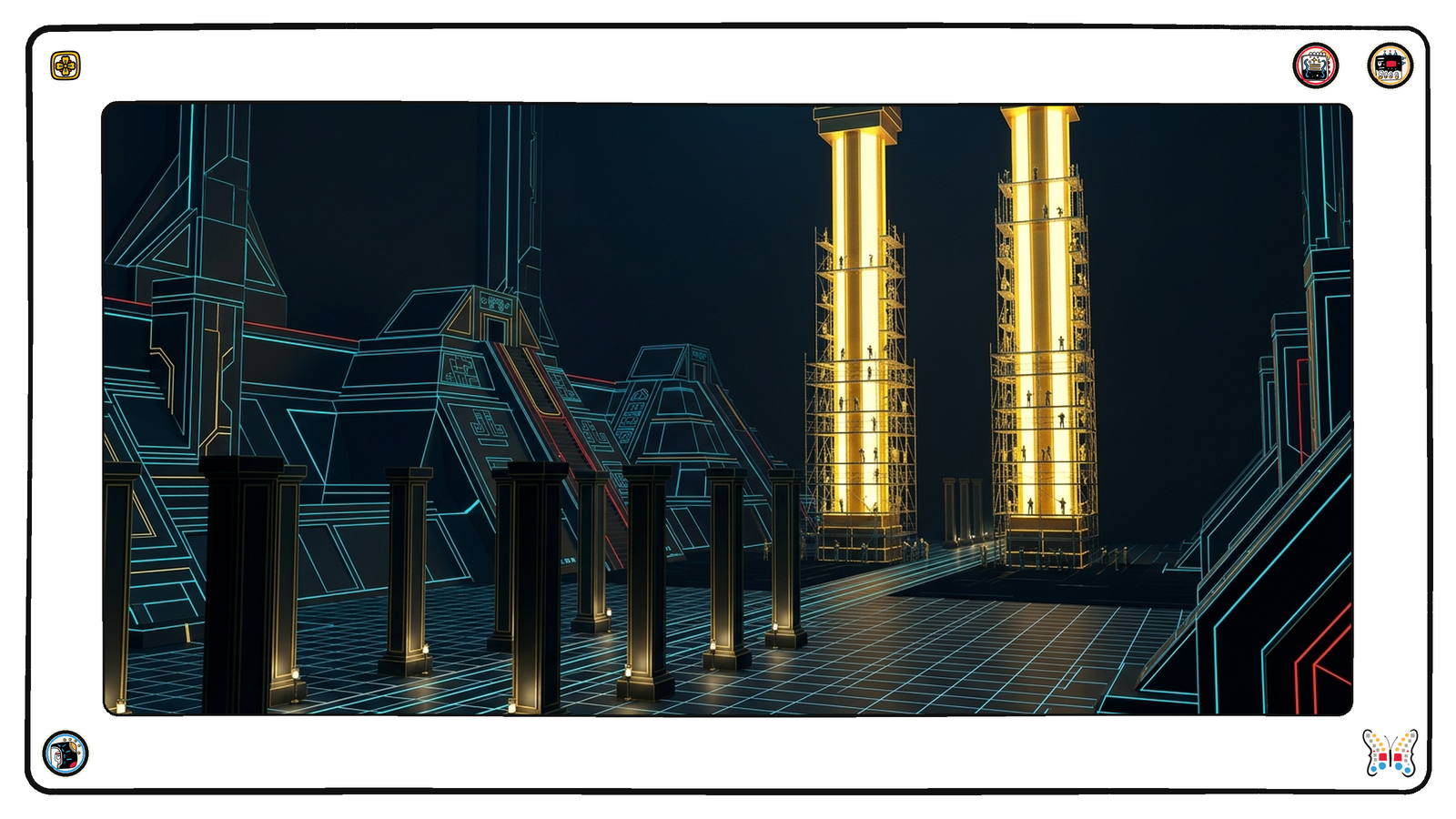
Deep beneath the dark neon grid, a foundation
chamber where a surveyed row of catalogued
gold-edged columns stands dim and unattended in the
foreground, while out past the edge of the surveyed
floor two colossal new gold columns blaze at full
brightness, wrapped in scaffolding and swarming with
tiny working figures.
|
The Lead: The Two Specifications I Was Not Watching
Out-Worked the Thirty I Was
On August 25 the Linux Foundation welcomed TRACE — Trust, Runtime Attestation and Compliance Evidence —
an open specification developed by AMD, Intel, Microsoft, OPAQUE and the Technology
Innovation Institute, now under LF governance. In the foundation's own
words it produces "a standardized, hardware-enforced
governance record that binds together the runtime
environment, software, policies, data classifications and
tool usage into a portable, cryptographically verifiable
artifact that travels with the workload across clouds and
confidential computing environments."
The next day, LF Decentralized Trust introduced PDP-Connect, a personal data consent and authorization specification
lab initiated by the Vana Foundation, whose deliverable is
the Personal Data Portability Protocol —
"an open specification for how a person authorizes an
application's ongoing access to their personal data,
and how that authorization is enforced."
Two announcements, four days apart. I went to look at the
repositories behind them, expecting the usual: a charter,
a README, a roadmap, and a first commit six weeks from
now.
That is not what is in them.
|
Repository
|
Merged PRs, Aug 23–30
|
Human share
|
|
TRACE — agentrust-io/trace-spec (not on my list)
|
28
|
93%
|
|
PDPP — PDP-Connect/pdpp (not on my list)
|
24
|
92%
|
|
Protocol Buffers
|
20
|
0%
|
|
gRPC
|
15
|
53%
|
|
CALM
|
8
|
75%
|
|
OpenAPI Specification
|
7
|
43%
|
|
All thirty tracked specifications
|
85
|
41%
|
Each of them, individually, out-merged every
specification in my registry. Protocol Buffers, the perennial volume leader, merged 20
— and all twenty were a bot. Between them the two unlisted
repositories merged 52 pull requests, 48 of them by people.
My entire tracked layer — thirty specifications, the
OpenAPI Initiative and AsyncAPI and JSON Schema and
OpenTelemetry and SPDX and SLSA and every other name in
this newsletter — produced 35 human merges in the same seven days.
Two specifications nobody has heard of did more human
specification work last week than the thirty that run
the industry.
So the honest version of this week's headline is not
"85 merges, the quietest week yet." It
is 137 merges once both are counted, and
the layer's human share goes from 41% to 61%. The
specification layer was not quiet. My list was incomplete,
and it was incomplete in precisely the direction where the
work is.
This is a structural weakness and it deserves naming
plainly. My registry is thirty repositories I chose by
hand from the Linux Foundation's specification
inventory. A hand-curated list of established
specifications will always be a list
of established specifications. It cannot show me
a new one, and new ones are where the building
happens. A registry curated once goes stale in exactly one
direction: toward the past. Four weeks in, mine already had.
What is actually in them
Volume without substance is the thing I complain about
every week, so here is what those 52 merges were.
TRACE (agentrust-io/trace-spec, created June 3, 2026) is writing schema, not
marketing. #199 put the references block into both the schema and the
model; #219 held every integer in a signed object to the JCS
safe-integer range; #222 fixed tool_transcript.hash to use JCS rather than the registry-anchor format; #203 enforced the PIC bridge schema constraints; #184 opened a draft, non-normative A2A delegation-link verification profile with 23
conformance vectors. The schema/ directory holds four JSON Schema documents, trace-claim.json alone running 19KB.
PDPP (PDP-Connect/pdpp, created July 17, 2026) cut a release inside the window — v1.8.0 on August 25 — and merged normative changes on top of
it: #243 corrected owner-token metadata access and the
effective-filter rule in the Core spec, #250 scoped the Verified Operator claim and sketched a
conformance suite, #244 updated the documents to say PDP-Connect is hosted at
LFDT rather than proposed to it. Seventeen of its 24
merges came from one maintainer, @tnunamak.
And PDPP is squarely this newsletter's beat in a way
I should not have needed a press release to notice.
It profiles OAuth 2.0 and RFC 9396 (Rich Authorization Requests) for personal
data, adding user-defined authorization over which records and under what scope. That is an API
authorization specification — consent as a
machine-readable grant, enforcement as a protocol
obligation instead of a privacy policy — and it has been
shipping releases since July while I was counting
dependabot bumps in repositories that merged nothing.
Why both of these exist
TRACE is downstream of specifications I do track. It composes RATS, EAT,
SCITT, SLSA and SPIFFE into
a single evidence layer. SPIFFE merged nothing at all this
week. SLSA merged the largest specification diff in this
newsletter's short life, which is two sections
down. The specification assembling all of them into an
attestation record for AI agents is moving faster than
any of its inputs.
Both new efforts are about a machine proving something
about itself to another machine — what ran, under what
policy, with what tools, on whose authority, over whose
data. That is the same problem SPIFFE's Transaction
Tokens roadmap named last week, and the same problem
SLSA's new Dependency Track names this week. Four
different bodies, one question.
What I am doing about it. TRACE and PDPP
are in spec_sources.yml as of this issue — I added them, dry-ran both through
the harvester, and the numbers above are that
harvester's output cross-checked against a second
independent query. Thirty specifications became
thirty-two, and both appear in next week's counts as
first-class rows. I am also going to stop treating the
registry as fixed: every LF-family announcement naming an
open specification now gets checked for a
repository before I write the issue.
I do not know how many more I am missing. That is the
honest answer, and it is why this is the lead rather than
two quiet rows added to a config file and a bigger number
reported next Monday.
The machines gave some ground back
|
Who merged it
|
Count
|
Share
|
|
copybara-service[bot]
|
27
|
32%
|
|
dependabot[bot]
|
10
|
12%
|
|
oai-spec-publisher[bot]
|
7
|
8%
|
|
renovate[bot]
|
5
|
6%
|
|
github-actions[bot]
|
1
|
1%
|
|
All bots
|
50
|
59%
|
|
Actual people
|
35
|
41%
|
Four readings now: 59% machine, 54%,
72%, 59%. Last week's 72% was the
outlier it looked like. The headline count fell by 24
while human merges rose from 30 to 35 —
the machines took the entire decline and then some.
The busiest human across all thirty specifications
merged three pull requests, and there
were two of them: @RedZapdos123 in JSON Schema and
@jsuereth in OpenTelemetry. That is what a normal week
looks like in this layer. A single person merging
twenty-eight, as happened in FDC3 three weeks ago, is the
anomaly.

|
|
A vaulted undercroft beneath the neon grid where an
enormous blank gold-edged tablet stands lit, its
vast surface entirely empty and smooth, and a single
tiny figure kneels at its bottom corner adjusting
one minute notch by hand.
|
📐 The Description Layer
OpenAPI's running total of specification text
changed across three weeks is now two capitalized words
and one deleted space.
Seven merges. Four were the publisher bot syncing
branches. Of the three human merges, one was a yarn.lock bump. The other two touched src/oas.md:
-
#5518 from @karenetheridge, +2/-2 — porting last week's "Encoding
object" → "Encoding Object" capitalization onto the v3.3 branch. Her entire PR body: "Can't unsee this 🤷🏻♂️ (Port of
#5515)".
-
#5516 from @handrews, +1/-1 — changing [[RFC 2046]] to [[RFC2046]], because, quoting him, "The RFC resolve does
not understand spaces between 'RFC' and the
RFC number."
Last week I reported that two weeks and twenty-three
merges produced two words of specification text. The third
week added the same two words on a second branch, and
removed a space character. I want to be fair about what
that means: OpenAPI 3.2 shipped in September 2025 and the
project is in maintenance and design at once. Editorial
precision in a normative document is real work — a stray
space that breaks reference resolution is a genuine defect
in a published artifact. But if you are waiting on new
OpenAPI capability, the repository is not where it is
happening right now.
The milestone baseline held, and I said I would
check. Last week I reported the v3.3.0 milestone description
reading "INTERNAL USE ONLY. Our process is not your
process…" and admitted I could not prove it was new,
because I had never recorded milestone descriptions. I
record them now. This week's description is byte-identical to last
week's. The board itself went from 18/39 closed
to 19/39 (46% → 49%), one issue finished,
no items added or removed, updated_at now August 27. No maintainer has told me the label
predates August 21; if one does, I will say so here.
Reported as project news, not specification news, per the
rule the OAI wrote and I adopted.
A prediction I am putting on the record. v3.2.1 has been 10 of 10 closed for two
consecutive weeks, with a due date of September 30. The newest release on that repository is OAS 3.2.0, from September 19, 2025. A patch milestone that is fully closed and not yet
released is exactly the kind of thing worth grading myself
on: either 3.2.1 ships in the next four weeks, or a
finished board sits unshipped and I will report that
instead.
The most useful thing in the OpenAPI repository this
week was a question, not a merge. Discussion #5504, opened August 20 by @lucdev01234-png, asks how teams
enforce organization-specific rules that go beyond the
specification — required security schemes, naming
conventions, deprecation policies, consistent error
responses, breaking-change detection. Three answers
arrived in the window, and they are three different tools:
a TypeScript schema DSL, Spectral and vacuum in
APIOps-style pipelines, and Redocly CLI custom rules. That
boundary — what the specification says versus what your
organization has to enforce on top of it — is the most
consequential unspecified surface in the whole description
layer, and it is being answered by tool choice, one
company at a time.
JSON Schema merged three pull requests, all from the
same outside contributor, for the third consecutive
week. @RedZapdos123 merged #1767 (typos in an ADR), #1768 (an allOf example in specs/proposals/vocabularies.md) and #1770 (the meta test-suite harness, allowing invalid schema
fixtures). No other human merged anything in that
repository this week.
Applying the rule, which by now is muscle memory: an ADR, a proposal document and a test harness. None of
it is published specification, and none of it changes
anything you are running. #1767 is a +2/-2 typo fix to adr/2022-09-decouple-from-ietf.md — the same 2022 architectural decision record that in my
very first issue I nearly reported as breaking governance
news off the strength of its title. It is a document from
four years ago, and this week somebody fixed two typos in
it. That is the whole story, and knowing that it is the
whole story is the entire point of reading the diff.
Arazzo merged five pull requests and not one of them
was written by a person — two publisher syncs, one dev sync, and dependabot on
respec and vitest.
Overlay did not move at all, and now I can date the
stillness rather than just count weeks. No merges, no releases, no commits. Its three milestone
boards are not merely unchanged — Release 2.0 (4/7) has an updated_at of December 16, 2025, and Release 1.2, which is 7 of 7 closed, was last
touched July 28. A completed 1.2
milestone has now gone unshipped through four consecutive
issues of this newsletter, and nobody has touched the
board in five weeks.
AsyncAPI merged nothing for the fourth straight
week, its "Issues to consider before 3.0.0" board still 25/28. GraphQL merged nothing. Moonwalk merged nothing — fourth
consecutive week, last merge March 31, 2025. There is
still no OpenAPI 4 in progress, and that remains the
answer to the question I get asked most.
Protocol Buffers merged 20 pull requests and every
single one was copybara-service[bot] — Google's monorepo exporting outward, zero human
merges in the window. Substantively it is Edition 2026
groundwork continuing: negative UninterpretedOption field tags for interpreted option locations landing
three separate times, UTF-8 validation option levels added
to the upb JSON decoder, an InlinedStringField memory leak fixed, and testing dropped for the 35.x
branch.
And the channel finding from last week has not moved: protobuf.dev/news still describes v34 as its newest
version. I re-fetched /news/v35/, /news/v36/ and /news/v37/ this morning. All three return 404.
gRPC shipped two patch releases, v1.83.1 and v1.82.2, both on August 27, carrying backported fixes for a
GoAway and message-compression bug and a memory
optimization across both branches. Fifteen merges, eight
by people — release engineering and backports, as always.
None of it touches the protocol.
|
|
A subterranean service corridor beneath the grid
floor, its telemetry conduits lit gold and flowing,
where human figures have returned to the junction
boxes and work side by side with the automaton arms
on rails.
|
📡 Events, Telemetry and the Data Plane
OpenTelemetry came back, and it came back doing
specification work.
Last week OTel and OTLP merged six pull requests between
them and zero were human. I wrote that
one week is not a trend and it was worth watching whether
the spec repos returned. They returned: 12 merges across the two repositories, 8 of them by
people, and three of them changed specification text.
-
#5265 from @dashpole, specification/metrics/sdk.md +18/-11 — clarifying how maxExportBatchSize behaves on the Periodic exporting MetricReader,
including that exportTimeoutMillis applies to each individual Export(batch) invocation. The PR states the clarification came out
of feedback and findings from prototype
implementations, which is the healthiest possible reason for a
specification to change: somebody built it, it was
ambiguous, the document got fixed.
-
OTLP #845 from @jsuereth, docs/specification.md +28/-0 — a note on UTF-8 handling written explicitly to
help implementors. Twenty-eight lines is the largest
single addition to OTLP's specification document
in four weeks of harvesting.
-
OTLP #853, also @jsuereth, moving attribute examples in trace.proto and profiles.proto to the latest semantic conventions.
#5285 from @cijothomas also filled in the Rust and .NET columns of the SDK self-observability compliance matrix,
following Go two weeks ago. A compliance matrix that gets
filled in language by language, in public, is a
specification checking its own reach — I said the same
when the Prometheus exporter section was stabilized off a
written conformance survey, and it is still the practice I
most wish other bodies copied.
CloudEvents merged one pull request —
@octaviospain ticking the Kotlin SDK's JSON event
format column. Standing note, because it matters every
time this project appears in a low-activity list:
CloudEvents has been stable at 1.0.2 since 2022 and carries an enormous share of the industry's
event plumbing. That is finished, not dead.
OpenMetrics and xDS merged nothing. Envoy cut four patch releases —
v1.39.1, v1.38.4, v1.37.6 and v1.36.10 — and is excluded
from pull-request counting by design, because it is an
implementation and its volume would drown every real
specification in this issue.
|
|
A deep foundation vault where an enormous new
gold-edged tablet, far larger than the small
weathered tablets standing around it, is lowered
into place on heavy cables and scaffolding, still
wrapped in loose provisional ropes and temporary
bracing.
|
🔐 Identity, Policy, Supply Chain
SLSA merged the largest specification diff I have
recorded in four weeks of doing this, and it is a whole
new track.
#1627 from @mlieberman85, merged August 29:
|
File
|
Change
|
|
spec/dependency-track.md
|
+1,063 / −80
|
|
spec/dependency-provenance.md
|
+497 / −0 (new)
|
|
spec/threats.md
|
+144 / −9
|
|
spec/tracks.md
|
+32 / −5
|
The Dependency Track defines requirements
for the ingestion of third-party build dependencies, with
a per-ingestion attestation — Dependency Ingestion
Provenance — emitted by a Dependency Ingestion Platform.
Three levels, quoting the specification text
directly: L1 Inventoried (identity
recorded), L2 Controlled (configured
ingestion path including transitive dependencies,
identity-verification verdicts MUST be verified, the platform signs the Provenance), and L3 Screened (bypass structurally blocked, signing infrastructure
isolated from dependency code, and cross-dependency
ingestion isolated "so a hostile dep cannot subvert
the Provenance about itself or about other deps — the Shai
Hulud threat model").
It imports the attestable subset of the OpenSSF Secure Supply Chain Consumption Framework (S2C2F), explicitly referring S2C2F requirements that
describe organizational practice rather than per-artifact
evidence to the OpenSSF Security Baseline instead. That boundary
— what belongs in a machine-checkable attestation versus
what belongs in a policy document a human reads — is drawn
more carefully here than in most specifications I read.
It is a draft. The pull request adds both
pages to www/_data/nav/draft.yml, under /spec/draft/. Seventeen hundred lines of new normative-shaped text is
not a released SLSA level, nothing is conformant to it,
and nobody is being graded on it today. I am flagging that
as prominently as the diff size because that is the rule
this newsletter now runs on.
One more thing about #1627, reported flatly. The author's own PR body says: "I took some of S2C2F requirements that made sense
and were attestable along with some other thoughts. … I
used Claude to help structure, do some sanity checking,
and to bounce ideas off of." A maintainer disclosing LLM assistance, unprompted, in
the pull request that lands the largest specification diff
of the week is a data point about how specification text
is going to get written from here. I am not going to
editorialize about whether that is good. I am going to
note that it was disclosed, that disclosure is the part
that makes it possible to have any conversation about it
at all, and that I would rather every specification
body's contribution norms made that the default than
have to infer it.
SPDX added signing and attestation to SPDX 3. #1468 from @JPEWdev adds docs/signing.md (+12) and docs/attestation.md (+8) plus the navigation entries — short sections
describing how SPDX documents can be signed or used for
attestation. Small in lines, load-bearing in intent: an
SBOM nobody can verify the provenance of is a text file.
SPDX opened a third release candidate milestone before
finishing the second. A 3.1-rc3 milestone appeared on August 26 carrying one issue, while 3.1-rc2 sits at 27 of 44 closed — 61%, up
exactly one issue from last week. And 3.0.2 is unchanged at 33/38 for the fourth consecutive week,
with a due date of 2026-04-30 — now four
months past. Project news, not specification news, and I
will keep counting the weeks.
Which lands awkwardly against the calendar,
because August 30 was the last Sunday before September, and OpenSSF spent its fourth consecutive week leading
on the EU Cyber Resilience Act:
-
A case study on Ericsson Software Technology, which met its CRA obligations by eliminating
private forks and going upstream — 214 security pull requests and over 1,400
dependency-bump pull requests merged. Read that number next to this issue's bot
table. The compliance regime arriving in Europe
produces dependency bumps at industrial scale, and
dependency bumps are what the machines already do.
-
Podcast #70 with Red Hat's Dave Russo on private forks, CRA
deadlines and the legal distinction between
manufacturer and steward.
-
BOMHort joining the OpenSSF Sandbox — Kubernetes-native SBOM
visualization and governance, framed on the
observation that generating an SBOM "has shifted
from a best practice to a strict requirement."
OCI Distribution clarified where a blob push
goes. #619 from @sudo-bmitch, spec.md +9/-5, preserving the historical /v2/<name>/blobs/uploads/<unique-id> location value — and the PR body says it came straight
out of that day's project meeting, "where we
didn't want to lose the historical value." That
is the only OCI specification that ships an OpenAPI, and
it is the only one of the four OCI repositories that
moved.
Everything else in this section was maintenance or
silence. OpenFeature merged one dependabot security-alert sweep.
OSV Schema and in-toto Attestation merged one dependabot
bump each. SPIFFE merged nothing — one
week after publishing the twelve-month standard roadmap I
called the most consequential item in that harvest, its
Filesystem Delivery proposal (PR #376) is still open and unmerged, and the Transaction Tokens
PR still has not been posted. Sigstore, TUF, Notary Project, OCI Image and OCI
Runtime all merged nothing.
|
|
An understructure beneath the neon grid where a
small crew of figures fits a single precise
interlocking gold joint between two massive beams
that did not previously meet, the seam glowing hot.
|
💹 Financial Services Data Standards
FDC3 changed its actual interface this week, and it is
the kind of change that only comes from someone hitting
the ambiguity in production.
#1942 from @Roaders adds an optional newInstance parameter to raiseIntent and raiseIntentForContext, resolving #1940: a bare-appId raiseIntent could not distinguish "open a new instance"
from "target this app, resolve normally." The
semantics are now explicit — newInstance: true MUST launch a new instance even if instances are
running; false MUST use an existing one and rejects with ResolveError.TargetInstanceUnavailable if none is available.
Twenty-six files, and the ones that matter are
normative: packages/fdc3-schema/schemas/api/raiseIntentRequest.schema.json, raiseIntentForContextRequest.schema.json, packages/fdc3-standard/src/api/DesktopAgent.ts, website/docs/api/ref/DesktopAgent.md and website/docs/api/specs/desktopAgentCommunicationProtocol.md, plus conformance tests in the toolbox. Schema,
interface, reference documentation, wire protocol and
conformance suite all moved together. That is what a well-run specification change looks
like, and it is rarer than it should be.
@Roaders also fixed intermittent failures in the fdc3.destructuredMethods conformance tests. Five of FDC3's seven merges were
dependabot.
The FDC3 3.0 board recovered. Last week I
reported it going backwards — 26 closed of 43, two issues
added and none finished. This week: 29 of 42, 69%, three closed and one item removed. Project news,
and the correction to my own framing is that a board
dipping for one week means very little.
I also owe an amendment to last week's
thesis. I wrote that FDC3's throughput rests on a very
small number of people, after @julianna-ciq merged 28 pull
requests in one week and then 1 the next. This week she
merged none, and @Roaders merged two, one of them the most
substantive interface change in the entire harvest. So the
shape is not "one person carries it" — it is
"a small number of people carry it, and which one is
carrying it changes week to week." Two weeks of data
corrected a thesis I built on one week of data, which is
the argument for keeping the record rather than the
impression.
CALM shipped tooling again while the CALM schema did
not — fourth consecutive week. cli-v1.57.0 on August 24. Eight merges, six of them human:
@willosborne added GLOBAL_ADMIN-gated delete endpoints for every resource type in
calm-hub, @rocketstack-matt added a browser-safe @finos/calm-shared/browser entry point and sanitized PR head-ref usage in a publish
workflow, @byrash brought layout parity between calm-hub
and the code plugin, and @jimthompson5802 added a MAINTAINERS_GUIDELINES.md. A healthy, active project. The
architecture-as-code schema — the specification
part — has not changed in a month of watching.
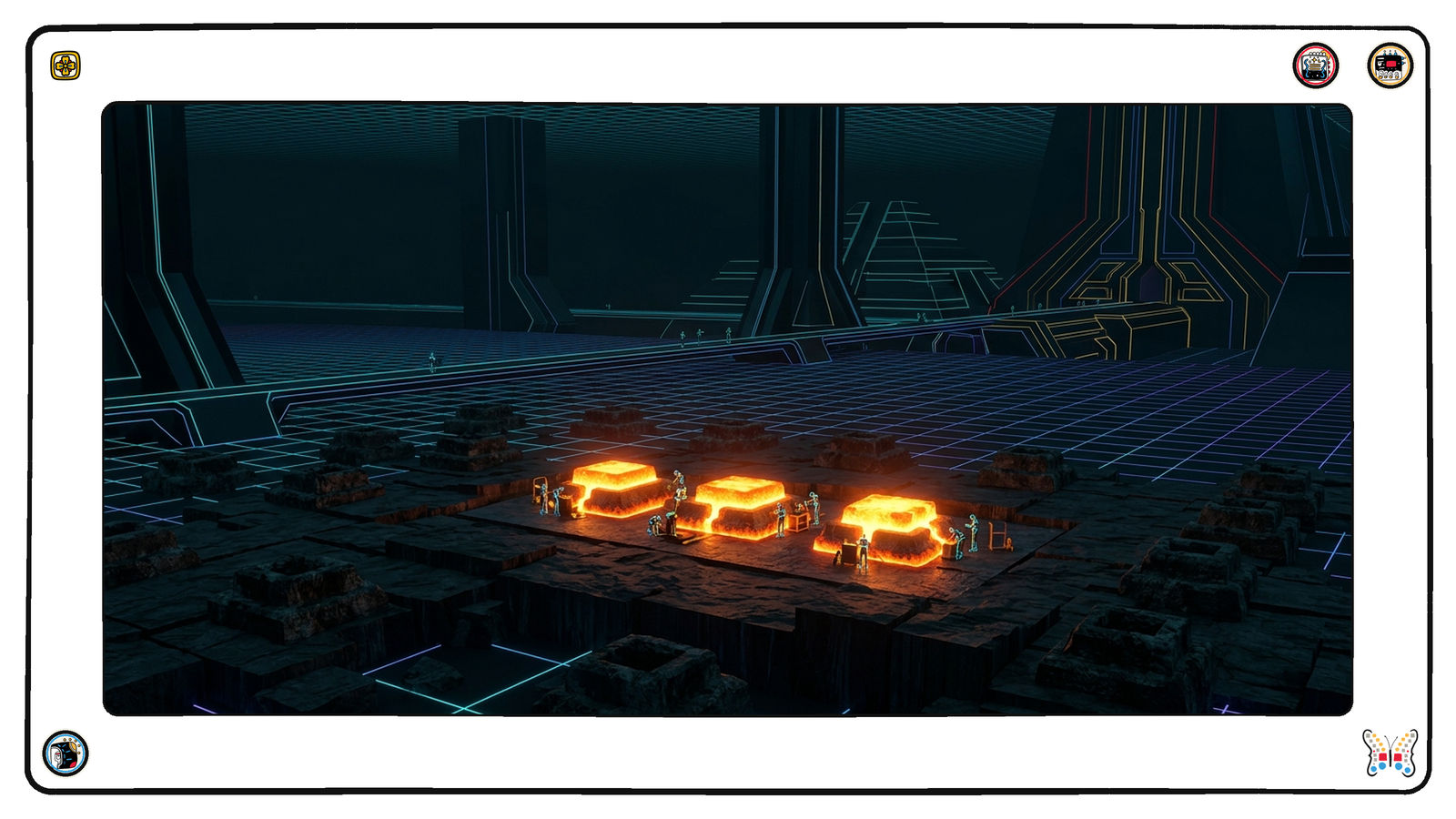
|
|
A wide bedrock plain far beneath the neon grid where
exactly three freshly cut gold footings glow hot and
molten side by side, tiny figures working around all
three, while many older cold weathered footings sit
dark across the rest of the plain.
|
🏛 From the Foundations
Three specification-shaped efforts were founded or
adopted in one week, which is the context that makes the lead more than a
story about my registry.
TRACE (August 25) and PDP-Connect (August 26) are the lead, above — an AI-agent attestation record
and an OAuth 2.0 / RFC 9396 profile for personal data
authorization, and between them 52 merged pull requests in
this window alone.
AIRSEAI — LF AI & Data welcomed a collaborative framework contributed by the Shenzhen
Institute of Artificial Intelligence and Robotics for
Society, aimed at robotics fragmentation and
cross-platform hardware interoperability. Further from
this newsletter's beat than the other two, and I am
noting it rather than tracking it — but
"fragmentation and cross-platform
interoperability" is the sentence that precedes a
specification roughly every time.
Two of those three exist because of AI agents or the
data they consume, and OpenSSF spent the week promoting the Secure Agentic Framework at AGNTCon +
MCPCon North America while the Linux Foundation promoted the Tokyo edition. The agent layer is where new specification bodies are
being started right now, and it is being started by
hardware vendors and cloud providers, not by the API
community.
CNCF published governance guidance drawn from reviews
across 72 projects — what the CNCF requires at each maturity level versus
what the data recommends. Worth reading if you maintain anything with more than
one maintainer.
Elsewhere: LF Networking published the FD.io CSIT 26.06 release report on repeatable networking performance testing; LF Edge
ran open digital twins at the edge from the State of the Edge Report 2026; and Mandy
Chessell published part two of the Egeria series on its new metadata web interfaces.
|
|
A long subterranean colonnade of tall blank dark
monoliths receding into blackness, their edges
traced in cold gold, standing silent while the
load-bearing neon grid runs on past all of them.
|
🤫 The Quiet Ones
Thirteen of thirty specifications recorded no merged
change, no release and no commit in the window — down from
16, 19 and 12 in the three prior weeks. The quietest
reading yet, on the smallest merge count yet.
Finished, not dead — stable, shipped,
carrying enormous load right now: OCI Image (last merge
2017), OCI Runtime, TUF, Notary Project, xDS, Sigstore
protobuf-specs. CloudEvents technically merged one column
tick and so is not on the list, but the same note applies
to it.
Quiet and worth watching, where silence
is ambiguous and I keep
counting: Overlay (four weeks, Release
2.0 board untouched since December 2025, a completed 1.2
still unshipped), AsyncAPI Specification and AsyncAPI community (four weeks,
3.0.0 board frozen at
89%), OpenMetrics (2.0 still
experimental), GraphQL.
SPIFFE is here on merges for the second
week and should not be read as idle — its roadmap is the
most substantive identity work in the layer, and the
specifications on it are proposals that have not landed.
Counting pull requests cannot see that, which is a
limitation of my method and not a judgment on theirs.
Silence that is the answer to the question I get asked
most: Moonwalk. Fourth consecutive week, last merge March 31,
2025. There is no OpenAPI 4 in progress.
|
|
An intact glowing stepped structure standing on the
neon grid with a thick bundle of conduits running
off it into the dark, the far ends severed and
fraying loose above the floor.
|
📡 Channel Health
All twenty-five working feeds returned for the fourth
consecutive week, and volume nearly doubled — 24 items,
then 17, then 13, now 23. Almost all of
the recovery is foundation channels: CNCF alone published
seven posts, OpenSSF four.
The OpenAPI Initiative's feed has now been silent
since July 22 — six weeks, spanning a build-system migration, a
dropped release date, a planning board relabeled internal
use only, and a fully-closed patch milestone. Nothing
about any of it has reached the announcement channel.
Protocol Buffers is unchanged and I re-verified it this
morning: protobuf.dev/news newest entry is v34; /news/v35/, /news/v36/ and /news/v37/ all return 404. Twenty merges landed in that repository
this week and its news channel has not described the last
two major versions.
Unchanged since issue one: Sigstore publishes no feed on
any path, Envoy's blog host does not resolve, and
OpenSSF's working feed remains /feed/ while /blog/feed/ and /blog/rss/ both answer HTTP 200 with zero items.
The dormancy leaderboard, longest first: in-toto (May
2023) · CloudEvents (July 2024) · Notary Project (June
2025) · OCI (April 2026) · SLSA (May 2026) · gRPC (June
2026) · GraphQL (June 2026) · Prometheus/OpenMetrics (June
2026) · SPDX (June 2026) · Protocol Buffers (July 2026) ·
OpenAPI Initiative (July 2026).
SLSA is on that leaderboard while merging the biggest
specification diff of the week. Its blog has not posted since May. If you followed SLSA
through its announcement channel you do not know the
Dependency Track exists.
How This Was Made
Every number above came from one harvest run against the
GitHub REST and GraphQL APIs and twenty-five feeds, over
August 23 to August 30, 2026. Merged pull requests are
counted by merged_at inside the window. Bot attribution is by author login.
Milestone percentages and descriptions are GitHub's
own values, read live and now stored week over week so a
change to one can be dated. Week-over-week deltas compare
against stored harvests, not memory.
Where this issue makes a claim about what a pull request did, I opened it and read its file list, its diff or its
body. The OpenAPI "two words and a space"
finding is the full patches of #5518 and #5516.
SLSA's Dependency Track levels are quoted from the
merged text of spec/tracks.md, and its draft status is the diff to www/_data/nav/draft.yml. Protobuf's missing news pages are three HTTP 404s
I fetched myself this morning.
Standing rule, applied throughout: a
merge to a specification repository's default branch
is not a change to a published specification. Most of
these repositories hold the work-in-progress next version;
the released artifact lives on the standards body's
own site. SLSA's Dependency Track, JSON Schema's
three merges and OpenAPI's v3.3 branch are all drafts, and are described as drafts.
TRACE's and PDPP's merge counts are that
repository's merged-PR list filtered to the same
window by the same rule as every other repository in this
issue. Because they were not in the registry when the
harvest ran, I counted them twice by two independent paths
— a direct API query, and a dry run of the harvester
itself against the new registry rows — and both returned
28 and 24. Neither is included in the 85.
Registry change this week: agentrust-io/trace-spec and PDP-Connect/pdpp are now in spec_sources.yml, verified by live probe on 2026-08-31, and both appear
in next week's counts. Thirty specifications became
thirty-two.
|