|
This is the first issue of a new thing. Every week I read
the API industry's blogs. That newsletter still goes
out, and it covers what vendors and
practitioners wrote. This one covers something
different and much less visible: what actually changed
inside the specifications themselves. Not the commentary
about OpenAPI — the merges into OAI/OpenAPI-Specification. Not a post about supply-chain security — the diff that
added WordPress to the OSV schema.
The Linux Foundation quietly became the neutral home of
nearly every contract that describes an API. OpenAPI and
its new siblings Arazzo and Overlay, AsyncAPI, GraphQL,
JSON Schema, gRPC, CloudEvents, OTLP, OpenMetrics, xDS,
SPIFFE, OpenFeature, SPDX, OpenChain, the three OCI specs,
in-toto, OSV, SLSA, TUF, Notary, Sigstore — one
foundation, one IP framework, one governance model. Add
Protobuf, which is Google's and not LF-governed but
sits underneath half of the above, and FINOS's FDC3
and CALM, and you have thirty repositories that between
them define how REST, event-driven, RPC, and GraphQL APIs
are described, how telemetry is encoded, how workloads
prove identity, and how software artifacts are signed and
inventoried.
Nobody publishes a weekly read of those thirty
repositories. So I built one. Here is week one.
The window: August 2 through August 9.
Thirty specification repositories and twenty-five feeds,
all read clean — no source errored, which will not always
be true and which I will always tell you when it
isn't. 150 pull requests merged. 4 releases cut. 24 posts
published.
|
|
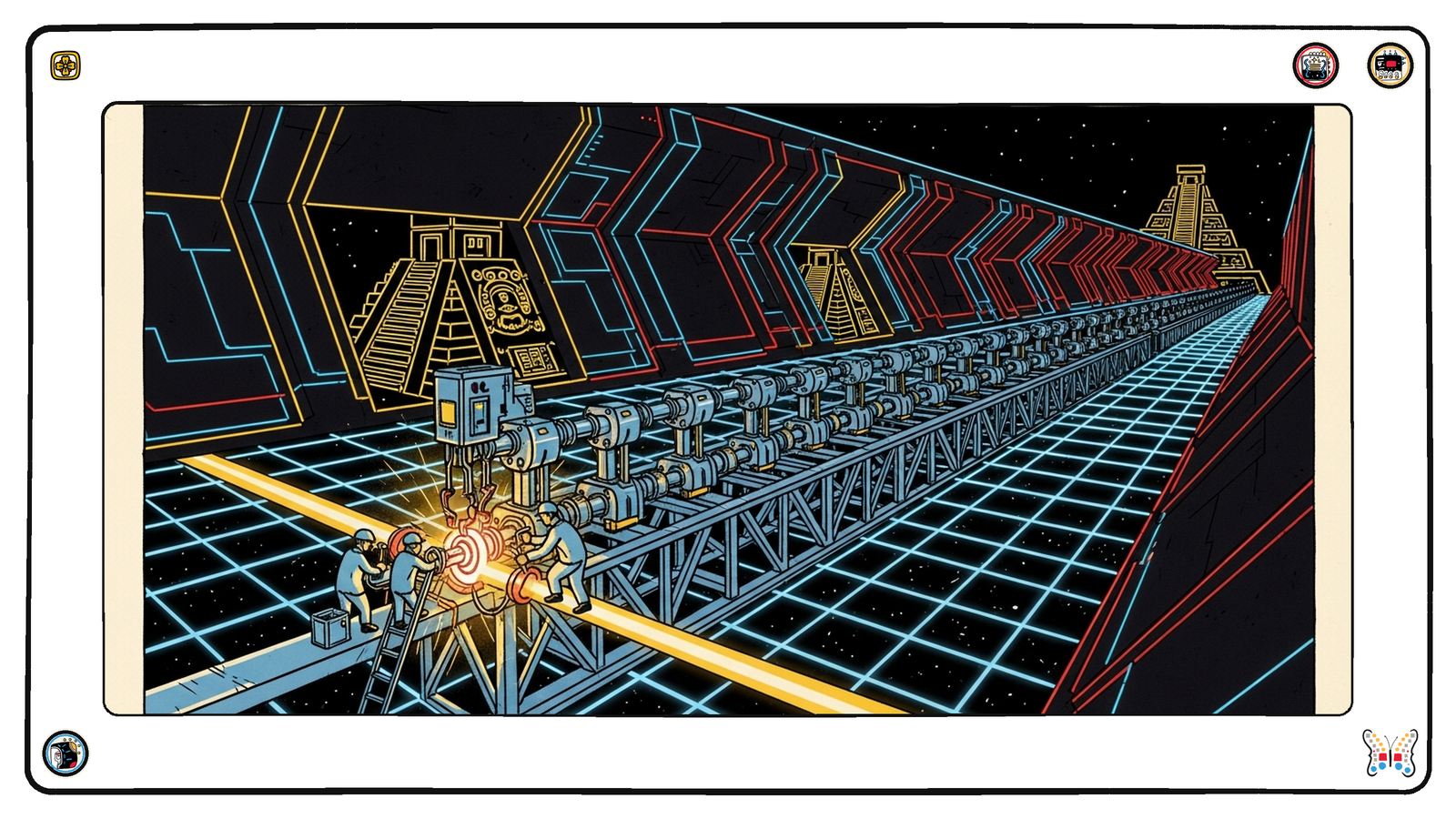
Beneath the dark neon grid, a long steel gantry
carrying an endless line of identical automated
riveting arms working a gold seam, while at one
point three small figures on a ladder set a single
glowing joint by hand.
|
The Lead: 59% of Specification Activity Is Now Machines
I expected to open this newsletter with a version number.
Instead I want to show you the composition of that 150.
|
Who merged it
|
Count
|
Share
|
|
copybara-service[bot]
|
34
|
23%
|
|
dependabot[bot]
|
29
|
19%
|
|
renovate[bot]
|
13
|
9%
|
|
oai-spec-publisher[bot]
|
11
|
7%
|
|
github-actions[bot]
|
2
|
1%
|
|
All bots
|
89
|
59%
|
|
Actual people
|
61
|
41%
|
Fifty-nine percent. If I had led with "150 changes
landed in the specification layer last week," that
would have been true and it would have misled you. Most of
the motion in these repositories is a dependency bump, a
branch sync, or an internal export from a company's
private monorepo.
This is not a complaint. Branch-sync automation is how the
OpenAPI Initiative keeps four live version branches
coherent; copybara is how Protobuf's development inside Google reaches
the public repo at all. That plumbing is doing real work.
But it means any headline count of specification activity is mostly
measuring robots, and I would rather establish that in issue one than
quietly inflate a number every week for a year.
The interesting cut is the inverse. Four specifications
had zero bot merges last week — every
single change was made by a person: JSON Schema (7), SPDX (7), SLSA (3),
and SPIFFE (1). Those four are also the
ones where the merges are prose: wording, grammar,
definitions, conformance dependencies. That is what a
specification under genuine editorial work looks like, and
it does not scale, and it does not automate.
Meanwhile FDC3 merged 18 pull requests of which 15 were
dependency bumps, and Protobuf merged 35 of which 31 were
machine exports. Same headline number, completely
different week.
|
|
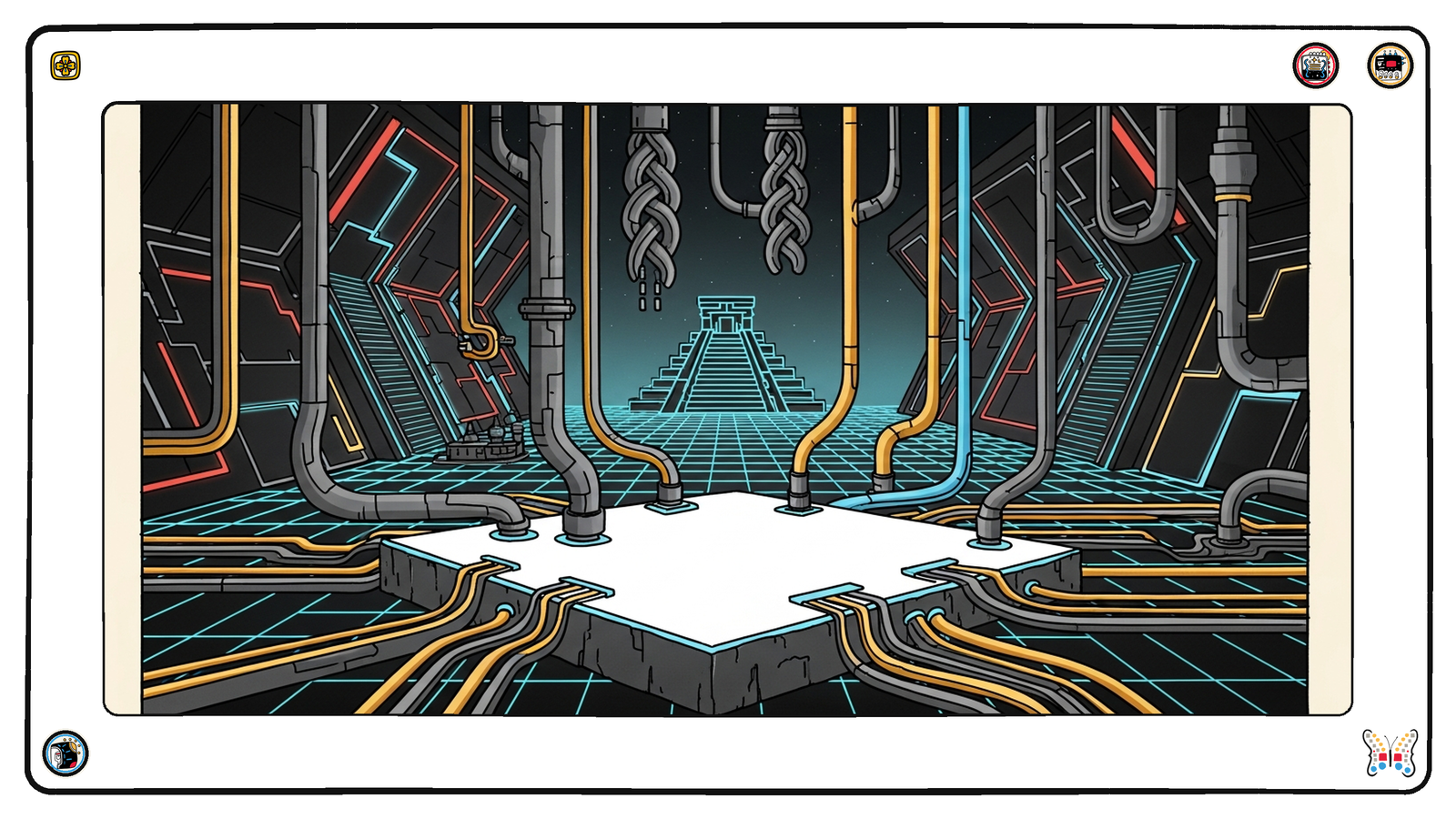
A foundation chamber underneath the neon grid,
dozens of gold and grey conduits converging from
every wall down into one blank white slab set into
the floor, the distant grid city visible through the
opening beyond.
|
📐 The Description Layer
OpenAPI has a patch release fully loaded and nobody has
pulled the trigger. The v3.2.1 milestone stands at 9 of 9 issues closed — 100% — with a due date of September 30. Everything scoped for
that patch is done. Sitting next to it, v3.3.0 is at 17 of 45 closed (38%) with a due date of
September 3rd: twenty-eight open issues and about three and a half
weeks. One of those two dates is going to move. Watch
which one.
The human merges into OAS this week were small and honest
— @karenetheridge fixing whitespace mistakenly introduced
into v3.2 and v3.3, and a schema error in contentType on v3.1; @handrews fixing a dead Slack invite link
twice. The other eight of thirteen were the publisher bot
syncing dev, v3.1-dev, v3.2-dev and v3.3-dev.
The genuinely interesting OpenAPI activity was
in discussions, not merges, and both are
the kind of question that has bitten every one of us:
JSON Schema is the one to watch, and the story is
governance. Seven merges, all human, all editorial: RFC-2119 keyword
matching fixed so it stops matching inside other words,
meta-schema paths resolved as file URLs for Windows,
grammar in the media-type descriptions. Ordinary spec
hygiene.
But two of those seven touch the IETF, and that is not
ordinary. #1748 "Update dates so ietf builds don't
break" merged August 3rd, and #1752 merged August 7th fixing wording in a file called adr/2022-09-decouple-from-ietf.md. JSON Schema wrote a formal architecture decision record
in 2022 to decouple from the IETF — and this week
they were maintaining the IETF build so it wouldn't
break, and polishing the language of the decoupling
decision itself.
Meanwhile the IETF has an active jsonschema working group, charter revision 01,
last touched 2026-04-30. I checked the datatracker
directly rather than take anyone's word for it. So
the specification that is the connective tissue underneath
OpenAPI, AsyncAPI, CloudEvents, OSV and SPDX has a
standing decision to leave the IETF and a live IETF
working group at the same time. JSON Schema also
ships no GitHub releases at all — it
versions by draft, still 2020-12. If you build tooling on
JSON Schema, the question of where the next version gets
decided is not settled, and this week is the first week I
have seen both threads move at once.
Arazzo and Overlay were pure housekeeping
— four and two merges, almost all bots. Worth noting the
milestone boards anyway: Overlay has Release 1.2 at 7/7 closed (100%), Release 2.0 at 4/7, and a Release 1.3 that is 0/3.
Arazzo shipped 1.1.0 back in May.
AsyncAPI merged three dependency bumps
and nothing else. Its "Issues to consider before
3.0.0 Release" milestone sits at 25/28 — 89% — and
has been close for a while. The one real signal was
in asyncapi/community, where the roadmap docs were removed to align with the website
and changes in community direction. Deleting your public roadmap is a decision, not a
chore. The July community update landed August 3rd.
Protocol Buffers cut v36.0-rc2 on August 3rd and merged
35 changes, 31 of them machine exports from Google's
monorepo. Their own July 13th news post says Edition 2026 is planned for the 36.x line in Q3
2026 — so that release candidate is the vehicle for a new
edition, and Q3 has about seven weeks left in it.
gRPC merged four, including GOAWAY support in the PH2 server work. GraphQL merged nothing at all — more
on that below.
|
|
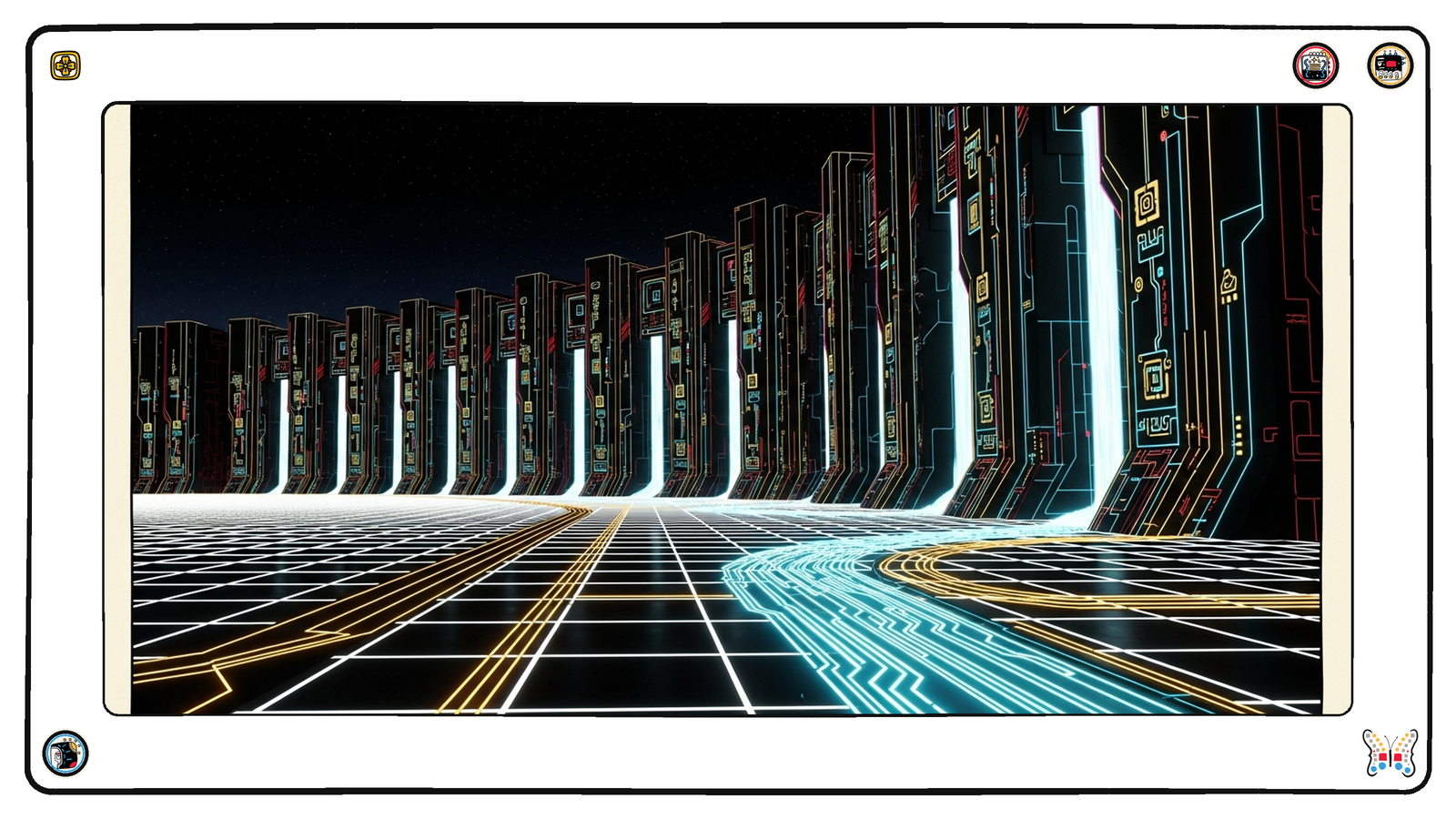
A service corridor running below the grid floor, a
receding rank of tall dark bulkheads with light
spilling between them, gold and cyan streams of
telemetry curving along the plating underfoot into
the distance.
|
📡 Events, Telemetry and the Data Plane
OpenTelemetry was the busiest genuine specification of
the week — 15 merges, only 5 from bots, and unlike most of this
issue they were substantive:
And #5252, "Release 1.60.0", merged August 7th — the tag was not yet published when
I harvested, so treat 1.60.0 as cut but not shipped. opentelemetry-proto merged six, mostly dependency work plus removing BCR publishing.
Their blog also published a practical guide to metric cardinality limits — the memory-safety valve in the metrics SDK, which is
exactly the kind of thing nobody reads until an incident.
CloudEvents, OpenMetrics and xDS merged
nothing. For CloudEvents that is the steady state — the spec has
been stable at 1.0.2 since 2022 and a graduated, finished
specification is allowed to be finished. I will keep
saying that rather than implying decay.
|
|
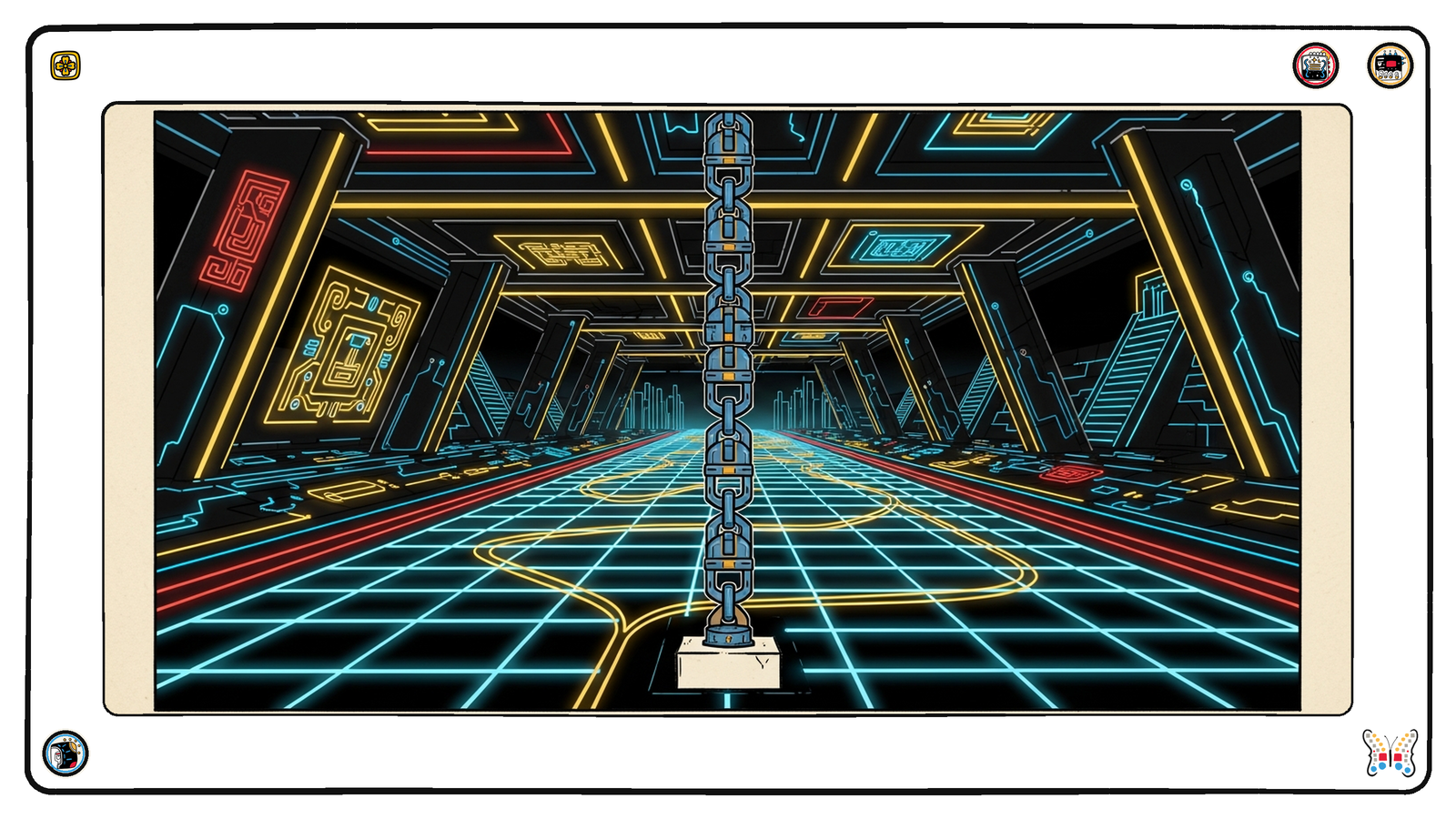
Inside a vaulted understructure lit gold and cyan,
one massive chain rises from a blank white anchor
block in the floor straight up through the ceiling,
every link carrying the weight of the hall above it.
|
🔐 Identity, Policy, Supply Chain
OSV Schema shipped v1.9.0 on August 6th,
the only real release of the week in this category. Two
changes worth naming: wildcard package name * support in the schema and linter, and WordPress added as an ecosystem. A vulnerability format adding WordPress is a statement
about where vulnerabilities actually live.
SPDX did the week's most thankless work — seven merges, every one by a person, mostly @bact and
@zvr: a dependency from the Software profile to the Licensing
profile conformance, a rewrite of the serialization section to remove
"you", a dead EO 14028 link, a POSIX ERE fix in the
license-matching guidelines. This is what maintaining an
ISO-ratified standard looks like from the inside.
Their milestone board deserves a flag, though. SPDX 3.1
sits at 45/102 closed, 3.1-rc2 at 24/44, and 3.0.2 is at 33/38 with a due date of April 30th — over
three months past due. A stale milestone date is a small thing, but SPDX is
ISO/IEC 5962 and procurement teams read these boards.
SPIFFE merged exactly one change: wit-svid added to the list of supported use values. One line, and it widens the set of things that can
carry a workload identity.
SLSA merged three, all human, and two
were logo changes on the website — IBM and Red Hat added to the collaboration section, Verizon's removed. Who is and is not on your adopters page is a real
signal, in both directions.
OpenFeature merged three: two dependency
bumps and a dead CNCF Slack invite link. Which is the second dead Slack invite fixed in a
specification repo this week, after OpenAPI's two.
Somewhere a Slack invite expiry policy is quietly
generating pull requests across the entire Linux
Foundation.
in-toto merged one dependency
bump. All three OCI specs, TUF, the Notary Project and
Sigstore's protobuf-specs merged nothing at
all.
|
|
Two tall angular pylons rising from the neon grid
under a near-black sky, a suspended span of glowing
gold coins strung between them like a cable, a
stepped pyramid standing on the far bank at either
end.
|
💹 Financial Services Data Standards
FINOS is where the volume was, and it is a different kind
of volume.
CALM merged 20 changes and cut two CLI releases in six
days — v1.52.0 on the 3rd, v1.53.0 on the 5th. The substance
is a versioned artefact storage redesign landing type by
type in CALM Hub, plus layout persistence and a VS Code plugin update. Only 7 of 20 were bots.
CALM is behaving like a product, not a specification, and
it is the fastest-moving thing on this entire list.
FDC3 merged 18, of which 15 were dependency
bumps. The real ones were @kriswest improving CVE scan coverage and @julianna-ciq removing an unused security
dependency. FDC3 3.0 sits at 19/39 closed, with a 3.1
candidates milestone opened at 0/9 — so 3.1 is being
scoped before 3.0 is finished.
FINOS also published From AI Principles to Executable Governance on the 8th, marking the transition from frameworks to
running controls. "Executable governance" is a
phrase I expect to steal.
|
|
A wide bedrock plain under the neon grid carrying
dozens of low gold-edged stepped platforms, each one
a separate foundation footing, all of them lit and
holding up a structure that is out of frame above.
|
🏛 From the Foundations
The Linux Foundation's press channel had a genuinely
busy week:
CNCF published eight pieces, with K8gb accepted as an incubating project and Cortex completing its OSTIF security audit. OpenSSF announced OpenBao v2.6. OpenChain shipped its July newsletter — the most dependable publishing cadence of any project
on this list.
|
|
A long subterranean colonnade of tall blank
monoliths receding into the dark, most of them unlit
and cold, only a handful still glowing pale gold,
the load-bearing grid running on past all of them.
|
🤫 The Quiet Ones
This section is the reason I built the harvester. Twelve
of the thirty specifications had no merged change, no release and no commit in the window:
Moonwalk (OAS 4 design) · GraphQL Specification ·
CloudEvents · OpenMetrics · xDS · Envoy · OCI Image Spec ·
OCI Runtime Spec · OCI Distribution Spec · TUF · Notary
Project · Sigstore protobuf-specs
Read that list carefully, because silence means different
things in it.
CloudEvents, TUF and the OCI specs
are finished. A stable graduated
specification that nobody needs to change is the goal, not
a warning sign. OCI image-spec's last merged pull
request was in 2017 and the format still runs every
container registry on earth.
Moonwalk is the one to actually notice. The OpenAPI 4.0 design effort last merged anything
on 2025-03-31 — over sixteen months ago.
Every few weeks someone asks me what is happening with
OpenAPI 4. The answer, from the repository rather than
from a rumor: nothing is happening, there is no release
date, and 3.3.0 is where the work is. Do not plan around a
4.0.
GraphQL merged nothing this week and its
last merge into the spec was 2025-07-01, with 196 open
issues. It publishes editions — the September 2025 edition
is current — so a quiet repo is not a dead standard. But
the contrast with 45 open issues on OAS v3.3.0 and a
three-week deadline is worth sitting with.
|
|
An intact glowing stepped pyramid and a lit monolith
standing on the neon grid, a thick bundle of
conduits strung between them gone dark and slack,
severed ends hanging loose above the floor.
|
📡 The Channels Are Rotting
While wiring this up I probed every publishing channel
these projects offer. The results are their own story, and
I am reporting them because a specification that cannot
tell you what changed has a real problem no matter how
good the spec is.
No working feed at all:
-
Sigstore — blog.sigstore.dev returns 404 on /rss/, /feed and /rss.xml. The served page is 7.7KB of client-rendered markup
with no post links and no dates in it. The project
whose entire purpose is making software supply chains
verifiable does not publish a machine-readable feed of
its own announcements.
-
Envoy — blog.envoyproxy.io fails to connect outright and /blog/index.xml 404s.
-
JSON Schema — publishes a blog with
no feed on any conventional path.
-
OpenSSF — /blog/feed/ and /blog/rss/ both return HTTP 200 with zero items. A 200 that yields nothing is worse than a 404,
because every tool downstream records it as a success.
The working feed is at /feed/.
-
Protobuf — the feed exists and every
single item is stamped Mon, 01 Jan 0001. The real date is only in the URL. I now parse the
URL.
Dormant, longest first: in-toto (last
post May 2023) · CloudEvents (July 2024) · Notary Project
(June 2025) · OpenFeature (March 2026) · OCI (April 2026)
· SLSA (May 2026) · gRPC (June 2026) · GraphQL (June
2026).
Eight of the specifications that the industry depends on
have not posted anything in months, and three have not
posted in over a year. The repositories are alive. The
announcement channels are not. If you are trying to track
this layer by subscribing to blogs, you are watching the
wrong surface — which, uncomfortably, is the argument for
this newsletter existing.
How This Was Made
No estimates, no vibes. Every number above came from one
harvest run against the GitHub REST and GraphQL APIs and
twenty-five feeds, on a window of August 2 to August 9,
2026. Merged pull requests are counted by merged_at inside the window. Bot attribution is by author login.
Milestone percentages are GitHub's own open/closed
counts, read live.
Two deliberate exclusions: Envoy's pull requests are not counted — it is a high-volume implementation repository, not a
specification, and including it would drown every real
spec in the issue; only its releases count. And a source
that fails to respond is reported as
an error, never as zero activity, because
"quiet week" and "my harvester broke"
look identical in a chart and only one of them is true.
This week every source returned.
If a number here is wrong, the repository is the authority
and I will correct it in the next issue. If there is
anything missing that you'd like to see let me know.
The goal is to bring activity across all of the Linux
Foundation specs into view so we can think more about what
is needed across them.
Next Monday: whether OAS ships 3.2.1 or slips 3.3.0,
and the first week-over-week numbers now that there is a
baseline to compare against.
Unsubscribe
606 W 57th New York, NY 10019
|