|
This is the third issue of the Specification layer. Last
week I led on the OpenAPI Initiative's milestone
board — a due date that came off 3.3.0 without a commit to
point at. This week the same board came back with a label
on it.
This newsletter window: August 16 through
August 23. Thirty specification repositories and
twenty-five feeds, all read clean again — no source
errored. 109 pull requests merged. 2 releases cut. 13 posts
published. Sixteen of the thirty specifications did not move at
all. It is summer though. To be expected.
One hundred and nine merges is down forty-seven from last
week, and the drop is not distributed the way the headline
suggests. Machine merges fell by five. Human merges fell from 72 to 30 — a 58% collapse in a single week — which pushed the
machine share of the entire specification layer from 54%
to 72%, its highest reading since I
started counting. A lot of my work on Spotlight Rules and
APIs.json are machine-driven. Curious how the rest of the
space compares.
|
|
Deep beneath the dark neon grid, a foundation
chamber where a colossal gold-edged bedrock slab is
bisected by a heavy chain barrier, a single small
lit lamp on the near side and the vast structure
receding into darkness beyond it.
|
The Lead: Two Standards Bodies Told Me the Same Thing in
Eight Days
First, a correction. In the August 16
issue I wrote that JSON Schema "found a bug in its
own meta-schema" and called it "a normative
artifact rejecting conformant input." That was wrong.
The file that pull request changed is an unpublished draft
in the v1 line, added to the repository in June, and the
published 2020-12 meta-schema does not contain the
construct at all. Nothing anyone deployed was ever
affected. Karen Etheridge of the JSON Schema TSC flagged
it, I corrected the published issue on August 19, and her
second point is the one that mattered more than the
first: work in flux is not news, and reading an in-progress
branch as a shipped defect is a mistake this newsletter
is structurally prone to because it harvests merged pull requests for a living.
Eight days later, the OpenAPI Initiative said the same
thing in its own repository, in capital letters.
The v3.3.0 milestone now carries this description:
INTERNAL USE ONLY. Our process is not
your process, information about specification changes
should be taken only from the in-progress,
publicly-available specification versions in the
repository. ;-)
And the project's release-planning discussion, #5116, is now titled:
[OUTDATED, DO NOT CITE PUBLICLY!!!] 3.3+ planning ideas
Here is what I can and cannot take as evidence, because
that distinction is a significant part of this job. GitHub
does not expose edit history for a milestone description
or a discussion title, so I cannot show you the moment
either one changed. What I can show you is that both were
touched inside the window and inside minutes of each
other: issue #1416 closed at 18:07:20 on August 21,
milestone 18's updated_at reads 18:19:55, and discussion
#5116's updated_at reads 18:27:42 — while its most recent
comment is from July 2, so that August 21
timestamp is a metadata edit, not a conversation. Twenty
minutes, one sitting, three artifacts.
I did not record milestone descriptions in my harvest
before this week, so I cannot prove the "INTERNAL USE
ONLY" text is new. I am recording them from now on,
and if a maintainer tells me that label has been there for
months I will say so next week.
Now the number that makes their point better than the
label does. OpenAPI merged eleven pull requests this week. I opened
every one and listed the files. Exactly one touched a
specification document: #5515 from @ralfhandl, on the v3.2-dev branch, +2/-2 in src/oas.md. The complete diff capitalizes "Encoding
object" to "Encoding Object" in a normative
sentence and in a YAML comment. Pedantic details. It is
good though.
Two weeks. Twenty-three merged pull requests. Two words
of specification text.
Everything else was the build migration I wrote about last
week, still propagating. #5503 from @handrews moved the project off npm and onto yarn
— 4,152 added, 5,888 deleted — because,
quoting the PR, "NPM has too many weirdnesses with
platform-specific issues and interactions with
GitHub." That change then replayed across dev, v3.1-dev, v3.2-dev and v3.3-dev as four identical +4164/-5915 sync merges from the publisher bot, plus three smaller
syncs and #5499 wiring the dev branches into the shared build-infra
schema test helpers. Six of the eleven merges were bots
replaying one human decision onto four branches.
So both readings of the OAI's week are true at once,
and only one of them is worth anything to you. Read the
repository and you see a busy project. Read the
specification and nothing happened except a capital O. I
will continue to search for the signal in the noise. Each
issue I will learn more, and strengthen my automation.
The milestone board moved, and almost none of it was work
|
Milestone
|
Aug 16
|
Aug 23
|
|
|
v3.3.0
|
17 / 45 (38%)
|
18 / 39 (46%)
|
1 closed, 6 items gone
|
|
v3.2.1
|
9 / 9 (100%)
|
10 / 10 (100%)
|
due 2026-09-30
|
3.3.0 gained eight percentage points this week. One issue
was finished — #1416, "Security Requirement Consistency with
Server Objects", closed August 21. The other six points came from six
items leaving the milestone entirely, and I want to flag a
gap in my own evidence: GitHub's repository events
feed covers this window, and it records
exactly one milestone event across the
whole repository — @ralfhandl adding #5515 to 3.2.1. There
are zero demilestone events. Six things
left milestone 18 and the events API does not narrate how.
I am not implying anything was hidden. I am saying that a
percentage on a planning board went up by eight points
while one issue got done, and that this is precisely the
thing the OAI has now labeled internal — with, on this
evidence, some justification.
The rule I am adopting is theirs, verbatim: information about specification changes gets taken from
the in-progress specification versions in the repository —
the v3.x-dev branches and the published documents — not from the
milestone board. Milestone numbers will still appear in
this newsletter, because a spec's planning surface is
legitimately interesting, but from now on they are
reported as project news and never
as specification news, and the distinction gets
said out loud every time.
The machines took the layer back
|
Who merged it
|
Count
|
Share
|
|
copybara-service[bot]
|
34
|
31%
|
|
dependabot[bot]
|
26
|
24%
|
|
oai-spec-publisher[bot]
|
8
|
7%
|
|
renovate[bot]
|
5
|
5%
|
|
opentelemetrybot
|
4
|
4%
|
|
github-actions[bot]
|
2
|
2%
|
|
All bots
|
79
|
72%
|
|
Actual people
|
30
|
28%
|
Three weeks of this split now: 59% machine,
54%, 72%. Last week I wrote that the flat
headline count was hiding a fifth more human work landing
than the week before. This week it is hiding the reverse,
harder: the headline fell 30% and human effort fell 58%.
The busiest human across all thirty specifications
merged four pull requests. Last week one
person merged twenty-eight.
Dependabot alone out-merged every human being working on
every specification in this newsletter, at 26 to 30 across
the field.
|
|
A vaulted undercroft beneath the neon grid where an
enormous blank stone tablet stands lit in gold, and
on its entire surface just two small carved marks,
while all around it dozens of gold scaffolding
gantries are being disassembled and rebuilt by tiny
figures.
|
📐 The Description Layer
Protocol Buffers shipped v36.0 — the only
specification-bearing release in the entire layer this
week. Published August 20, after release candidates on July 9 and August 3.
This one carries language-level change, not just runtime.
From the release notes: default_symbol_visibility becomes STRICT in Edition 2026; a
new enforce_proto_limits feature is added and turned on by default in the descriptor for
Edition 2026; reserving field number INT_MAX is now disallowed; the top-level
unittest protos have been migrated from Edition 2024 to
Edition 2026; and (py|cc|java)_generic_service now emits deprecation warnings. Editions are how
Protobuf versions its language now, and Edition 2026 is
visibly being assembled in the open.
Protobuf also merged 32 pull requests, 30 of them copybara-service[bot] — Google's monorepo exporting outward, same as
every week. The two human merges were @JasonLunn
cherry-picking release commits onto the 36.x branch. It
remains the most automated specification in the set by a
distance.
And then the part that belongs in the channel-health
section but is too good to bury: the most recent version announcement on protobuf.dev/news is v34. protobuf.dev/news/v35 and protobuf.dev/news/v36 both return 404. Two major versions have shipped since
the news channel last described one, and the v36.0 release
notes open by pointing readers at that news page for
"additional announcements."
JSON Schema merged one change, and it is the same file
as last week. #1763 from @RedZapdos123, merged August 22, adds "pattern": "^[^#]*$" to $schema in specs/meta/meta.schema.json, so a $schema value containing a fragment fails meta-schema
validation. It ships three test cases: no fragment valid,
empty fragment invalid, named fragment invalid.
Applying the rule properly this time. That file is an unpublished draft in the v1
line. The change brings it into agreement with the v1 prose
in specs/jsonschema-core.md, which says the value of $schema "MUST be an absolute IRI (without a
fragment)." The published 2020-12
core specification says something different — "MUST
be a URI (containing a scheme) and this URI MUST be
normalized," with no fragment prohibition — and the
published meta-schema at https://json-schema.org/draft/2020-12/meta/core types $schema as a plain uriString with no pattern at all. So this is a v1 design decision
being made machine-checkable inside a draft, not a fix to
anything you are running. If you write $schema values today, nothing has changed for you.
Arazzo and Overlay were dependency bumps and nothing
else. Arazzo merged four, all bots — two respec/highlight.js
bumps and two publisher syncs. Overlay merged three, all
dependabot, and its milestone board is now frozen at identical numbers for the third consecutive
week: Release 2.0 4/7, Release 1.2 7/7, Release 1.3 0/3. A finished 1.2 milestone has now sat unshipped for
three weeks in this newsletter's record.
AsyncAPI merged nothing at all, and
its "Issues to consider before 3.0.0" milestone is unchanged at 25/28 for the third straight
week.
gRPC's ratio inverted. 14
merges, ten of them human — after a week
of 11 bots to 1 human. Almost all of it is release
engineering rather than protocol: @asheshvidyut bumping
versions on the v1.82.x and v1.83.x branches, and
backporting a Python fix that makes StatusCode enums actual ints across three release branches, plus
@shivaspeaks fixing PSM interop CI on three branches and
@aslam9691 on workflow preservation. Real people doing
real work, none of it in the protocol.
Moonwalk is still silent. Third
consecutive week, last merge March 31,
2025. GraphQL merged nothing again.
|
|
A service corridor deep under the grid floor, its
telemetry conduits still lit gold and flowing, but
every junction box along its length worked by small
automaton arms on rails, not a single human figure
anywhere in the passage.
|
📡 Events, Telemetry and the Data Plane
OpenTelemetry went from the most human-driven
specification in the layer to zero human merges in seven
days.
Last week: 14 merges, 11 by people, including a Prometheus
exporter section stabilized on the back of a written SDK
conformance survey. This week: four merges, all four machine — opentelemetrybot adding a shared security scanning workflow and moving to
the shared OSSF Scorecard workflow, and renovate on
lock-file maintenance and a cspell action bump. OTLP
merged two, both the same bot, both the same two CI
changes.
Six merges across the two repositories, zero people, zero
specification. It is one week and one week is not a trend,
but it is the single largest week-over-week swing in the
harvest and it is worth watching whether the OTel spec
repos come back.
CloudEvents, OpenMetrics and xDS all merged
nothing. For CloudEvents the standing note holds: stable at 1.0.2
since 2022, carrying a large share of the industry's
event plumbing. That is finished, not dead.
|
|
A vaulted chamber beneath the neon grid where one
enormous sealed door stands closed and dark, and
pinned across its face a single large glowing gold
map or chart, lit from within, the only light in the
room.
|
🔐 Identity, Policy, Supply Chain
The most consequential specification news of the week
came from a repository that merged nothing. SPIFFE published The SPIFFE Standard Roadmap on August 18 — SIG-Spec's twelve-month plan,
written by Arndt Schwenkschuster, and the first time in
this newsletter's short life that a project has laid
out where its specification is going rather than shipping
a diff.
Three things are on it. SPIFFE Filesystem Delivery standardizes what has been reinvented per-deployment for
years: fixed file names for the bundle, the certificate
and the private key, plus a single SPIFFE_CREDENTIAL_FOLDER environment variable pointing at the directory — X.509
SVIDs only for now, JWT deferred pending interest. That
proposal is PR #376, and I want to be exact about its status: open since February 21, 355 lines, not merged, last touched August 20. The roadmap is the news; the
specification is still a proposal.
Transaction Tokens is the one to watch,
and the motivation is stated plainly in the post: an X.509
SVID tells the fifth service in a chain that the fourth
one called it, and nothing about whose request started the
chain or whether the amount was modified in flight. Their
words: "With non-deterministic workloads like AI agents
entering these chains and the industry acknowledging the
problem, we want SPIFFE to secure it
end-to-end." Short-lived signed JWTs carrying originating actor and
purpose, issued on demand through an experimental profile
on the Workload API. That PR has not been posted
yet. A remote Workload API is the third,
aimed at managed-node environments — EKS Auto Mode, GKE
Autopilot — where there is nowhere to put a node agent.
If agent-to-service call chains are going to have a
machine-readable identity contract, this is the
specification where the argument happens. Nothing merged.
Everything to watch.
The supply chain woke up, quietly and usefully. Seventeen merges across in-toto Attestation, Sigstore,
OSV Schema and SPDX, and four of them are worth your time:
-
in-toto attestation #578 from @arpitjain099 fixes a genuine defect in
a published Go module. digest_set.md says gitCommit, gitTree, gitBlob and gitTag hold either SHA-1 (40 hex) or SHA-256 (64 hex),
but HexLength() returned 20 bytes for all four, so ResourceDescriptor.Validate rejected a perfectly valid SHA-256 git digest
with ErrIncorrectDigestLength. The library now tracks accepted byte sizes per
algorithm. That is a shipped implementation
disagreeing with its own specification, and this time
I have checked which side is published: the Go module
is.
-
OSV Schema #557, also @arpitjain099, adds linter check REC:005 constraining OSV record ids to ^[a-zA-Z0-9:_.-]+$ — the stated rationale being to avoid URL encoding
and to prevent shell-script breakage on ids containing
spaces or slashes. A linter rule, not a schema change.
-
OSV Schema #588 from @jess-lowe clarifies how to represent a
vulnerability that spans both a strict ecosystem like
Go or npm and a generic Git
repository: distinct entries in the affected array rather than one merged entry. Documentation,
and the kind that stops two tools disagreeing.
-
SPDX's only two merges were both @bact and
both editorial — #1441 correcting the stated conformance-point count to 14,
and #1447 adding a hyperlink for CNSSI 4009. His note on the
second one is a small artifact of the world we work
in: the CNSS website requires a DoD root certificate
installed in your browser to reach it.
Sigstore cut but did not ship. #925 "Prepare for 0.5.2 release" merged August 21, and there is no 0.5.2 release published — the newest release on that repository is a Java
artifact from January 2025. A merged release-prep PR means
cut, not shipped, and I check that every week for exactly
this reason. The substantive merge there was #923 from @loosebazooka adding a custom java_package to envelope.proto.
SPDX's boards barely moved and the overdue one did
not move at all. 3.1-rc2 went 24/44 to 26/44. 3.0.2 is unchanged at 33/38 with a due date
of 2026-04-30 — now approaching four
months past. Reported, per this issue's new rule, as
project news and not as specification news.
Which matters because of the calendar. OpenSSF
published another Cyber Resilience Act podcast on August 18, the third consecutive week they have led
with CRA. Their own practitioner's guide calls it
"the September 2026 reporting deadline rapidly
approaching." September starts in eight days. The specifications that would carry that compliance in
machine-readable form merged, between them, two editorial
fixes and a linter rule.
OCI Image, OCI Runtime, OCI Distribution, SLSA, TUF,
Notary Project and OpenFeature all merged
nothing.
|
|
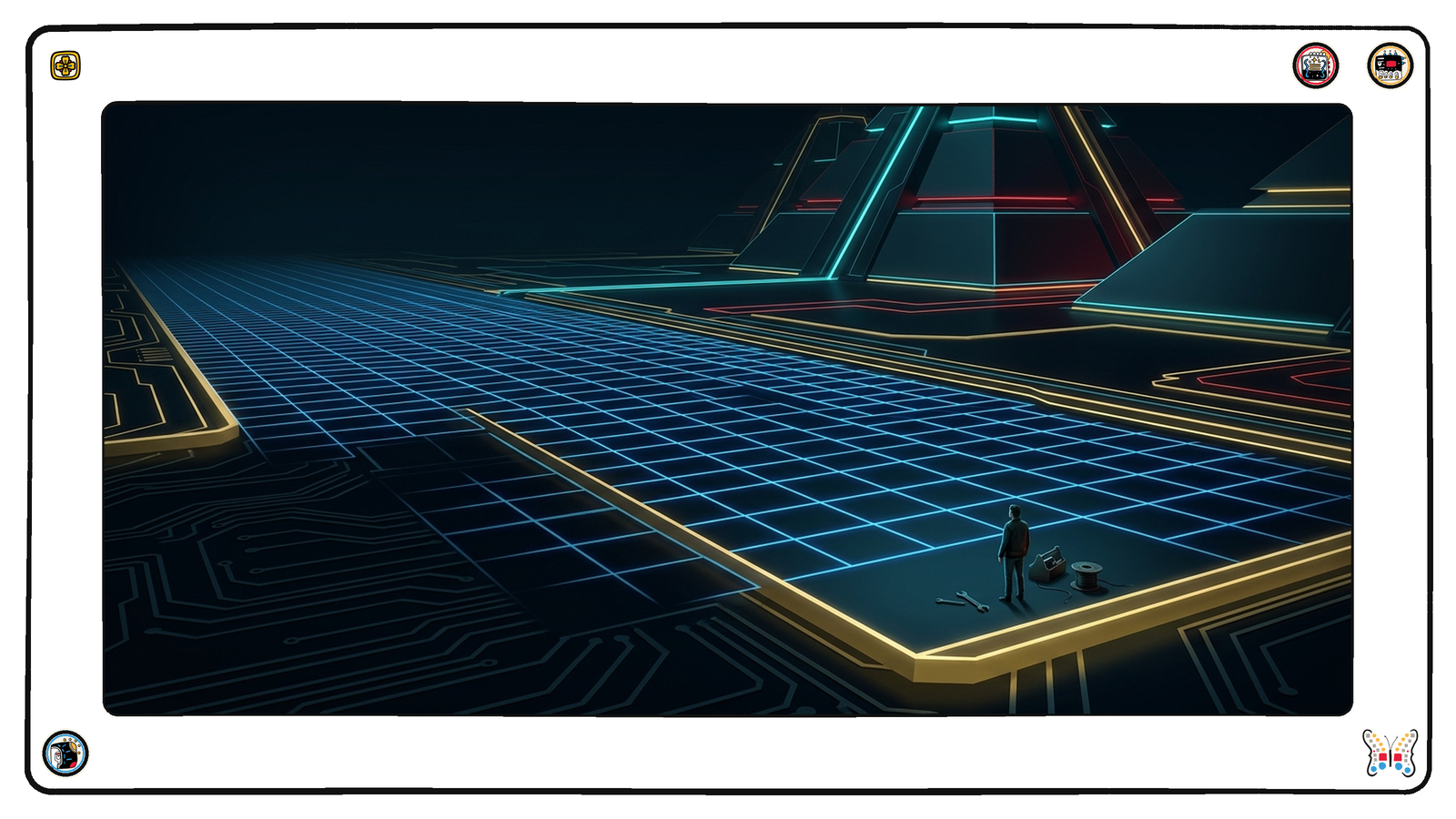
A gold-edged foundation slab beneath the neon grid,
mostly dark and cold, with a single small figure
standing alone at one corner where a whole crew of
figures worked the week before.
|
💹 Financial Services Data Standards
Last week I ended on a sentence I now get to grade: "When people ask what a standard actually runs on,
this is the answer more often than anyone admits: it
runs on somebody." @julianna-ciq had merged 28 pull requests into FDC3 —
39% of all human specification activity across all thirty
repositories.
This week FDC3 merged 13. Twelve were dependabot. One was @julianna-ciq, #2113, bumping the remaining fdc3-conformance dependencies.
I do not know why, and I am not going to speculate about
one person's week. What I will report is the shape: a
standard that produced a deprecation removal, four
substantive schema merges and a new maintainer seven days
ago produced, this week, a dependency sweep. The thesis
was that FDC3's throughput rests on a very small
number of people. One week of data is consistent with it.
That is all one week of data can be.
FDC3's flagship milestone went backwards. FDC3 3.0 held at 26 closed while its total grew from 41 to 43 —
two issues added, none finished, 63% down to 60%. 3.1 candidates grew from 10 to 11 and remains at zero closed. Project
news, not specification news.
CALM shipped cli-v1.56.0 on August 17 — a tool release, the second of the two
releases in the window, and the third consecutive week
CALM's tooling has shipped while the CALM schema
itself has not. Eight merges, evenly split human and bot:
@willosborne added the missing hub push/pull/list interface subcommands to the CLI and trimmed the
root AGENTS.md, @ppcvote fixed generated front matter to emit
POSIX-style paths, and @byrash fixed requirement-URL
display in the VS Code plugin.
|
|
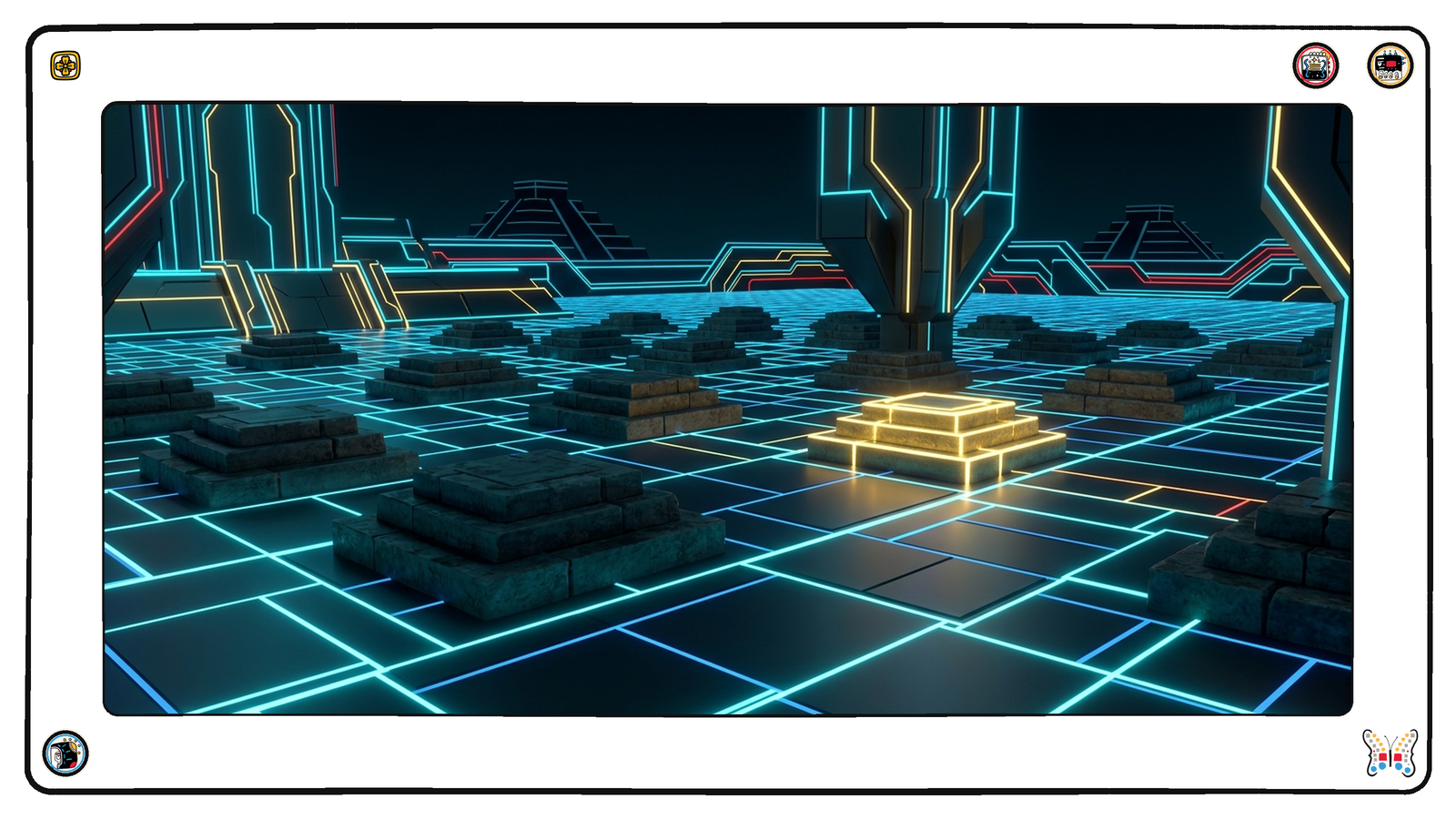
A wide bedrock plain beneath the neon grid, a single
new gold-edged footing freshly cut and glowing among
older weathered ones, all of them bearing an unseen
structure above.
|
🏛 From the Foundations
The Xen Project launched a Shared Functional Initiative
for safety-critical systems, announced August 17. The Xen Safety Committee's stated purpose is a
collaborative path to develop and maintain reusable engineering artifacts for functional safety
certification — which is a specification-shaped problem wearing
different clothes. Safety certification evidence is one of
the last places where every organization still builds its
own artifacts from scratch, at enormous cost, to say the
same things. Worth tracking for whether the artifacts
become anything a machine can read.
CNCF graduated Kubeflow on August 17, the second graduation in two weeks after Cloud Native
Buildpacks, and framed in the announcement as solidifying
a standard for cloud native AI operations.
Egeria 6.0 shipped at LF AI &
Data, written up August 20 by project leader Mandy Chessell as part one of a
four-part series — a metadata-interoperability project
whose whole reason for existing is open exchange formats
between data catalogs, and one I should probably be
reading more closely than I am.
CNCF's blog also ran two pieces on sovereignty this
week — multi-plane architecture and data sovereignty — which is where a lot of the next round of
interoperability requirements is going to come from,
whether or not anyone writes them down as specifications.
|
|
A long subterranean colonnade of tall blank dark
monoliths receding into blackness, their edges
traced in cold gold, standing silent while the
load-bearing neon grid runs on past all of them.
|
🤫 The Quiet Ones
Sixteen of thirty specifications recorded no merged
change, no release and no commit in the window — down from
nineteen last week, up from twelve the week before.
Finished, not dead — stable and carrying
enormous load right now: CloudEvents (1.0.2 since 2022),
OCI Image, OCI Runtime and OCI Distribution, Notary
Project, TUF, SLSA, xDS.
Quiet and worth watching, where silence
is ambiguous and I keep counting the weeks: Overlay (three
weeks, milestone board frozen identically, a completed 1.2
unshipped), AsyncAPI Specification (three weeks, 3.0.0
board unchanged at 89%), AsyncAPI community, OpenMetrics
(2.0 still experimental), OpenFeature, GraphQL.
SPIFFE is in this list on merges and
should not be read as idle — it published the most
substantive roadmap in the harvest. That is the limitation
of counting pull requests, stated plainly.
Silence that is the answer to a question people keep
asking: Moonwalk. Third consecutive week, no activity, last
merge March 31, 2025. There is no OpenAPI 4 in progress.
Envoy is excluded from pull-request counting by design —
implementation, not specification — so its appearance here
means it cut no release, not that it was idle.
|
|
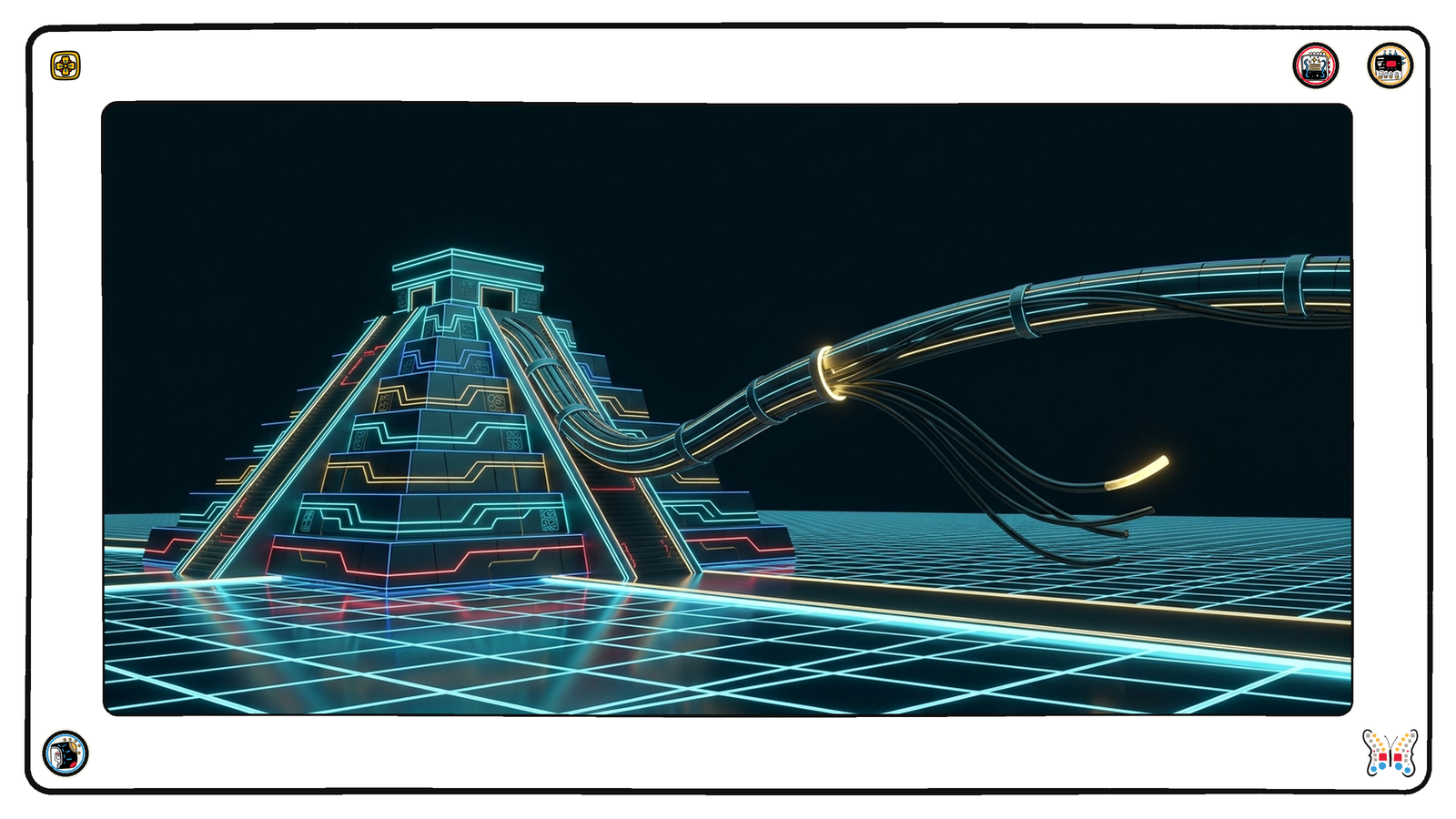
An intact glowing stepped structure standing on the
neon grid with a thick bundle of conduits running
off it into the dark, the far ends severed and
hanging loose above the floor, one of them freshly
cut and still faintly glowing.
|
📡 Channel Health
All twenty-five working feeds returned. Volume fell again
— 24 items, then 17, now 13.
The finding of the week is Protobuf. It
shipped a GA major release on August 20 and the newest
version post on protobuf.dev/news is v34; /news/v35/ and /news/v36/ both 404. The v36.0 release notes themselves open with
"Protobuf News may include additional announcements
or pre-announcements for upcoming changes" and link
to a page that has not described the last two majors. If
you follow Protocol Buffers through its news channel, you
do not know Edition 2026 is being assembled.
The OpenAPI Initiative's feed has now been silent
since July 22 — five weeks, through a full build-system migration, a
dropped release date, and a planning board relabeled
internal use only. Nothing about any of it reached the
announcement channel.
Unchanged since issue one: Sigstore publishes no feed on
any path, Envoy's blog host does not resolve, and
OpenSSF's real feed remains /feed/ while /blog/feed/ and /blog/rss/ both answer HTTP 200 with zero items.
The dormancy leaderboard, longest first: in-toto (May
2023) · CloudEvents (July 2024) · Notary Project (June
2025) · OCI (April 2026) · SLSA (May 2026) · gRPC (June
2026) · GraphQL (June 2026) · Prometheus/OpenMetrics (June
2026) · SPDX (June 2026) · Protocol Buffers (July 2026) ·
OpenAPI Initiative (July 2026).
How This Was Made
Every number above came from one harvest run against the
GitHub REST and GraphQL APIs and twenty-five feeds, over
August 16 to August 23, 2026. Merged pull requests are
counted by merged_at inside the window. Bot attribution is by author login,
with opentelemetrybot counted as a machine. Milestone percentages are
GitHub's own open/closed counts, read live.
Week-over-week deltas compare against the two stored
harvests, not against memory.
Where this issue makes a claim about what a pull request did, I opened the pull request and read its file list, its
diff or its body. The "two words of
specification" finding is the file lists of all
eleven OpenAPI merges plus the full patch of #5515. The
published-versus-draft reading of JSON Schema #1763 is the
merged patch against specs/jsonschema-core.md in the repository and against the live documents
at json-schema.org/draft/2020-12/. Sigstore's unshipped 0.5.2 is the releases list on
that repository. Protobuf's missing news posts are
two HTTP 404s I fetched myself.
Two things I cannot fully evidence and am flagging rather
than asserting: when the OAI milestone
description and discussion title changed, because GitHub
exposes no edit history for either — I have updated_at timestamps twenty minutes apart on August 21 and no
baseline of my own, and I have started recording milestone
descriptions so there is a baseline next time.
And how six items left milestone 18,
because the repository events feed covers the window and
records no demilestone events at all.
The standing rule, now applied twice: a merge to a specification repository is not a change
to a published specification. Most of these repositories hold the work in progress of
the next version while the released artifact lives on the
standards body's own site. Before framing any merge
as a defect, a break or a change you should act on, I
check which artifact it lands in and whether that artifact
is published. If it is a draft, it gets called a draft.
Added this week, from the OAI's own wording: planning
boards, milestones and release discussions are project
news, never specification news, and the difference gets
stated in the text.
Two standing exclusions: Envoy's pull requests are not counted, only its releases — it is a high-volume implementation
repository and including it would drown every real
specification in the issue. And a source that fails to
respond is reported as an error, never as
zero activity, because "quiet week" and "my
harvester broke" look identical in a chart and only
one of them is true. This week, as the two before it,
every source returned.
If a number here is wrong, the repository is the authority
and I will correct it — in the next issue, and on this
page. The goal of this newsletter is to provide a weekly
accounting across the specifications to see where there
can be more information sharing, communication, and
investment by humans and agents to help get work done, but
also potentially align the specs.
Next Monday: whether 3.2.1 actually ships against its
September 30 date now that it is fully loaded for the
second week running, whether OpenTelemetry's
specification repositories come back after a week with
no human in them, and whether the supply-chain layer
moves in the last days before the CRA reporting date it
has spent three weeks writing about.
|