Recent articles
Hey fam,
I’ve been talking about expanding my newsletter a bit in scope. Several positive reactions later, and here’s some stuff about poetry. My first love. The muse has t always been all that kind to me, with my bad health, brain fog and pain have many times taken poetry away from my lips and pen. However, I can still do this sort of article.
It’s likely not arranged in the best way. I’ll need to tackle solid formatting for poetry in the near future. Here’s to the poet that none of us will ever be, Robert Frost.
Share
The Simple, The Profound, and The Fire: Re-Reading Robert Frost
Robert Frost was truly the poet of the novice and of the inspired.
Still, reading only Frost for extended periods can wear on anyone. You get sick of birds, flowers, and trees remarkably fast, despite the beauty with which they are described.
Even when his imagery felt played out, it was impossible to deny his ability and sheer versatility. A running joke among writers is that a specialized creative writing degree guarantees only one outcome: the memorization of no less than two and no more than three Robert Frost poems.
Subscribe
Having spent formative years devouring Faulkner and Kerouac, and debating whether a single dot of cadence required greater weight, it is easy to cultivate the reflexes of an academic poetry snob.
From that vantage point, Frost often gets dismissed as too simple, a craftsman of neat cadence and polite meter rather than the desperate, screaming truths of human emotion.
Often ranked among the greatest American poets of the 20th century, Frost remains an enduring puzzle. He was capable of taking something as mundane as two solitary stones in a driveway and transforming them into an arresting meditation on human persistence. He approached the natural world not merely as scenery, but as an exacting mirror for internal friction and moral crossroads.
Comment
When examining his technique through a narrative lens, Frost’s work hinges on three deliberate choices:
Deceptive Simplicity: His language relies on accessible phrasing and unadorned surfaces, carrying profound psychological weight without decorative excess.
Vernacular Cadence: He mapped natural speech directly onto traditional meter, allowing high structural discipline to read like casual thought.
Grounded Metaphor: Physical landscapes, stone walls, and diverging trails do not exist as mere decoration; they function as tactical, tangible stand-ins for human decisions. Frost understood that fire and ice serve equally well when it comes to human ruin. His poetry endures precisely because it bridges the accessible and the profound, proving that clarity of craft never has to come at the expense of depth.
Spotlight: Two Essential Miniatures
“Fire and Ice”
First published in 1920, this compact nine-line poem tackles apocalyptic destruction through an understated, almost casual tone. Frost weighs desire against hatred, aligning blazing passion with fire and cold indifference with ice, ultimately concluding that either emotional extreme holds enough destructive power to end humanity.
“Nothing Gold Can Stay” Published in 1923, this eight-line masterpiece uses the fleeting early bloom of spring as a lens for transience, grief, and the inevitable loss of innocence. The poem moves rapidly from botanical observation to mythic fall, illustrating how peak beauty and perfection are inherently impossible to preserve.
“Nothing Gold Can Stay,” was featured in the SE Hinton novel “The Outsiders,” in 1967. She began the novel at age 15, it was published when she was 18. In 1983, Francis Ford Coppola directed the film adaption, which may have been the most star studded movie of the decade, including C. Thomas Howell, Matt Dillon, Ralph Macchio, Patrick Swayze, Rob Lowe, Diane Lane, Emilio Estevez, Tom Cruise, and Leif Garrett.
Thanks for reading! Building Realities is a collection of essays, fictions, poetry, and art by Jack Lhasa. A veteran of the publishing industry for 30 years. Jack is disabled, and all of this is run on his free time and donations. If you like what you’ve read, subscribe, tell a friend!
In what is now an extremely famous scene, Ponyboy, looking out over the morning mist, recites the poem. The novel and movie are a part of most US Schools’ required curriculum.
I hoped you’ve enjoyed a brief look inside the work of Robert Frost. He was so prolific, I could honestly do a series only on his poetry.
Until next time,
I’m Jack Lhasa.
You are Amazing.
👊👊Solidarity👊👊
HTTPS://ko-fi.com/jacklhasa
Currently listening to:
The Violent Femmes
Please Do Not Go
From their debut, self-titled album(1982)
Jack Lhasa3 weeks ago
Grants for Speculative Fiction
Hey hey!
It’s time for another little insider view with me, Jack Lhasa. This article is about funding available to adults, specifically those who write speculative fiction.
Share
What is Speculative Fiction?
This isn’t something most of us were taught in school, so I felt like a short definition was in order.
Speculative Fiction is an umbrella term for tons of genres, large and small. Basically, the rule is that if your story requires different rules of reality, it’s Speculative Fiction. It should take a step away from tradition and fiction set in our world, without any changes.
Included Genres(not a complete list):
Fantasy
Science Fiction
Alternate History (like steampunk)
Post-apocalyptic settings, including utopian and dystopian.
And most anything else that blurs the lines of reality.
If your story has a special change to our history or present reality, and puts heavy focus on this change, it’s Speculative Fiction.
There are lots of ways to pay the bills as a writer. Most of them aren’t exactly well-advertised. Age is mostly irrelevant, as is publication history.
Literary grants generally want a complete writing sample(novel, novella, short story, etc). They are known to focus purely on style.
Speculative Fiction grants, on the other hand, usually ask for a much smaller sample. Then the grant’s panel(3-6 people who read and discuss) focuses on things like thematic resonance, world building, and internal logic. They are basically looking for consistency throughout.
It’s important to mention up front that you shouldn’t send your complete lorebook(if you have one). You should spend time describing your underlying narrative. Ask yourself what breaks if your protagonist fails.
Comment
Now, because I don’t want this to get very long, I’m going to list some grants and what they pay. Be sure to search for them for the details.
Working Class Writers Grant - $1000/yr
Gulliver Travel Research Grant - $1000
Diverse Worlds & Diverse Writers Grants - $500
Older Writers Grant(ages 50+) - $1000
Message me
Winning more than cash
Clarion & Clarion West Workshop
Need and merit based
Winners get a six week intensive mentorship with leading genre editors and authors.
The SFWA Givers Fund & Emergency Medical Fund:
What’s unique here is that the grant is only given to writers experiencing financial hardships.
Odyssey Writing Workshop Scholarships
Covers expenses to attend their Summer Program.
The program has a very deep focus on the mechanics of Fantasy and Science Fiction.
Having attended any of the courses in the above three is basically portfolio gold. It’ll instantly catch the attention of agents, editors, and publishers.
Subscribe
The next will again be just a list, because the awards are pretty complex. There’s no fee to enter them, and most have award tiers, meaning there’s more than one prize available. Each is focused on helping build your career as a writer. Look these up yourself, you’ll understand it much better than if I tried here.
L. Ron Hubbard’s Writers of the Future Contest
BAMF! (Books and Authors of More Fantasy) and Indie SFF Contests
Dream Foundry Emerging Writers Contest
Jim Baen Memorial Short Story Award
One of the best things about grants in Speculative Fiction is that most only require you to submit 500 words!!! HOW EASY IS THAT??
500 words is actually pretty tight if you’re writing novel length books. It’s important to keep some parts in as few words as possible. A good rule of thumb is that you shouldn’t use new terms created for your project. It’s okay to include a few, but keep it short.
Now, here’s some tips from my personal experience. I didn’t pay for college at all. I’m talking tuition, books, food, dorm, the works. 4 years I never paid a penny. That’s because I talked to the English Department Heads at the 3 schools I’d narrowed it down to. I asked them about grants and scholarships, and learned how these sorts of applications work: what’s needed, what to leave out, etc etc etc. Each one turned me onto scholarships and grants that were completely new to me.
So, here’s what a good project description needs:
First of all, one of the main things a grant panel looks for is if you can produce a finished project. Define what the finished product will be(standalone novel or novella, include your current progress(word count, draft stage). If you can include an outline, or just the end point, it’ll help a lot. This is heavily weighted, but depends on the other factors.
Avoid long blocks of history. I create these all the time in world building, but they don’t grab attention. Instead, focus on a problem or scarcity. Friction. give them a taste of the conflict. That’s what you want to show grant panels.
Always start with your core premise and your Hook. Use basic narrative language on this one.
Thematic Conflict. Your protagonist should face a climax that involves choosing to use or not use the special qualities(like magic, or tech).
Detail the specific engine in your work. Clarify things like magic or technology. Be sure to include how these abilities or qualities are learned, and the cost paid to use them. You want to really focus on the cost, limitations, and scarcity.
It is a lot to fit into 500 words. That’s honestly the most difficult part. If you have any room left, mention how the funding would help you. Good examples for this include dedicated research time, access to references that are paywalled, or production expenses.
I truly hate writing pitches, but that’s basically what grant panels are looking for with the above components.
You should do some research before applying for anything. You can find examples of grant proposals. Be sure to research the grant you’re applying for. Look for past winners, and other info that is specific to that grant panel.
You can easily find examples online, or you can buy a book. There are so many on writing a good grant proposal. It’s a tough dance trying to balance everything inside 500 words. I know that some of the awards I detailed aren’t awarding money.
They offer a chance at attending an incredibly deep, prestigious class, course, etc. this kind of prize means clearing out a block of your schedule. If there’s anyway you could possibly attend, do it! Most adults will likely have issue with spending six weeks at a writers’ retreat, but it is absolutely worth it if you can.
Get the app
Finally, check the University’s and community colleges in your area. Here in Chattanooga there are workshops nearly every weekend. These cover most any genre or type, and they have guest speakers who are often celebrated for writing narratives that are notoriously hard.
(Tim O’Brien read from his book of short stories at my 2nd workshop. If you aren’t familiar with him, he’s often called “the only person to write about Vietnam with real truth.” Vets call him that. He wrote “The Things They Carried” a book of short pieces that are roughly about his time in Vietnam.)
Check with the English department at every college that’s within driving distance. LOTS offer unique opportunities to network with agents, publishers, and other writers. Plus, writing is a craft. You can never learn too much. Your work can always be honed.
Alright. That’s it for me. Let me know if you apply for these or any other grants. Especially if you’re selected for a prize!
I’m Jack Lhasa
You are Amazing.
👊👊Solidarity👊👊
Donate, Tip, or Buy
(All images care of Unsplash.com)
Jack Lhasa1 month ago
Hey hey! Welcome all builders and fans!
This Special Edition of Building Realities highlights the members of my family who served in our Armed Forces. I’ll be telling you about the monument and its relationship with worldbuilding.
Share
On the Lincoln Memorial plaza, temporary architecture meets collective memory in a remarkably modern way. The National Military Monument erected for America’s 250th commemorations relies on structural innovation rather than carved granite to tell its story.
Get the app
Standing eighteen feet high, two double-sided flag installations mirror the limestone aesthetic of neighboring monuments while embedding 528 high-definition LED screens that form the stripes of fluttering flags. Instead of static engravings, names of over forty-one million service members scroll continuously across these surfaces, displaying thousands of records in rotating forty-five-second windows.
WW1
The interplay between scale and intimacy defines the experience. While the installation pays homage to centuries of military history, its digital architecture allows visitors to isolate single threads within the massive archive. Through the interactive search portal, entering a service member's name generates a personalized record. On site, staff can queue specific entries to appear directly on the glowing LED panels, while remote users can search the portal from anywhere.
WW2 - Normandy and On
Comment
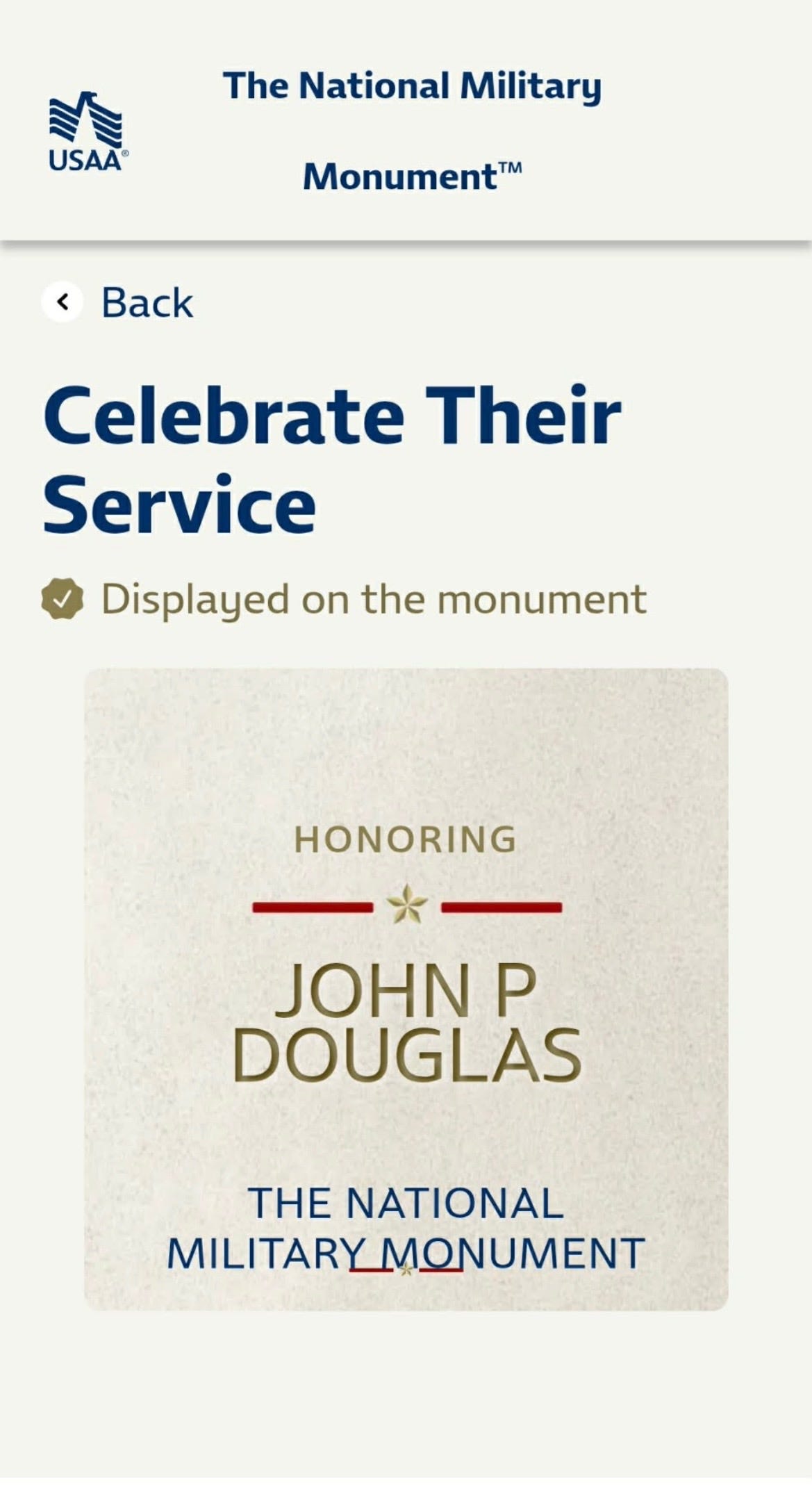
Seeing generational service rendered in dynamic light creates a tangible connection between national archives and personal legacy. Running queries across my own family line brought up three generations within the digital canvas: my great-grandfather, grandfather, and uncle.
Served in Vietnam
Subscribe
For anyone interested in searching their own family lineage within the memorial, the database remains fully accessible online at USAA.com/Monument250 through August 23. Whether exploring the plaza in person or searching the digital portal from home, the installation serves as a proof of concept. This temporary monument is an incredible example of how we can honor our past, without ruining our forest.
Such a monument could be used at parks and museums all over the country, providing inside looks at wildlife preserves through camera feeds.
When my mother found out about our family on the monument, she started crying. She’s always been very proud of soldiers in our family. This article is dedicated to her.
Comment
I’ll keep the rest of this short. When building a new setting, things that should be common are often just glazed over. If your (fictional) society has any real history, it’s had wars. I personally feel like war stories are so overused that there’s very little anything original. MoonShadow had wars. They know what’s up. If you’re like me, and don’t like the idea of writing about war in your world, a monument is definitely the way to go. A few years ago, video game developer, Bethesda, known for their extremely thorough worldbuilding release Starfield. A Sci-Fi game that has you visit a war memorial very early in the story. Science Fiction requires some aspect of worldbuilding.
Seeing this monument’s embrace of modern technology gives me hope. In a society that has both science and idiots who think “anti-science” is a possible belief when they use their computer or smartphone. I’ll give the anti-science platform a chance when it stops using science and things made possible because of it.
Thanks for stopping by,
I’m Jack Lhasa
You are amazing
👊🏼👊🏼Solidarity👊🏼👊🏼
Tips and donations
Jack Lhasa2 months ago
Hello dear readers!
Today we’re going to talk about an exercise in creativity that many incredibly famous and skilled musicians use, poets too.
It’s called the Cut-Up Technique or découpé in French. First, I’m going to explain it the way a textbook might. Then I’ll tell you my system, which I prefer and I think you will too.
Just below this divider is a system that I’d recommend more for inspiration, because I just don’t like “luck” being part of my process.
Message me
Cut-Up Technique
It is a semi-chanced based literary technique(according to some) where you take a written text, cut it into individual words or phrases, and rearrange them to form entirely new, often surreal, combinations.
How It Works
Gather Source Material: You take a page of text, this could be lyrics or poetry you’re writing, the text of a journal or any of your own material. Certain people teach that using magazines and newspapers is okay, but it’s not to me.
Cut It Up: You literally cut the text into fragments (sometimes word by word, other times in short phrases).
Rearrange: You shake them up and lay them out randomly, rearranging them until a striking or unexpected line emerges.
Famous Practitioners
While the technique was originally popularized in the 1920s by Dadaist poet Tristan Tzara and later refined in the 1950s by writer William S. Burroughs, it became a massive tool for legendary songwriters:
David Bowie: Perhaps the most famous musical adopter of the method, Bowie used it extensively in the 1970s (most notably on albums like Diamond Dogs) to break through writer's block and find brilliant, non-linear imagery.
Thom Yorke (Radiohead): Yorke famously used the cut-up technique for the album Kid A, pulling chopped-up lines out of a hat to assemble lyrics for songs like "Everything in Its Right Place."
Kurt Cobain (Nirvana): Cobain frequently wrote poetry and cut it up, rearranging the lines to create the abstract, emotionally raw lyrics found on In Utero.
The "Fold-In" Variation: A closely related sibling of this method is the fold-in technique, where you fold two different pages of linear text vertically down the middle and paste them together to read across the newly joined, hybrid page.* (source at the bottom).
Comment
Jack’s technique
This is the short and simple version. I’ll post a step-by-step after it. By the way, the method above was mostly popular in literary circles. My version is better for music and poetry(IMHO).
Take a blank piece of paper and just write the things you want to say, or whatever comes to mind. Make each non-pronoun BIG. when you’re finished, rip out each large print word.
Now mix them up until they fit.
Ripping the words out is so that you can rearrange them to fit a beat. The idea behind leaving the pronouns and prepositions separate from the BIG words is simple: they simply aren’t useful in the moving around of BIG words. Pronouns and prepositions are stuff you can slide into the big words, so that the structure makes sense. The idea is to do that part last.
That’s why I recommend writing your pronouns and prepositions in small writing, while making the other words bigger. It removes a potential problem. That being that you’ve written it all the same, and end up tearing off pieces of words you want. There’s not some hidden meaning in doing things this way, it’s designed to be easy, and straightforward.
That was my natural language directions.
After this, I’ll address a few caveats in my technique.
Here’s my step-by-step:
Step 1: Decide what you want the song to be about. This can be strict, or loose.
Step 2: Start writing about that subject on paper. Use thought flow if you loose motivation. Just write out what you’d like the song to say, along with any symbolism, etc.
Step 2.5: try to write words that aren’t pronouns or prepositions in bigger text. That’s just a trick I use to make it easier to rip or cut.
Step 3: Rip or cut out the BIG words.
Step 4: Rearrange your words them until you find what you’re looking for. I recommend keeping your guitar in your lap for this part, so you can kinda build your chord progressions as you go.
Step 5: Type it, or write it on paper so people don’t think you’re loony! lol
That’s it!
My directions are geared towards the lyricist, but work equally well for poets, or anyone that needs a creativity puzzle(like me. Always).
I say rip it. Cutting it feels too sterilized. Good lyrics and poetry are raw. I find my creativity is at its peak when I’m using my hands.
My version involves a few more steps because I include the original writing as part of the system. I’d never use magazines or anything like that for writing. It needs to be mine.
I recommend keeping your pronouns and prepositions in normal size, while your nouns, verbs, etc should be written with more boldness. This is purely pragmatic. Getting the words you want in the pile is easier if you can ID them on quick glance.
Share
So, BIG words are everything except pronouns and prepositions. The idea here is that while you’re mixing the words around, you’ll probably say pronouns aloud. That’s before you finish though. I recommend arranging your BIG words into something you like, then adding in the pronouns and prepositions at the very end for linking material.
Along with the musicians listed earlier, Bob Dylan used this method, as did William S. Burroughs. Lots of people use it.
Subscribe
It’s also great if you’re having trouble getting inspired. As a young writer, I tried tons of things people said would make me more creative. Only a handful were worth keeping, and this is one.
I should thank @mattromagna for digging this out of me, lol. Seriously, I hope this helps, man.
I’m Jack Lhasa
You are Amazing
👊🏼👊🏼Solidarity👊🏼👊🏼
MoonShadow on Zerkels
I need to update my Substack web badly! O.o
First steps credited to:
Heal, B. J. (2023). Cut-Up Transmediality: From Text to Image. In The Intermediality of Contemporary Visual Arts. IntechOpen. https://doi.org/10.5772/intechopen.111441
Jack Lhasa3 months ago
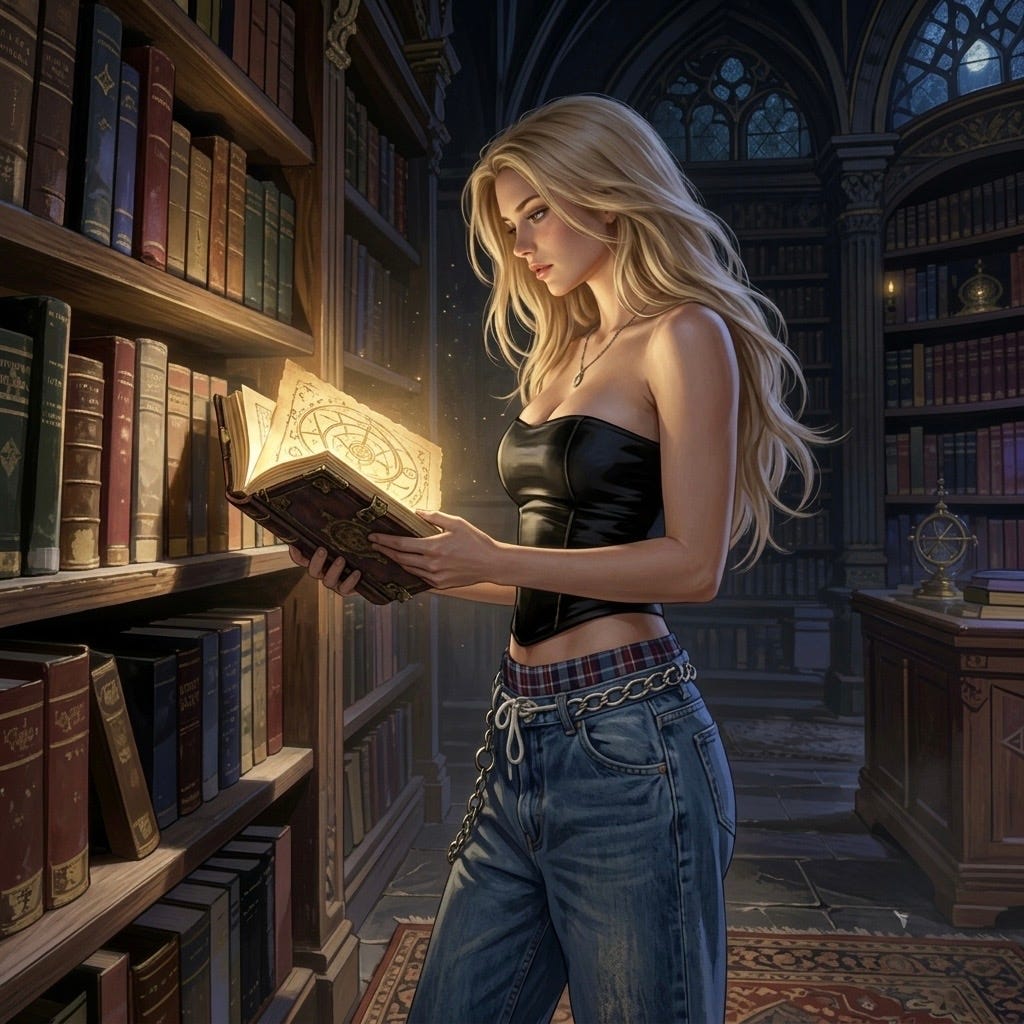
Building Realities - MoonShadow II
Part II of II
Welcome back! I’m Jack Lhasa, and this is Building Realities. I’m going to be telling you the rest of the MoonShadow project’s important bits today.
Building Realities with Jack Lhasa is a reader-supported publication. To receive new posts and support my work, consider becoming a free or paid subscriber. All content within one year is 100% free here.
I seriously spent all of February-April turning out MoonShadow fiction, other world data, as well as checking out new art for inspiration, messing with my own images. Extremely productive.
In the last newsletter, I reintroduced the project. I talked about the basics of the story world, culminating in the development of a post-scarcity, low crime, near utopian society. Now, I’m going to tell you the rest of the history.
The Arcane Archives
The major cities decided that this was something worth celebrating. After many talks, and planning a new city was built in cooperation. Citizens of both cities placed bids on places in the new city, ensuring they’d have a home or shop that was exactly what they’d wanted.
Construction soon began on a large scale. The ground was dug out, so that sewer systems and water filtration units could provide water to anyone. On this foundation, they built a city of shiny polished metals and beautifully carved stone. It was truly a marvel to behold. Students from the other cities could enter their name into a raffle. The winners were able to transfer to Dhaka’s schools as soon as they opened.
Share
Dhaka opened to a crowd of nearly 500,000 residents. Because of careful planning, the city could hold nearly 1.5million. Plenty of room for expansion. A street fair with events went for weeks.
And that’s where we enter the story. A society that put war aside for widespread learning. As they did, they reaped the benefits. The more people that graduated, the more magic and technology developed.
Comment
We’ll be sharing short stories here, as well as smaller fiction. Microfiction, flash fiction, art, and more will reveal the world we’ve created.
I’m Jack Lhasa!
You are amazing.
👊🏼👊🏼Solidarity👊🏼👊🏼
here you can find our products and tip, if you are enjoying the project.
Message me
All Content copyright Jack Lhasa, David Cunningham, others where noted. 2025-2026 or older. All rights reserved. Contact Admin before using any part of this text or project.
Building Realities with Jack Lhasa is a reader-supported publication. To receive new posts and support my work, consider becoming a free or paid subscriber.
Jack Lhasa3 months ago
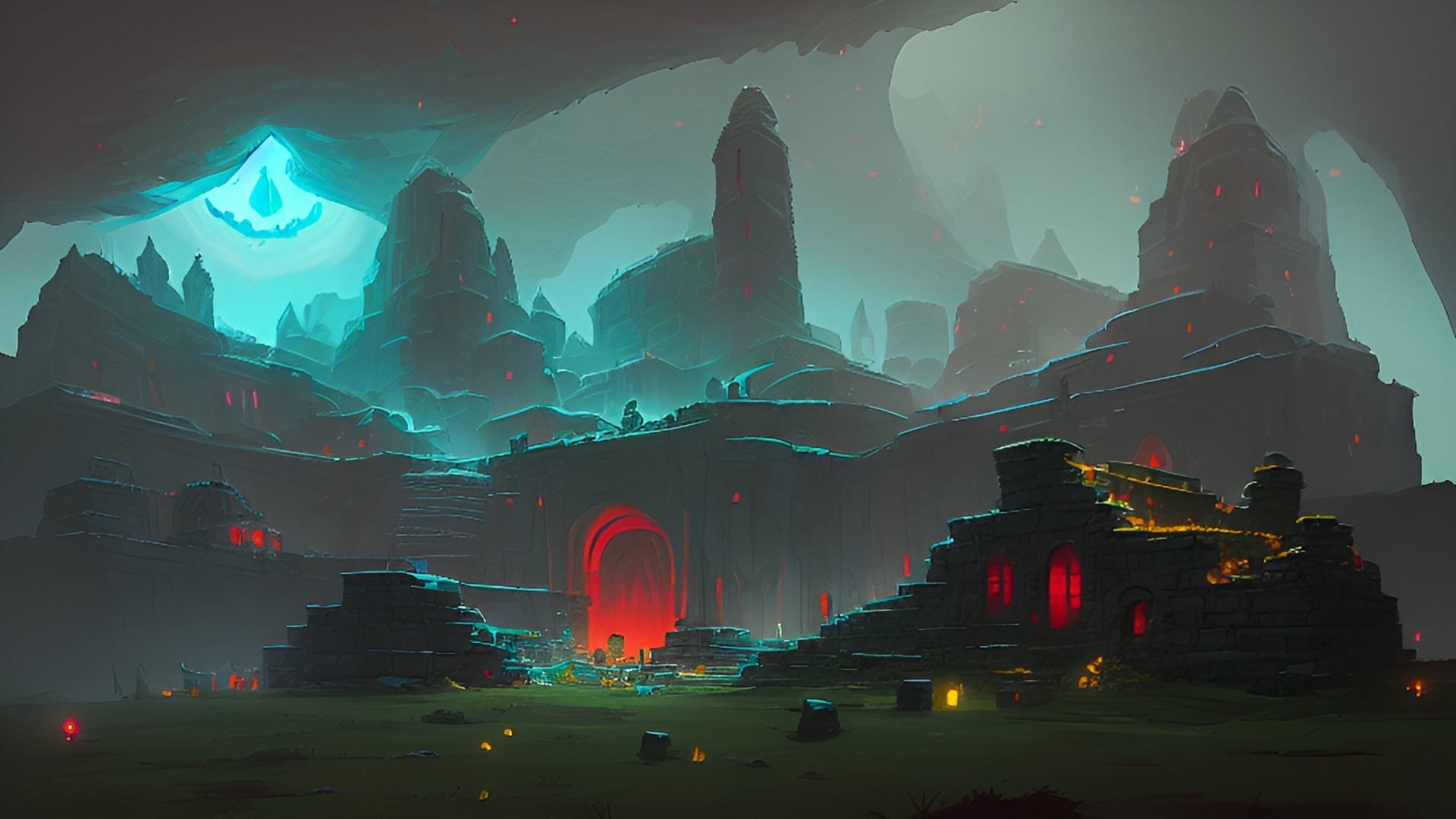
Building Realities 06/05/2026
Hey there people!
One
I’m Jack Lhasa and what I do is build worlds. Actually I do a massive variety of other things. I’m the publishing and art markets’ Jack of All Trades, so to speak. If it’s a job in either field, I have done it and can do it. I’ve taught classes, courses, clinics, and workshops. That’s enough about me.
Message me
The Dhakan Undercity
This is kinda long so here’s a peak:
Building Realities with Jack Lhasa is a reader-supported publication. To receive new posts and support my work, consider becoming a free or paid subscriber.
1. Jack Lhasa
2. The slow start
3. Arrival of a co-creator
4. Worldbuilding goal and collaboration
5. Press Kit Media and Assets Bundle
6. The World We Build
7. The other side of the universe
The Crimson Forest
Two
Let’s talk about Worldbuilding and the MoonShadow project.
The MoonShadow project is my baby. For about 15 years, every January I’ve picked a project and made it my work for the year(along with paying gigs lol). In 2025, I decided to start the novel I’d always wanted to write, and I changed up my normal rules. Usually a year’s project is either finished by the next January or abandoned(kinda. I keep all the work. Mess with it occasionally, but not full energy).
Subscribe
This time I knew this would be a big task. So at the onset, I pledged to continue this to it’s completion. I knew I was talking about 3 or more years.
MoonShadow is about Magic. In the first few months I held 4 focus groups and consulted several people who I think are experts in their fields. Despite this, very little got done.
Three
Then, in May of 2025, my old friend David reached out, after almost 20 years. He’d moved out of town and we lost touch after a few talks in the early years. We were very compatible in our interests, both very intelligent and well spoken, and when we met, we hit it off fast.
As we were catching up, I mentioned what’d been going on with MoonShadow, the frustration from the focus groups, and the basics concepts involved. Dave immediately wanted to help.
Kaelith in her Pro League Duelist Outfit
“What can I do? What do you need?” That’s the conversation that really kicked the project into gear. As part of my January project design, I wanted a unique world, that was so compelling others would want to create in it. That’s the basic end goal. After we’ve finished establishing a framework and releasing our own fiction and art, we’ll be inviting others. It’s still a ways off from new collaboration, but tell me if you think you might want to try, and we’ll make the list for first access. The best part about the first few rounds of collaborators is that their work will be canon. They’ll also be playing a role in creating this setting.
We also have loose plans of publishing much of the Worldbuilding info available as RPG supplements.
Four
So, Dave started out just helping me brainstorm, organizing the mess I had made, helping me pick between ideas. By summer’s end, I was like, “Nah. You’ve done so much, you’re a co-creator.”
Since then, we’ve done so much!!! Dave’s already completed some compelling short fiction. I’ve fleshed out the world to cover a wide range in a way that new authors or artists will still be able to write just about anything they like. And those things will become part of the entire setting.
I’ve told this story before, but after my recent absence there’s been some fresh interest, so I thought I’d start with our Origin Story here. 😁👊🏼
Five
We’ve been working on a Press Kit Media and Asset Bundle. We are nearing completion there, but we’re saying release in September, just in case. Anyone who might like to write initial thoughts on the project should reach out. We’ll get the kit to you. You’ll have first access to tons of stuff, including our logos and official graphics to use with your article.
Sorry this has gotten kinda long. I’m going to squeeze in some actual world info, then we’re done for now.
Share
Six
The setting.
God knows when, in a galaxy very different from our own, life developed. A rock in orbit around an Ice Giant, that spent its existence bathed in shades of blue because this blue planet was nearly always blocking or tinting the system’s star. Curious and unfathomable creatures and biomes developed. And magic was intertwined with physics. They only worked together.
On this giant planet’s moon, magic is intrinsic. It is everywhere and in everything. The plants and animals developed strong bioluminescent properties. Real, unfiltered daylight was only reaching this place for around three hours a day. Dusk and Dawn take up most of each days time. The darkest time is also about three hours.
And on this moon, plants and animals were always infused with magic. In the wild, almost every creature had offense or defensive magic. How exactly these creatures were making it work is still a bit of a mystery.
Comment
Several hominid-like animals evolved to possess consciousness like humans. Yet humans, earth, and everything from them had never had any type of connection here. It’s long been hypothesized that aliens would be most likely to have developed in a similar way. 2 legs, 2 arms, a torso and a head. Why? Because that’s true(roughly, some have 4 legs) of nearly all mammals here.
The people of this strange satellite were of a variety of races. Even so, a race of hybrids developed, with the possibility of having any color or characteristic of other races.
By the time our story starts in on the written history of the place, there is nearly constant war for limited resources. Those who learned to control the magic all around them rarely shared info. And many were quite mad.
The Three Cities
Seven
One day, in the City of Mistyat, which sits at a river delta, a small group of cloaked strangers arrived. They began to teach everyone magic. Eventually the movement lead to a full scale public education system, and three major cities.
Public education was free, but compulsory. Everyone had to attend from age 5 to 25. After several generations, everyone was using magic everywhere for all manner of things. Graduates were capable of total survival, with many skills. Graduates stepped into the world as equals.
Centuries passed.
Scarcity of resources was nearly unimaginable. With the ability to fulfill their basic needs, crime wasn’t something that occurred very often. Society was near-utopian.
Unfortunately, intelligent creatures never handle a life without struggle very well for long.
The Known World
I’m calling it there. More next week. Promise.
One thing about the Press Kit and possible writers/artists/etc who’d like to collaborate. I’m not the kind of person to toot my own horn. I’ve been on the press side of big project releases. If you write about product announcements, you are going to want the media kit. This is going to be big. I’ve worked big releases before. If you e got one reader or millions, Sign up. Do a short article when you get the kits. You won’t regret it. Potential collaborators, you will want to have art, or short stories, or whatever you do aligned here.
You have all heard me say repeatedly that I never really think my work is all that great. Even when magazines and websites are buying it like crazy. MoonShadow is going to be the best thing I’ve ever created or been involved with. I’m confident of that. At launch, it could be a huge platform for you to make an entire portfolio. Getting in early is always the smart thing when something with this kind of potential comes along. Subscribe. As more and more of our project is talked about here, the more you’ll believe me, but the contact queue is first to express interest, first to get in. A reviewer could easily turn out two dozen commentaries and reviews just on what we’ve already finished. As we roll out over the next few years that means you could release articles monthly. The first to cover MoonShadow consistently will receive exclusive. Contact us email at the bottom, or contact via Substack.
I’m Jack Lhasa.
You are Amazing.
👊🏼👊🏼Solidarity👊🏼👊🏼
Support!
Get the app
Join the chat
If you think you might like collaborating with us, or if you think you’d like to be one of the first journalists and critics to be able to write about our work, contact us! You can use the regular Substack avenues, or Contact the MoonShadow Team!
All Rights Reserved.
The MoonShadow world, storylines, images, texts, characters, and any other content, Copyright Jack Lhasa 2000-2026, David Cunnigham 2025-2026 unless otherwise noted.
Building Realities with Jack Lhasa is a reader-supported publication. To receive new posts and support my work, consider becoming a free or paid subscriber.
Jack Lhasa4 months ago

The Value of Affirmation
(unedited)
“I am good looking.”
“I am strong.”
“I am intelligent.”
“I am a giant.”
“I am a Rockstar”
Positive affirmations.
I can’t think about affirmations without seeing that Saturday Night Live “Daily Affirmations with Stuart Smalley.” And I laugh. Al Franken played Stuart Smalley. It was a parody and a bit of a jab at some of the self-help trends at that time(Early 90s).
Building Realities with Jack Lhasa is a reader-supported publication. To receive new posts and support my work, consider becoming a free or paid subscriber.
"I'm good enough, I'm smart enough, and doggone it, people like me."
Franken would stand in front of a mirror and say his affirmations which were crazy ridiculous. Comedy Gold. It was a recurring skit. They did them from 1991 until around ‘94-‘95. He’d have the week’s host, or another SNL cast member on as guests to talk about their “problems.” He would often anxious stumble over a line, then say:
“That's okay... I'm in a program."
Truly classic comedy. I’ve always like e dry era of SNL, but the 90s and 00s were the ones I watched live.
Anyway, if you’ve ever seen a therapist or read a self-help book, there’s a good chance you’ve heard of “Positive Affirmations.”
Subscribe
Just like on SNL, the idea of this sort of complimenting yourself in front of a mirror can seem pretty silly. It’s a reason some people refuse to try affirmations.
Here’s the thing though. If you’re battling depression, anxiety, issues of self-worth, or anything at all like that, affirmations do actually work.
Even if you think it’s dumb. If you do it every day, it’s like reprogramming your brain. When Depression settles in for a long hall(Even as long as a few months), it changes our inner monologue.
You feel awful. No one much wants to be around you. You are extra hard on yourself about things someone who isn’t depressed never even considers. The longer you are depressed without any real relief, the worse your thoughts get twisted up. This happened to me. I didn’t even notice.
My thoughts, and my mind, well, those were my happy places as a kid. If I needed to cope with something, I’d read. After I started driving I’d go to the library and bookstores for hours every week. But the way depression hit me, it felt sudden.
Most people don’t see a nervous breakdown in their future. The signs are there. But we aren’t taught how to identify and handle excessive depression or anxiety. Some self-medicate. I did for a bit before my breakdown. Never thought I’d feel and truly believe I might die any second. That’s a panic attack.
I fought the meds and therapy. My brain was the thing that had given me every good thing in my life. The idea that it was sabotaging itself was unthinkable. So, I went a long time without any improvement.
It’s been 21 years. Nothing has helped my mental health problems well for very long. I tried every suggestion. Every random advice. Every pill. Every type of therapy. Nothing worked.
Years later, I was able to gain actual clarity by disassociating. When you feel like you’re outside of yourself, that constant thought pattern is very clear. I realized immediately that depression had warped my entire identity. Starting with my self-worth.
There are a lot of medications doctors will get you to try when the usual suspects aren’t helping. They made me clumsy. I acted like I was drunk. I walked into things. All kinds of stuff.
My brain was taking healthy thoughts, and twisting them. If I fell down, I’d think, “Yup. That’s me. Just a clumsy asshole.”
When you start saying that over and over, it becomes the reality. The negative thoughts are everywhere and often. Soon you rarely ever think or say good things about yourself.
This is why those “Positive Affirmations” work. The negative thoughts started slowly. But they became the norm.
Positive thoughts can also do that!
Standing in front of the mirror, saying, “I am…” feels absolutely silly. It was a long time before I really even tried. It seemed so dumb.
But, saying these things, even when you don’t believe them, or think the exercise is stupid and couldn’t possibly help.. if you keep doing them, your thoughts will change.
Would you look at that? I did a quick search to make sure I hadn’t screwed up any of the SNL names, and it turns out that those skits even spawned a movie, “Stuart Saves his Family.” 1995. I have not seen it. I’ll make that happen.
Back to those pesky thoughts that’ll hold you back. The thing about doing something every day is that it becomes a ritual. Though less common now, throughout human history, rituals were employed in a great many ways. The simple breakdown, though, is that ritual is a type of learning.
By repeating the same actions until they’re memorized, we are creating a feedback loop. Once memorized, the daily performance actually releases dopamine and probably a few other important neurotransmitters.
I’ve actually already written an article about why ritual does this, explained as building up a collection of something. When you collect baseball cards(Just a random choice on my part) you usually buy sealed packs. Opening those packs, and pulling out a highly desirable card triggers a dopamine release. Then, once it’s in its home display or whatever, whenever you go back and look through your cards, you see it, and boom, dopamine. This also works with taking notes.
Share
So, ritual. Rituals are dramatic performances of an agreed upon script. They are mostly used in group settings, because the drama, the memorized review, seeing others doing the same, and being told that this part is representing a person or storyline, you hit dopamine repeatedly, and everyone their makes a bonding memory.
Why is this related to affirmations? Because rituals are a bit like coding a program into a full group. It builds solidarity. The repetition becomes a reward highway.
When you do positive affirmations a very similar thing happens. These things are normally alone, but they have ritualistic elements. And, just like rituals, even if you think it’s horseshit, it still creates that brain link over time.
Focusing on things you really don’t like about yourself, and make an affirmation that says the opposite. Slowly, a thought like, “I’m so damn forgetful!” Gives way to an affirmation like “I am smart and conscientious. I remember my friends’ birthdays.”
Say it enough, and the negative thought changes into either a non-thought(You just don’t talk about forgetting as much), or it becomes a motivator, like, “Oh, my cousin’s birthday is this month. I’ll go get her a card.”
Obviously, I could give you much more aesthetically pleasing examples in nearly every example above, but this isn’t about making the beauty of language shine. It’s about mental health, and an effective exercise that is almost always dismissed without even trying.
That is the thing. The results. Your mileage may vary, but making thoughtful affirmations that assert a positive attitude or trait in yourself, will change some negative wiring.
Comment
It’s not magic. You will get nowhere if your affirmation is “I am psychic.” Won’t change anything. lol.
I’m publishing this. I’m not going to proof it. I’m sure my finger slipped a time or two, but I want to assert my confidence here. Confidence is something depression took from me. I took it back. And I did it by looking in the mirror and telling myself I was confident. True story.
My mental health issues will never be completely gone. It would take an absolutely Light Bulb level new Tech to do that. I have managed to regain qualities I’d lost though. Affirmations were a big part of it.
As always, I’m Jack Lhasa.
You are amazing.
👊🏼👊🏼Solidarity👊🏼👊🏼
Ko-Fi
Tip your servers! They work hard dealing with assholes all day and the owner tops their hourly at $3.
Building Realities with Jack Lhasa is a reader-supported publication. To receive new posts and support my work, consider becoming a free or paid subscriber.
Jack Lhasa4 months ago
Hey out there!
I’ve been promising this for a while, but health, a busted computer, and a busted phone took their toll on time. Here now is the list.
Share
Submissions
My list of zines, Substacks, and other places open to submissions from new writers has five links now.
I’ll make it live very soon, but please, if you know of publishers, contests, or any other easy access publications, send me that info!!!
Accounts on Substack that release a curated newsletter from submissions. Of their community. These usually pay a small amount of online rights, award a sticker or plaque or similar, Poetry Workshops, Clinics, Open Mics, contests, Awards, group recognition and more.
Subscribe now
1.
Flash fiction 3/mo
https://open.substack.com/pub/bradleyramsey
———
2.
Blank Canvas Post
https://inkandribbon.org/submissions
——-
3.
Strange Pilgrims
Strange Pilgrims
We read over 7000 stories & essays. Here are our top 9 submitting tips!
Our next reading period is coming up on March 6 (Gabriel García Márquez’s birthday) for 24 hours only, midnight-to-midnight. Submissions are free and we pay $200 for long-form writing, and $50 for short-form. Read the full submission guidelines here and get ready to submit…
Read more
7 months ago · 208 likes · 17 comments · Strange Pilgrims, Shannan Mann, and Karan Kapoor
——-
4.Write, Period.
https://substack.com/@writeperiod
———
5.
Future Britain’s Speculative Fiction
Sol Stories
Future Britains - Contributors Announcement
Something new is dawning on these British Isles…
Read more
7 months ago · 34 likes · 17 comments · Martin Grace
———
6.
Lemon Jelly Press.
Fiction, nonfiction, poetry. Huge variety!
Lemon Jelly press
Submissions Are Open at Lemon Jelly Press
We’re open…
Read more
6 months ago · 85 likes · 7 comments · Lemon Jelly Press CIC
———
7.
Only Poems
https://onlypoems.submittable.com/submit
This kind of publication is not uncommon. The pay this particular site offers is excellent.
Reply from Substack account where I inquired:
hi, yes! The poems we publish every Saturday come in via submissions. You can find more
details here: onlypoems.submittable.coM
———
Only Poems
Holds major poetry publishing and contests.
Poet of the week: $77 Poem of the month: $33 Only Poems daily: $22 Post of the year:
$5k,plus $500 each finalist Bob Hicok Fellowship (yearly): lots of amazing rewards Leonard
Cohen Poetry Prize: $1/$250 to 4 fin.
https://onlypoems.submittable.com/submit———
The link I’m sharing below might be the single best way to kick your career in poetry into gear!
So many publications! Most even pay decently!!!
Subfolios
This is a treasure trove of ways to get paid.
https://subfolios.com/
Leave a comment
Hey everybody!!
At the 1st of April I promised to publish a list of all the places I could find with open
submissions for poetry and fiction.
Then we had a loss in the family. And I had to take most of April off.
The good news is that I’ll be publishing that list THIS WEEK. First Week of May, 2026.
IF YOU ARE IN CHARGE OF A PUBLICATION YOU‘D LIKE LISTED, REPLY TO THIS POST. IF YOU
KNOW OF A PUBLICATION WITH SUBMISSIONS OPEN, TELL ME IN THE REPLIES!
Thanks everyone! That good news be coming soon! 😉
Jack Lhasa
Building Realities.
May 03, 2026
(FINALLY published May 20, 2026. )
Subscribe now
BY ALL MEANS, copy this list. Republish it. Restack it. Just get it to everyone who needs it!!
Jack Lhasa5 months ago
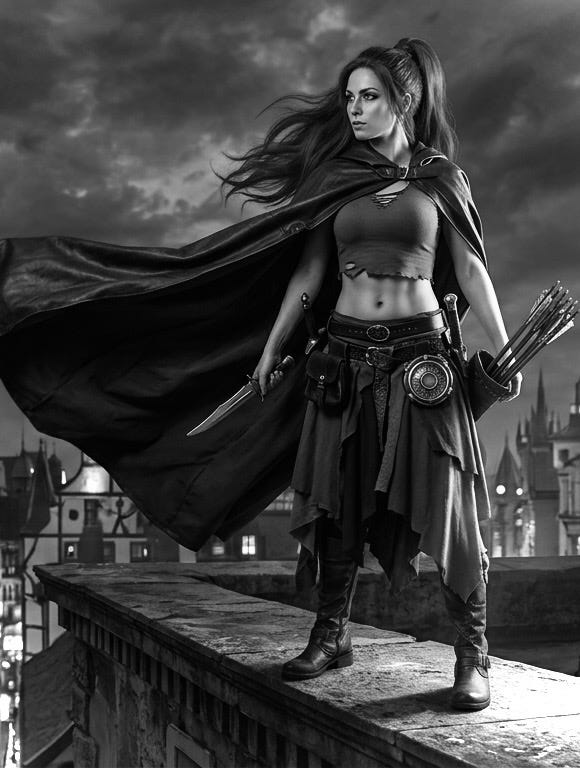
Subscribe now
Share
General poetry without much of a name:
Text within this block will maintain its original spacing when published
Some time soon
Sweat and
You’re gonna find love
you won’t know what to do.
Bass sends those shivers
up and down down
lips begin their quiver.
I’ll know.
You’ll know, just what to do.
Leave a comment
Text within this block will maintain its original spacing when published
You know it's like
Everything else is resistible
covering years up with tears
I'm invincible.
Just a few nameless bits.
Start writing today. Use the button below to create a Substack of your own
Start a Substack
I’m letting my poetic side blossom after a decade and more of silence. I can’t promise it’ll ever be anything good here. Except me 😉
I’m Jack Lhasa
You are Amazing
👊🏼👊🏼Solidarity👊🏼👊🏼
https://ko-fi.com/jacklhasa
https://linktr.ee/jacklhasa
Looking across Ilargia Base.
Jack Lhasa5 months ago