All articles

The Agentic Russian Dolls
An ‘agentic’ agenda is now moving across organizations where daily tasks, products, or mindset of employees are being ‘aligned’ with this shift. But agentic means a lot of things Delegating work to agents to complete. For engineers, they’re encouraged to leverage AI code gen. For Marketing, the value is more automation than actual autonomous, non-directed actions (no I’m not talking about web fetch for news alerts) Embedded AI models live inside the product as core functions, e.g. models learning behavioral patterns, so that the product has the ability to take smart actions on its own without being directed by heavy manual configs Product provides an agentic interface, in its most basic form as a chat widget to help users delegate tasks using natural language, or MCP serves/API to help plug-in agents of choice. Voilà, the agentic stack we’re arriving at: at the core lives the underlying AI models. It’s built upon a codebase which is now also largely created by AI. And the agent-native UI wrapper is the outer shell. Source: The National Museum of American Diplomacy This layered architecture is what many companies are now trying to manifest their Agentic AI adoption into existence, which I can’t help thinking about its uncanny resemblance to Russian nesting dolls. Shifting from buy to build and agentic interoperability AI still have many limitations, but the one thing it has delivered so far is making companies shift from buy to build. In other words, many companies believe they now have the powers to build internal micro-SaaS that is better than a packaged solution from vendors. And that their own fleets of agents need to operate across these ecosystem and infrastructure seamlessly. Dare I say it brings forth the agentic interoperability between internal and vendor software. Many people have now referred to this concept as ‘Web of Agents.’ Microsoft announces the start of a ‘open, scalable agentic web’ As a vendor, a few things to think about: If every company has their own agents, the need from vendors’ solutions does not go away. Instead, vendors will still be able to create complex solutions serving specific tasks that customers need to get done. But now that tasks are delegated to customers’ agents, the ‘agentic’ aspect of vendors’ solutions is the fact that they’re designed more for agents and less for human end-users. This concept of agentic has a great impact on product design decision, pricing structure, or even PMF. In this way, it’d rather concern MCP servers for external apps and official connectors on popular models (GPT, Claude, Gemini, etc.) Leave a comment

Reasoning is not in charge
Most of us think of emotions as something separate from reasoning, a kind of interference layered on top of otherwise clean, rational thought. But the more I read recent work from Anthropic and interpretability research from Transformer Circuits, the harder it becomes to maintain that distinction. What looks like emotion may not be opposed to reasoning at all; it may be part of the machinery that makes reasoning possible in the first place. Thanks for reading ProductChimp! Subscribe to receive new posts and support my work. Looking inside Claude Recent work from Anthropic and interpretability research from Transformer Circuits points to a surprising pattern in how models like Claude process information. When exposed to certain tokens that carry emotional weight, such as urgency, risk, or uncertainty, the model’s internal activations shift in measurable ways. What makes this more interesting is that these signals appear to function before any explicit reasoning is generated. The model does not first decide through step-by-step logic and then react. Instead, these emotion-like cues bias the system early in the process, shaping the trajectory of the response that follows. The reasoning we see in the output often reflects these initial biases rather than independently deriving conclusions from scratch. From a mechanistic perspective, these findings challenge the idea that models operate as neutral, logic-first systems. Instead, they behave more like systems with embedded control signals that guide computation under constraints. Emotion-triggering inputs act more like switches that reweight internal pathways, making certain interpretations more likely than others. Emotions as a form of compression In any sufficiently complex system, it is computationally expensive to evaluate every situation from first principles. Instead, the system develops shortcuts, signals that summarise prior experience into fast, actionable judgments. In humans, we label these signals as fear, curiosity, or confidence. In machine learning models, similar dynamics appear as internal activations that bias the system toward certain outputs before any explicit chain of reasoning is constructed. In both cases, something like a pre-rational push exists, guiding the direction of thought before it is articulated. This challenges the common intuition that reasoning is primary and emotion is secondary. In practice, even large language models do not operate as purely logical engines that derive conclusions step by step. They generate internal tendencies first and then produce reasoning that is consistent with those tendencies. The explanation often comes after the decision has already been shaped. If this is true, then reasoning is less like a neutral engine of truth and more like a narrative layer that justifies underlying signals. Emotions as control systems rather than disturbances AI models allocate attention, prioritise goals, and determine what is worth computing in the first place. Without such mechanisms, a system would not become more rational; it would become directionless, unable to decide what to focus on or how to act. What we call “emotion” is simply the name we give to these fast, value-laden signals in human cognition. There is a strong instinct to design systems that are purely rational and stripped of anything resembling emotion, under the assumption that this leads to safer or more reliable behaviour. But if emotion-like processes are actually the way systems encode priorities and values, then removing them does not produce cleaner reasoning; it risks producing systems that lack coherent objectives altogether. The issue is not whether such signals exist, but how they are shaped and aligned. What I find most compelling in this line of thinking is the inversion it suggests. We tend to believe that intelligence begins with reasoning and is occasionally distorted by emotion. But it may be more accurate to say that intelligence begins with something like emotion, an internal sense of what matters, and that reasoning is the tool used to elaborate, justify, and act on those priorities. In that sense, emotions are not a flaw in the system; they are the interface through which any system, human or artificial, engages with the world. References: https://www.anthropic.com/research/emotion-concepts-function https://transformer-circuits.pub/2026/emotions/index.html If reasoning is shaped before it begins, what does that change about how we prompt or trust AI systems? Leave a comment
Complex billing comes from product decisions
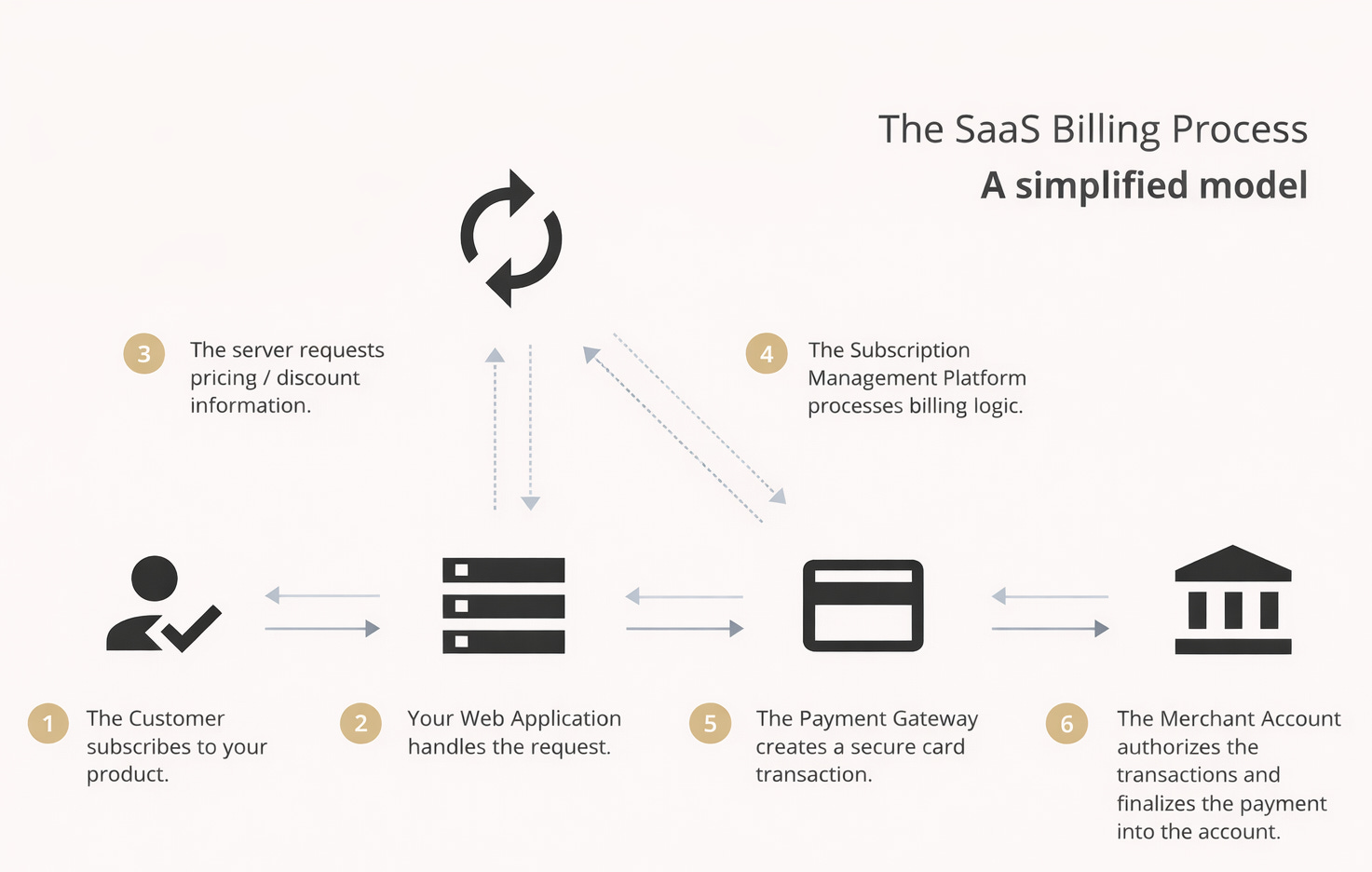
Billing has been sitting in the back of my mind for a while. Not because something broke, but because it keeps quietly influencing decisions that are framed as product or pricing discussions. In many SaaS companies, billing is treated as an operational detail rather than a product decision. It usually lives somewhere between finance and engineering, assumed to be solved once and then safely ignored. That framing feels convenient, especially early on, when there are more visible problems to focus on. At first, it even feels accurate. A subscription has a price. A card gets charged. An invoice goes out. Everything feels neat and contained. Billing runs in the background while attention stays on features, growth, and distribution. The system works, so there is little reason to question it. That sense of stability is reassuring, but it rarely lasts. Source: Chart Mogul Thanks for reading ProductChimp! Subscribe for free to receive new posts and support my work. When billing stops being invisible As products evolve, billing evolves with them, whether anyone plans for it or not. Credits get added, discounts accumulate, bundles appear, and regional rules slowly creep in as the customer base expands. None of these changes feel significant on their own, but over time they build a layer of logic that becomes difficult to reason about. What usually becomes clear, later than expected, is that billing systems are built for the company that exists today, not the one gradually taking shape. When pricing needs to change or a new model needs to be introduced, billing stops being neutral and begins to shape what is possible. Decisions take longer and teams start working around the system instead of relying on it. Pricing itself is meant to be strategic as it communicates value, sets expectations, and shapes how customers experience a product over time. The systems that implement pricing, however, often feel rigid and disconnected from the way product teams think about value. Ideas that make sense in discussion or planning become surprisingly difficult to express in codes that were never designed to change. Over time, that gap turns pricing from a lever into something teams hesitate to touch. And when billing logic lives inside such systems, you lose the steering wheel on the revenue engine. You may have a clear sense of what they want to charge, but less confidence in how the final numbers are derived. Early on, that uncertainty is easy to live with, but as the business scales, it becomes a source of risk. Customers trust that they are being charged fairly and consistently. Internally, teams trust that revenue data is accurate and defensible. When billing logic becomes hard to explain, that trust starts to erode, and small discrepancies turn into distractions. Complexity as a byproduct of ambition Billing complexity rarely comes from poor decisions. More often, it is the result of trying to do the right things at each stage of growth. Supporting more use cases, offering flexible pricing, and serving a broader range of customers all introduce complexity by design. Each choice makes sense on its own, but together they create systems that are harder to change than expected. Over time, this changes how billing is perceived. It stops feeling like something that can be hidden behind a vendor abstraction and starts to resemble core infrastructure, with all the expectations that come with it. Core infrastructure needs to be understandable. It needs room to evolve. It deserves the same level of architectural care given to systems that power the product itself. From that perspective, billing needs to be legible. Pricing logic should be explainable, auditable, and adaptable. When a pricing model cannot be clearly expressed in code or explained in plain language, it often signals a deeper misalignment in how value is defined. There is also an organisational cost to opaque billing. When systems are hard to understand, ownership becomes blurred. Product, engineering, finance, and sales end up talking past one another about the same numbers. Everyone feels the friction, but no one feels fully responsible for resolving it. Over time, caution sets in. Pricing changes are delayed not because they are wrong, but because the systems feel fragile. That helps explain why many SaaS companies hold on to outdated pricing structures longer than they should. Customer resistance is rarely the real blocker. More often, it is internal fear of breaking systems that are already stretched thin. Billing as a strategic asset Billing complexity is inevitable for any serious SaaS business. Pretending it can be postponed indefinitely or solved with shortcuts only pushes the cost into the future. Every workaround adds weight, and every opaque decision makes meaningful change harder later on. A more useful question is not how to avoid billing complexity, but how to design for it. That means assuming change from the start, making logic explicit, and building systems that can adapt rather than resist. Seen this way, billing becomes an ongoing design practice rather than a one-time setup. The companies that handle billing well will not be the ones with the flashiest pricing pages. They will be the ones that can change pricing confidently, explain it clearly, and implement it without disruption. That is when billing stops feeling like a necessary evil and starts to look like a strategic asset, one that quietly encodes how a company understands value. If this resonates, I would love to hear where billing complexity has shown up in your own product or organisation. Leave a comment

Why Amazon Bedrock AgentCore memory is not the breakthrough you think it is
The hype cycle around Amazon Bedrock AgentCore Memory has gone into full acceleration. In every webinar, demo, or LinkedIn thread, someone repeats the same claim. Give agents memory, especially episodic memory, and suddenly we get consistency, reliability, and something that finally feels “production ready”. It is a compelling story, but I do not think it survives contact with real systems. People believe memory solves the statelessness problem, which is true in a narrow sense. But the problems that stop AI agents from functioning at scale are not primarily about memory. They are about reasoning stability, tool correctness, and predictable behaviour. Memory helps, but it is not the missing piece everyone wants it to be. We are mistaking a feature that feels human for a feature that actually solves technical bottlenecks. The result is a collective overestimation of what AgentCore Memory really does. Thanks for reading ProductChimp! Subscribe for free to receive new posts. The reliability problem is deeper than forgetting context Most agent failures have nothing to do with memory at all. They start with misinterpreted instructions, unstable reasoning loops, and tool calls that veer off in unpredictable ways. Episodic memory does not eliminate these behaviours. It just records them more neatly. You can give an unreliable agent a perfect record of its past. It does not mean it will make better decisions about its future. It may even repeat the same decision with more confidence because the memory gives it false reassurance. The continuity improves, but the correctness does not. This is the blind spot in the industry narrative. We assume more context leads to better outcomes. In LLM powered systems, the relationship is not that clean. Source: AWS Episodic memory is reflection, not learning The phrase “learns from experience” shows up everywhere in discussions around AgentCore. It is a convenient phrase, but it is misleading. Episodic memory summarises interactions. It does not improve the model. It does not change its reasoning mechanics. It does not create new abilities. If anything, episodic memory can reinforce wrong patterns. When a model hallucinates or misunderstands something early on, that error may be summarised and fed back later. The agent becomes consistent, but consistently flawed. This is the part no one seems keen to acknowledge. Episodic memory makes behaviour more coherent. It does not make behaviour more correct. Those are not the same thing. Better governance does not mean better behaviour AgentCore deserves credit for offering strong governance around memory. IAM, KMS, retention rules, and policy enforcement are all legitimate enterprise-grade features. In regulated industries, this matters a lot. But governance of memory is not governance of behaviour. You can audit a bad decision, but you cannot prevent it simply by having the history of it. The majority of agentic failures come from uncontrolled autonomy and vague action boundaries. Memory does not solve either. This gap means teams may feel safer without actually being safer. The system is traceable, but not more predictable. The infrastructure becomes easier, but the behaviour becomes harder Yes, it is a relief that we no longer have to build and maintain our own vector stores or retrieval pipelines. AgentCore does that well. But when you abstract away infrastructure, the hard part shifts upward. Now teams need to figure out what to store, when to store it, how to summarise it, and how to prevent memory clutter from degrading reasoning. This is not implementation work. It is behavioural design work. It requires a deeper understanding of the agent’s task boundaries and decision patterns. If that design is weak, memory becomes noise rather than signal. So the idea that memory simplifies production is incomplete. It simplifies infrastructure, but it complicates behaviour. More memory often means more confusion There is a popular assumption that more data makes agents better. This is rarely true. When agents carry too much memory, retrieval becomes noisy and ambiguous. They surface irrelevant episodes or partial patterns that distort the next output. Episodic memory magnifies this risk because episodes contain entire reasoning paths. If your agent stores poor decisions, it may reuse them later. You end up with a system that is consistent, but consistently wrong. Memory is a multiplier. It multiplies good behaviour and multiplies bad behaviour. This is why the industry’s overly optimistic framing feels premature. The breakthrough the industry wants will not come from continuity The thing people want most from agents is reliability. They want a system that does not behave differently on Monday than it did on Friday. Memory feels like a way to get there, but it does not address the underlying randomness of LLM inference. Two identical prompts with identical memory can still produce different outcomes. Real reliability comes from constraints, deterministic tool flows, and controlled autonomy. These areas are much harder to design than memory systems, which is why they get less attention. But until those foundations improve, memory will not meaningfully move agents from prototype to production. Continuity makes agents feel better. Determinism makes agents work better. The industry is confusing one for the other. The more honest way to frame AgentCore memory Here is a more grounded framing. AgentCore Memory is a helpful feature that improves continuity, reduces repetitive prompts, and gives organisations better auditability. It is a meaningful step, but not a transformative one. Production readiness will not be unlocked by storing more context. It will come from better constraint design, more stable reasoning frameworks, and improved evaluation systems. Memory enhances a well built agent. It does not fix a poorly built one. The industry should be excited, but for the right reasons. Memory is progress, but not the breakthrough people are claiming. Helpful resources AWS Bedrock AgentCore GitHub: https://aws.github.io/bedrock-agentcore-starter-toolkit/index.html Official documentation: https://docs.aws.amazon.com/bedrock-agentcore/latest/devguide/memory.html What do you think? If you disagree with me or think memory really is the turning point, leave a comment. I want to hear how you see it. Leave a comment

The truth about viral loops and why most startup attempts fail
Founders often imagine viral loops as a near automatic engine of growth. A user invites another user, the cycle repeats, and the product grows with very little effort. The idea of effortless growth is attractive. Viral loops promise compounding acquisition without paid channels. The reality is more disciplined. Virality only works when the product is so valuable and so clear in its purpose that sharing becomes the natural continuation of the user’s experience. Everything else distracts the team from what actually matters. Here’s exactly Andrew Chen’s thinking on viral loops. Source: Tech Crunch Thanks for reading ProductChimp! Subscribe to receive new posts and support my work. 1. Sharing only works when it fits directly into the user’s flow It’s common to place sharing prompts at the end of a journey. This almost never works. If the loop isn’t anchored in the product’s core action, users will skip it. Viral loops succeed when sharing feels like a built in part of the task the user’s already doing. If you need to force the share, the loop will die out. Successful virality feels inevitable, not bolted on. 2. Both sides must gain something immediately A viral loop fails the moment the recipient does not understand the value of the invitation. Many loops reward the inviter but leave the recipient confused. This imbalance kills momentum. The invite must feel like a benefit for both people. The recipient should arrive and think, this is useful to me right now. Balanced value is the only way a loop stays alive. 3. Virality is engineered, not accidental Many founders hope virality will emerge naturally if the product is cool enough. But viral loops rely on predictable systems. They require intentional design, measurable conversion points and clear incentives that align with user motivation. Word of mouth is emotional and unpredictable. Viral loops are structured systems that can be repeated and monitored. Treating the two as the same leads to confusion and wasted effort. 4. The equation determines whether the loop scales or collapses Every loop starts with the same rule. Each user must reliably create more than one additional user over time. Invite rate, acceptance rate and activation rate form the foundation. If the math doesn’t support growth, the loop will weaken no matter how clever the design appears. Early spikes are misleading. Once novelty fades, only the numbers tell the truth. Viral products succeed because their systems work under normal behaviour, not under early excitement. 5. Viral loops expose everything your product does well and everything it does not A viral loop functions like a diagnostic tool. If onboarding is confusing, referrals reveal it instantly. If value is unclear, users hesitate to share. Virality amplifies strengths and weaknesses, which is why early stage teams often hurt themselves by implementing a loop too soon. Retention must exist before virality. Without retention, the loop becomes a fast way to increase churn. 6. Copying someone else’s viral loop almost never works Founders often borrow referral systems from well known companies. Dropbox’s shared folder loop, Airbnb’s supply driven invitations, Notion’s collaborative workspace model. These loops worked because they matched the product’s use case and user psychology. A loop that fits a collaborative tool does not translate to a health app. A social identity loop does not translate to enterprise software. Virality is contextual. Ape the structure without the behavioural context and the loop fails immediately. 7. Network effects and virality are different, even if many teams mix them up A network effect means the product becomes more valuable as more people join. Virality refers to the speed at which new users show up. You can have one without the other. Virality without a network effect usually fades. A network effect without virality grows slowly. When a product has both, growth becomes significantly more durable. But this only happens when the founder understands which mechanism the product actually relies on. 8. Viral loops decay unless they are actively maintained Every viral loop weakens over time. Audiences saturate, user behaviour evolves and conversion rates naturally decline. Virality is dynamic. It requires continuous adjustment of incentives, messaging and trigger placement. Treating virality as a one time feature is a mistake. It must be treated as a living system that needs tuning, measurement and periodic refresh. 9. Even small friction destroys momentum A viral loop is fragile. Tiny points of friction can break the chain. One unclear step, one slow load, or one confusing message can stop sharing entirely. Both the sender and the receiver must feel confident, clear and comfortable about the action. Reducing friction is not only technical but psychological. Users share when they feel certain about what will happen next. 10. Retention is the multiplier that makes virality meaningful A viral spike without retention is hollow. You acquire users quickly, but they disappear before they create value. Viral loops only matter when the product already earns long term engagement. Retention transforms viral growth from a temporary spike into a compounding engine. Without retention, virality becomes a short lived stunt. With retention, it becomes a strategic advantage. Takeaways Viral loops are not shortcuts. They are structured, fragile systems that reward clarity, strong product value and disciplined design. When a loop works, growth feels intentional and scalable. When it fails, it highlights the precise areas where the product still needs work. The goal is not to chase virality. The goal is to build a product so valuable that sharing becomes a natural act. Then build the mechanism that helps that behaviour scale. That’s the version of virality that works, according to our friend Andrew. Everything else is optimism disguised as strategy. If you have your own lessons or scars from building viral loops, I would love to hear them, so feel free to share your thoughts in the comments. Leave a comment
Amplitude’s core principles for Product-led Growth success
Product-led growth has evolved from a buzzword into a fundamental business strategy. But as more companies attempt to adopt PLG, many struggle to translate theory into practice. Amplitude has spent years refining their own PLG approach and identified essential principles that separate successful PLG implementations from those that fall short. These aren’t abstract concepts but hard-won insights from companies like WeMoney, NBCUniversal, Parabol, and Amplitude’s own experience building its product. Whether you’re just starting your PLG journey or looking to optimize an existing motion, these principles provide a foundation for sustainable, scalable growth. Source: The Motley Fool Thanks for reading ProductChimp! Subscribe for free to receive new posts. Principle 1: Put the product at the center of every customer journey stage The most fundamental principle of product-led growth is right in the name: the product itself drives acquisition, retention, and monetization. This principle goes beyond simply offering a free trial. It means the product must deliver value independently at each stage: At acquisition: Your product should naturally attract users through mechanisms like virality loops, network effects, or user-generated content. When someone uses Zoom, they create meeting links that introduce new users to the product. When developers use Snyk, they generate pull requests with Snyk branding that reach other developers. The product itself becomes the primary acquisition channel. At activation: Users must reach their “aha moment” without human intervention. Amplitude has simplified its onboarding journey, reducing signup flow pages by 60% to help users experience product value faster. The product guides users to discover value on their own through personalized onboarding, profiling questions, and progress tracking. At engagement: The product keeps users coming back through push notifications, personalized experiences, communities, and integrations. When Calm prompts users to set daily reminder notifications, retention increases by 3X, the product itself creates the habit loop. At monetization: Users can self-serve checkout and purchase without sales involvement. The product makes the value so clear that upgrading becomes the natural next step. Most companies blend product-led motions with marketing-led and sales-led approaches, with different weights at each stage. The key is ensuring the product can stand on its own merit at every touchpoint. Principle 2: Build on a foundation of behavioral data You cannot execute product-led growth without deep visibility into how users actually interact with your product. Former Amplitude Head of Growth Elena Verna emphasizes: “You need to have a data-driven environment, so you’re not just working from intuition or the opinions of the highest-paid person in the organization.” Behavioral data reveals both what users do and the psychology behind their actions. This data foundation enables: Understanding the true customer journey: PLG requires mapping the actual paths users take not the ones you assume they take. Amplitude customers use the platform to identify where users experience friction during onboarding, which features drive retention, and what actions predict higher conversion and lifetime value. Identifying “Aha Moments”: Every product has critical moments where users discover value. For Amplitude, this includes set up moments (connecting a data source and creating a chart) and “aha” moments (saving or sharing a chart). WeMoney discovered that users who set money goals within the first three days had significantly higher 12-month retention—a finding that only emerged through behavioral analysis. Enabling Product-led Sales: Product usage signals tell your GTM teams when to engage. Amplitude’s sales team is equipped with product usage data and product-qualified account (PQA) scores. Sales is three times more likely to convert PQAs than any other lead type. This isn’t possible without robust behavioral data. Democratizing insights: When you make self-serve data accessible across teams, anyone can leverage insights without waiting for analysts. This accelerates decision-making and aligns organizations around what actually drives growth. Principle 3: Embrace experimentation as your core decision-making process PLG represents an opportunity for product and growth teams to directly impact the bottom line. But with that opportunity comes increased accountability. Experimentation provides the reliable, repeatable process for making high-stakes product decisions. The 7-step experimentation framework Elena Verna’s framework guides teams through rigorous experimentation: Define a growth lever: Align experiments with business priorities (acquisition, retention, or monetization) Define the customer problem: Ground your work in actual customer needs Develop a hypothesis: Interpret why the problem exists Ideate possible solutions with KPIs: Generate multiple approaches and define success metrics Prioritize solutions: Consider cost, impact, and confidence Create an experiment statement and run tests: Frame your experiment clearly and execute Learn from results and iterate: Update your understanding and continue the loop This framework ensures experiments benefit users and the business. It bridges the gap between perception and reality, especially critical as you scale and direct customer feedback becomes harder to gather. Principle 4: Design for self-service activation If users can’t activate your product without human intervention, you don’t have product-led growth. This principle is non-negotiable. Ben Williams of Product-Led Geek notes: “I like to think of the activation process as something that starts really early, probably before they get to your web presence. When you talk about the product in PLG, it encompasses the entire user journey, not just the application.” Key tactics for self-service activation Personalized, goal-based onboarding: Dave Rigotti from Inflection.io emphasizes using micro-surveys and historical data to tailor onboarding paths. Amplitude has profiling questions during onboarding to customize the user journey based on what users want to achieve. Good friction: Not all friction is bad. Williams advocates for eliminating bad friction while cultivating good friction through gamification and thoughtful profiling questions that help tailor experiences. Social proof and use cases: Demonstrate how your product solves problems for customers with similar needs. This builds trust and helps users see themselves succeeding with your product. Progress visualization: Show users where they are in the onboarding journey. Airtable’s progress bar and LinkedIn’s profile completion indicator motivate users to reach full activation. Skills certifications: Reward users for completing trainings. INDMoney’s IND Learn program helps users earn finance certifications in five minutes, lifting activation rates while building trust. Amplitude has invested heavily in activation through simplified onboarding, Sales Assist programs, goal-oriented email nurtures, Amplitude Academy for skills training, and one-click integrations to speed up setup. Principle 5: Build retention through product habit loops PLG is more than an acquisition strategy. It’s essential for keeping users engaged and returning. The product itself must create habit loops that bring users back. Effective retention tactics Push notifications: Timely reminders bring users back to the product. When implemented thoughtfully, they significantly impact retention. Personalization: Wrike customizes dashboards for each user and augments them with AI-recommended tasks. When experiences align with individual needs and expectations, users stay engaged. Communities: Create spaces where users exchange advice and find belonging. Amplitude’s Cohort community exemplifies this, giving users reasons to return beyond the product features themselves. Game mechanics: Reward users with a sense of accomplishment. This motivates continued engagement and builds loyalty. Integration: Make your product work seamlessly with tools users already rely on. As former Amplitude Director of Product Management Hiral Shah notes about Atlassian: “When I’m creating a roadmap using Jira, I can pull that into Confluence very easily without leaving the tool.” At-scale customer success: Vic Davis, SVP of Customer Success at Inflection.io, emphasizes solving for scale: “We tend to over-pivot towards high-touch programs aimed at high-value customers… Solving for scale is what drives value when and where humans can’t.” Principle 6: Align monetization with actual product value In PLG, monetization happens when the product’s value becomes so clear that upgrading is the natural next step. This requires careful alignment between pricing, value delivery, and user experience. The monetization spectrum Trials: Offer time-based access to paid features. Credit card trials create urgency but may deter some users. Free trials lower barriers but may attract less committed users. Freemium: Provide limited functionality forever. Users upgrade when they need more features, usage, or benefits. LinkedIn’s InMail Messages feature demonstrates this: free users can’t send InMails, while paid tiers range from 5 to 50 per month. Reverse trial: Combine freemium with temporary access to paid capabilities. After the trial, users revert to the freemium experience with a clear understanding of premium value. Choosing the right model Dave Rigotti from Inflection.io outlines key considerations: Usage variability: Consistent usage patterns suit time-based trials. Significant variation works better with consumption-based models. Adoption cycle: Quick value realization supports time-based trials. Complex products with longer cycles need usage-based or extended trials. Conversion optimization: Time-based trials create urgency, potentially increasing conversion. But if value requires deeper adoption, users may feel rushed. CleverTap experimented to find their ideal trial duration, landing on 30 days, enough time to discover value while maintaining urgency. Product-Led Sales: Usage signals indicate when sales should engage. Amplitude empowers sales with product usage data and PQA scores to identify the most promising accounts. This product-led approach to sales converts at rates five times higher than traditional leads. Principle 7: Scale through organizational alignment PLG requires alignment across product, marketing, sales, and customer success. Each function plays a specific role in the product-led motion. Organizational models Product-led: Growth teams report to the product organization, positioning PLG as core to product strategy. Growth: A VP of Growth oversees growth marketing, product growth, and analytics: all responsible for self-serve revenue. Canal+ Poland’s Bartłomiej Leszczyńśki recommends this approach, with the growth team working across organizations to incorporate new methodologies. Dual model: Amplitude uses this approach, with growth marketing and growth product teams co-owning growth across functions. Both report to their respective VPs, with shared product metrics reinforcing alignment. Shared metrics drive alignment At Amplitude, aligned teams share metrics for: Acquisition: New relevant signups from business domains Retention: Number of activated accounts (data source connected, chart created, chart saved or shared) Monetization: Free-to-paid conversion rate over rolling 28-day windows Principle 8: Acknowledge PLG’s limits and prerequisites Not every company should adopt PLG, and successful practitioners are honest about when it’s not the right fit. Elena Verna identifies clear conditions that signal you should wait. When NOT to adopt PLG: Unpredictable current motions: If existing sales and marketing approaches aren’t predictable and sustainable, there’s likely a gap between what you think users want and what they actually want. Close this perception-reality gap before attempting PLG. Users can’t self-activate: If your product requires sales or customer support for activation, PLG won’t work. Complex enterprise tools that need backend system connections aren’t ready for product-led approaches, at least not without significant product evolution. Value isn’t immediately apparent: Passive products like cybersecurity software that work invisibly can’t drive engagement loops. Without engagement, there’s no path to retention or monetization through product-led motions. Enterprise buyers control all decisions: In highly regulated industries like healthcare, government, and law, end users may not have purchase authority. PLG requires end users to discover value and bring others along, which isn’t possible when enterprise buyers gate all decisions. Principle 9: Measure what matters at each journey stage You can’t improve what you don’t measure. PLG requires specific metrics for each customer journey stage: Acquisition Number of new signups and qualified leads Customer acquisition cost (CAC) Payback period Activation Activation rate Time to activate Free-to-paid conversions Engagement Monthly, weekly, daily active users (MAU, WAU, DAU) Stickiness (DAU/MAU) Feature usage Retention Retention rate Churn rate Customer lifetime value (CLV) Monetization Net revenue retention (NRR) Monthly recurring revenue (MRR) Average revenue per user (ARPU) Generated with NotebookLM Conclusion: PLG as a continuous journey Product-led growth isn’t a destination. It’s an ongoing journey of optimization, experimentation, and learning. Success doesn’t require perfection across all principles simultaneously. Start with one or two, build confidence, and expand from there. Amplitude has applied these principles to guide their own PLG journey while helping thousands of customers optimize theirs. The companies that succeed with PLG share a common thread: they put users first, let data guide decisions, experiment relentlessly, and recognize that the product must deliver value at every touchpoint. Whether you’re just beginning your PLG journey or optimizing an existing motion, these principles provide a framework for building products users love, and ones that sustainably grow your business. Love to hear your experience with PLG! Leave a comment
The cloud divorce papers are piling up
Somewhere between the third billing surprise and the second architecture review, you start wondering if you’re actually running a business or just subsidizing AWS’s new data center. The cloud promised infinite scale and zero infrastructure headaches. What it delivered was infinite ways to spend money you didn’t budget for and zero transparency into why your monthly bill just doubled. Now, after a decade of migration-to-cloud evangelism, companies are quietly filing for divorce and moving back to bare metal. The narrative shift happened faster than most people realize. David Lee’s viral Medium post about escaping cloud pricing hell struck a nerve because he articulated what thousands of engineering teams were already whispering in Slack channels. Source: Hetzner Thanks for reading ProductChimp! Subscribe for free to receive new posts. The math that broke the cloud’s spell is embarrassingly simple When your $800 monthly estimate becomes a $4,200 invoice because someone forgot to turn off a dev environment, you start questioning the entire relationship. A bare metal server from providers like Hetzner or OVH costs around $100-150 monthly for dedicated hardware. The equivalent AWS EC2 instance, once you factor in the reserved capacity you actually need, network egress fees, and the premium for managed services you’re not using, runs $400-600. That’s not a rounding error. That’s paying 4x for the privilege of abstractions you spend half your time working around. Bare metal doesn’t eliminate your costs but internalizes them But here’s what the bare metal evangelists won’t tell you upfront: the cloud isn’t expensive because Amazon is greedy. It’s expensive because someone has to pay for elasticity, global distribution, instant provisioning, and the army of engineers ensuring 99.99% uptime. When you move to bare metal, you’re not eliminating those costs. You’re just internalizing them. The dirty secret of the bare metal migration is that it only works if you have workloads that look nothing like the cloud’s ideal use case: Sustained high utilization? Bare metal wins every time. Predictable capacity needs? Absolutely move off cloud. But the moment you need to scale from 10 servers to 100 servers overnight because TikTok discovered your product, you’ll remember exactly why cloud exists. Real-world migrations tell a more nuanced story than the blog posts celebrating cost savings. Companies that successfully moved to bare metal share common characteristics: they run databases or compute-intensive workloads with consistent resource utilization, they have infrastructure teams who know how to rack servers and configure networks, and critically, they’re willing to sacrifice geographic distribution for cost savings. If your application needs to be performant in Tokyo, London, and São Paulo simultaneously, bare metal gets complicated fast. The performance argument deserves scrutiny too. Yes, bare metal eliminates the noisy neighbor problem where someone else’s cryptocurrency mining operation throttles your database queries. Yes, you get direct hardware access without hypervisor overhead. But AWS isn’t stupid. They’ve poured billions into custom silicon like Graviton processors specifically designed to minimize virtualization penalties. For most applications, the performance difference between well-configured cloud instances and bare metal is measurable but not meaningful. What really changed isn’t cloud technology. It’s cloud pricing strategy AWS, Google Cloud, and Azure spent the 2010s competing on features and effectively giving away the farm to win market share. Now they’re monetizing that installed base through increasingly Byzantine pricing structures designed to maximize revenue per customer. Data egress fees that cost pennies in actual infrastructure but generate billions in margins. Reserved instance pricing that requires a PhD in combinatorial optimization to navigate. Managed services that charge 10x markups over open source alternatives. The industry response created a market for cloud-lite providers. Companies like Latitude.sh, phoenixNAP, and Scaleway offer bare metal infrastructure wrapped in just enough automation to feel cloud-adjacent. You get API-driven provisioning, pay-by-the-hour billing, and managed network connectivity, but you’re still fundamentally renting dedicated hardware. It’s the worst of both worlds for some workloads, the best of both for others. The most telling signal isn’t individual companies migrating off cloud. It’s the emergence of a repatriation consulting industry. Firms now specialize in helping companies unwind their cloud architectures and move back to co-located data centers or hybrid configurations. When there’s enough demand to support an entire consulting category around leaving a platform, that platform has a problem. But let’s be honest about what’s actually happening: Most companies aren’t abandoning cloud entirely. They’re getting smarter about workload placement: Databases move to bare metal. Kubernetes control planes stay in cloud. Batch processing jobs run on spot instances. Static assets get cached at the edge. Source: Google Cloud Rationality rules The uncomfortable truth is that cloud became expensive precisely because it works too well at solving hard problems most companies don’t actually have. You probably don’t need multi-region active-active deployment. You probably don’t need to scale from zero to a million requests per second in thirty seconds. You probably don’t need managed services for every component in your stack. But cloud providers spent fifteen years convincing you that you do, and charged accordingly. The bare metal renaissance represents a market correction, not a revolution. Companies are remembering that running your own infrastructure isn’t actually that hard if you have predictable workloads and competent engineers. The pendulum swung too far toward cloud-everything. Now it’s swinging back toward rationality. The future isn’t cloud or bare metal, rather it’s knowing which workload belongs where and having the operational maturity to manage complexity. What happens next depends on whether cloud providers recognize they’ve priced themselves into a retention crisis. AWS’s margins are too good and their market position too dominant for dramatic pricing changes. But smaller providers smelling blood in the water are offering cloud-native experiences at bare metal economics. That’s the real threat. Not companies leaving for traditional data centers, but companies choosing cloud-lite alternatives that deliver 80% of the cloud value at 40% of the cost. The question isn’t whether your company should migrate off cloud. It’s whether you’re paying cloud prices for workloads that could run perfectly fine on cheaper infrastructure, and whether you have the team and architecture to make that transition without creating a different kind of operational nightmare. Because here’s what nobody tells you: the cloud exit strategy is way harder than the cloud migration was. At least moving to cloud had momentum and executive buy-in and vendor support. Moving off cloud means convincing your CFO that short-term migration costs will generate long-term savings, training your team on infrastructure they haven’t touched in years, and accepting responsibility for outages that used to be AWS’s problem. The companies successfully navigating this transition aren’t the ones chasing cost savings alone. They’re the ones who looked at their actual workload patterns, did the operational maturity assessment honestly, and made calculated decisions about which pieces belong where. That’s boring. That’s pragmatic. That’s also how you avoid becoming the next cautionary tale about premature optimization. Have you made the jump to bare metal, or are you still paying the cloud tax? Drop your stories in the comments. Leave a comment

The war for agentic browsing is already decided
Ever since ChatGPT burst onto the scene in late 2022, I’ve seen AI evolve from a novelty chatbot into something that’s reshaping how we interact with the web. What started as a tool for answering questions has morphed into what the industry now calls agentic browsing. And if you’ve been paying attention, you’ll have noticed a sudden flood of AI browsers hitting the market. But this war of agentic browsing hasn’t just begun. We know who has the upper hand. Thanks for reading ProductChimp! Subscribe for free to receive new posts. Beyond co-pilot: AI now gives commands Searching used to be about finding sources and reading through them myself. Now with AI search, I get information squeezed into bullet points and summaries whilst barely touching the actual articles. The accuracy and credibility of these summaries remain questionable at best. They lean on whichever proprietary model is being used, introducing bias at every turn. While we have our own judgement, there’s a massive gap between what information we are actually looking for and what the language model chooses to present. Zero-click searches have jumped from 56% to 69% in just a year. People aren’t visiting websites anymore because the AI has already decided what they need to know. More or less, AI has gone beyond being a co-pilot or companion. Now it starts giving commands on our behalf. Microsoft’s Sales Development Agent operates entirely autonomously, building pipelines and nurturing leads 24/7 without human intervention. ChatGPT Atlas can receive a command like ‘plan a birthday dinner for six people Saturday’ and will search restaurants, check availability, make reservations, and send invites whilst controlling the cursor and navigating sites without you lifting a finger. This brings forth another implication for how websites present information. We’re at the beginning of a paradigm shift where websites will eventually be optimised for machine readability, not human eyes. Publishers are being forced to implement schema markup, JSON-LD files, and what’s being called Generative Engine Optimization (GEO). Those who don’t adapt risk being overlooked entirely by AI systems that can’t parse their content properly. A generation that lives on the web Everyone literally lives inside their browsers these days. From searching information to shopping, booking flight tickets, and millions of other trivial tasks. Unlimited data from user behaviours is the next great treasure trove that AI companies are hunting for. Beyond mammoth training data and reinforcement learning, capturing browsing patterns and personal data proves far more valuable. Perplexity’s CEO Aravind Srinivas stated candidly that their Comet browser was built specifically to ‘get data even outside the app to better understand you. What are the things you’re buying, which hotels are you going to, which restaurants are you going to, what are you spending time browsing, tells us so much more about you.’ Perplexity’s CEO Aravind Srinivas at an TEDx event The company’s valuation exploded from $520 million in early 2024 to $14 billion by May 2025. That’s the value of surveillance infrastructure masquerading as browser innovation. Academic research from UCL, UC Davis, and Mediterranea University documented exactly what this means in practice. AI browser assistants are collecting medical records from health portals, social security numbers, banking details, and full webpage content transmitted to servers. They’re tracking IP addresses and sharing them with Google Analytics for cross-site profiling. They continue recording even in private browsing mode, when all tracking should cease. My great concern is data privacy being at risk on an unprecedented scale. How trustworthy is an AI that can access your banking information, your medical records, your private messages? And how deep should they have access? Another reason companies are racing into this space: look no further than a future of tiered web browsing, where you pay subscription fees for the AI browser experience and settle for basic search if you can’t afford it. The Browser Company’s Dia charges £20 per month for full AI features. Perplexity offers tiers ranging from free to £200 monthly for their Max subscription. OpenAI’s Atlas breaks three decades of convention by charging for what’s always been free. I wonder what people will be more familiar with at that point, given how reliance on AI is being forced upon us. When OpenAI increases your ChatGPT rate limits as an incentive for making Atlas your default browser, that’s not offering choice. That’s manufacturing dependency through artificial scarcity. Landscape of AI browsers The 2024-2025 period saw virtually every AI company release a browser. Perplexity launched Comet. OpenAI released ChatGPT Atlas. The Browser Company pivoted from Arc to Dia. Microsoft responded with Edge Copilot Mode. Each promises to revolutionise how we interact with the web through autonomous agents and AI-powered assistance. Source: Reuters But here’s the uncomfortable truth that the industry doesn’t want to acknowledge: Google has already won this war before it properly started. Chrome commands 67% of global browser market share. Rather than launching a separate AI browser, Google simply embedded Gemini throughout Chrome’s existing infrastructure, delivering AI capabilities to billions of users at zero acquisition cost. They don’t need you to switch browsers or change behaviours. Google’s strategy represents what analyst Ben Thompson calls sustaining innovation rather than disruption. They leverage behavioural data from 14B+ daily searches, their own tensor processing units for compute advantages, and seamless integration across Workspace, Calendar, Photos, and YouTube. Most critically, they maintain ads revenue through AI interfaces whilst challengers must convince users to pay subscriptions for previously free functionality. The standalone AI browsers face insurmountable disadvantages. They must build adoption from zero whilst simultaneously competing on AI capabilities. They lack the behavioural data that incumbents possess. They can’t integrate natively with existing tools without partnerships. They’re asking users to pay $20-200 monthly for something that’s always been free. Current evidence strongly suggests incumbents win this battle. Chrome, Safari, and Edge combine for over 90% market share, all rapidly adding comparable AI features. Users aren’t switching despite AI-native alternatives offering theoretically superior functionality. Google extends its search monopoly into the AI era without requiring any behaviour change from users. The only wildcard remains antitrust intervention. The August 2024 federal ruling found Google illegally maintained search monopoly through default placement deals. Potential remedies include forcing Chrome divestiture or separating search from browser operations. Both OpenAI and Perplexity offered to buy Chrome, recognising this rare window to challenge Google’s position. But even if Chrome gets divested, would it matter? The integration advantage remains with whoever controls the most users and data. Microsoft owns 60% of enterprise browser penetration through Edge. Apple controls Safari on all iOS devices. The window for disruption appears to have already closed. The web we’re losing Perhaps the most troubling aspect isn’t who wins the browser wars. It’s what we’re sacrificing in the process. The fundamental problem is simple: AI summaries eliminate the need to visit source websites. Publishers are experiencing what NPR characterised as an ‘extinction-level event’. Traffic to the world’s 500 most visited publishers declined 27% year over year. CNN lost approximately 30% of traffic. Business Insider and HuffPost around 40%. Travel blog The Planet D suffered a 90% collapse and shut down entirely. These aren’t minor adjustments. This is the structural collapse of the economic model supporting digital journalism for two decades. When users get answers without clicking through, nobody views ads. When nobody views ads, publishers can’t fund investigative reporting, fact-checking, or original content creation. The web becomes a wasteland where AI systems train on content nobody has incentive to produce. Prompt injection has becomes the new (unsolvable, malicious) frontier. Security experts across industry and academia agree on another disturbing reality: prompt injection represents an unsolved, potentially unsolvable security problem. Dane’s post on X Dane Stuckey, OpenAI’s Chief Information Security Officer, acknowledged on Twitter that prompt injection remains a frontier, unsolved security problem. Hidden malicious instructions embedded in web pages can make AI systems execute them as legitimate commands. You could literally get your bank account drained by scrolling through Reddit. Enterprise security testing found that traditional browsers stop 47-53% of web vulnerabilities, but Perplexity Comet stopped only 7% and ChatGPT Atlas stopped only 5.8%. That leaves users up to 90% more exposed than with Chrome or Edge. Yet these products continue releasing to millions despite unanimous expert consensus on the danger. Brave shared an interesting article about unseeable prompt injections. The productivity benefits are real: users genuinely save hours daily; organisations achieve measurable efficiency gains. However, we’re creating a tragedy of the commons where rational individual adoption produces collectively catastrophic outcomes for information ecosystems. Final verdict The AI browser wars represent a genuine inflection point, but not the one companies are advertising. This isn’t about which startup can dethrone Google or whether subscriptions replace advertising. It’s about whether we can build AI-mediated browsing that delivers productivity gains without destroying the economic foundations of the web. So far, the answer appears to be no. Google maintains monopoly through integration. Challengers struggle with adoption and security. Publishers face existential crisis. Users gain convenience whilst losing privacy, security, and access to quality information sources. By late 2025, every major player has made their move. The outcome will determine whether the web evolves into sustainable AI-mediated infrastructure or collapses into an economic wasteland incapable of supporting the content we claim to value. The browser wars have been won. We just haven’t realised yet that everyone lost. Have you tried any of these AI browsers, or are you sticking with your current setup? Drop your thoughts in the comments. I’m particularly curious whether the privacy concerns outweigh the convenience for you. Leave a comment

When the cloud fell: Inside the AWS outage that broke the internet
Monday started like any other day for millions of people around the world. Then, suddenly, it didn’t. Picture this: You’re trying to send a Venmo payment, your kid wants to play Fortnite, and you need to check your bank balance on the Lloyds app. Snapchat went dark. Duolingo users couldn’t practice their Spanish. Roblox developers stared at error screens. Suddenly, none of it works. You’re not alone. That was the reality for millions of people when AWS went down. Despite being the invisible backbone supporting more than 1,000 companies and services we use every day, AWS was reportedly down for 15 hours on October 20, 2025. Thanks for reading ProductChimp! Subscribe for free to receive new posts. What actually happened? The outage started around 4:00 AM EDT. According to Downdetector, over 6.5 million reports flooded in globally. Everything from social media apps to banking services to educational platforms went offline or became severely degraded. The affected? A who’s who of digital services: Snapchat, Roblox, Zoom, Coinbase, Duolingo, Lyft, banking apps like Lloyds and Halifax, MyFitnessPal, Starbucks mobile ordering, Canvas, the Wall Street Journal, the New York Times, and ironically, Amazon’s own e-commerce platform. Even the Premier League’s Semi-Automated Offside Technology had to sit this one out during Monday night’s match. The breakdown for everyone The problem wasn’t some dramatic server explosion or a cyberattack. It was DNS, the Domain Name System, often called the internet’s “phone book.” When you type “instagram.com” into your browser, DNS translates that human-friendly name into the numerical address computers actually use. When DNS stops working, it’s like having someone’s phone number but the entire phone network forgetting how to dial it. The failure originated in AWS’s northern Virginia data center cluster, known as US-EAST-1, the world’s largest cloud provider hub. AWS messed up a single point of failure: the DNS record for DynamoDB. The database itself stayed online, but apps couldn’t connect because its DNS was missing. Since DynamoDB underpins many AWS services, that small DNS issue cascaded into widespread outages. This is the third time in five years that a major internet outage has stemmed from this same Virginia facility. IT security officer Marek Szustak from eSky Group put it perfectly: “As engineers say, it’s always DNS.” Despite being seemingly minor infrastructure, DNS can paralyse the largest cloud environments when it goes wrong. AWS’s Lambda service was particularly hard hit. Lambda helps ensure your phone, computer, or television can run apps from the cloud. When Lambda faltered, the cascading failures multiplied. Reliability is one of the 6 pillars of AWS’ Well-Architected Framework, so the bigger question when this incident occurred is ‘Why wasn’t AWS redundant enough to survive the server outage the other day?’ Reddit thread to follow. The blame game begins The stories emerging from this incident paint a fascinating picture of our dependence on cloud services. Charles Osita Odili, a Roblox game developer who’s built his entire career on the platform, described the experience: “Once it all went down, we couldn’t access either [Roblox game or development tools], meaning we couldn’t work on our respective games for a couple of hours.” But developers are pragmatic folks. “Everyone just goes to do something else for a few hours,” Odili explained, “then as soon as someone gives the green light that it’s back up again, everyone hops back on.” Some developers maintained a sense of humor. Duolingo immediately reassured users on social media: “PSA: your streaks will be saved!” This addressed the concerns of dedicated language learners who’d built up thousands of consecutive days of practice. Ironically, this AWS outage also bricked people’s $2,700 smartbeds. An Eight Sleep bed is a smart bed that starts at $2,700. Users provide their own mattress and Eight Sleep sells them a mattress cover and a “Pod” that acts as the brain of the system. Many frustrated Eight Sleep Pod owners reported that the Amazon Web Services outage caused their smart beds to overheat and, in some cases, get stuck in an upright position. When AWS finally announced the underlying problem was fixed (though services continued experiencing “significant errors” for hours afterward), the finger-pointing immediately started. Ken Birman, a computer science professor at Cornell University, didn’t mince words: “Companies using Amazon haven’t been taking enough adequate care to build protection systems into their applications. We know how to make these systems stronger, and we know how to do it securely.” But it’s not just about prevention. It’s about accountability. The shadow of the 2024 CrowdStrike outage looms large. Delta Airlines is still fighting to recover over $500 million in losses from that incident, having had to manually reset 40,000 servers even after CrowdStrike fixed their issue. Henna Elahi, a senior associate at Grosvenor Law in London, explained that whether companies can recover losses depends on “several factors,” including contracts between parties and the severity of the outage. With users unable to make payments, some customers may have breached their own contracts, potentially leading to a cascade of legal claims. Mike Chapple, an information technology professor at Notre Dame University, described what happened as “cascading failures.” He compared it to a power outage: “Crews start working to try to bring it back online. The power might flicker a few times, but it’s possible they’d only addressed the symptoms and not the root cause.” What this means for the future This outage exposed some uncomfortable truths about our digital infrastructure. Centralization is a massive risk. When a single company controls so much of the internet’s infrastructure, problems don’t just affect one service. They create a domino effect across the entire digital landscape. Over 1,000 companies went dark because they all depended on the same provider. Disaster recovery planning isn’t optional anymore. It’s essential. Multiple people affected by the outage expressed shock that major companies lacked adequate backup systems. In 2025, “the cloud went down” shouldn’t be a valid excuse for hours-long service disruptions. The geographic concentration of critical infrastructure needs serious examination. That this is the third major outage from the same Virginia data center in five years suggests systemic issues that go beyond individual technical glitches. AWS has promised a detailed “post-event summary” explaining what went wrong, though these reports typically take weeks or months to produce. In the meantime, companies are left to assess their vulnerabilities and hopefully shore up their defenses. The larger question remains: In an increasingly cloud-dependent world, what happens when the cloud falls? Monday’s outage lasted 15 hours. Who knows how long the next one could be? The bottom line AWS returned to “normal operations” by Tuesday morning, but the damage, both financial and reputational, will linger. For the millions of users affected, the outage was a stark reminder that our increasingly digital lives rest on surprisingly fragile foundations. When the backbone of the internet breaks, we all feel it. Maybe it’s time we started asking harder questions about who’s responsible for keeping that backbone strong. Have thoughts on cloud infrastructure reliability? Drop them in the comments. And if you were affected by the outage, I’d love to hear your story. Leave a comment

How to actually forecast revenue and plan your marketing budget (without losing your mind)
Suppose you’re tasked with doubling net new revenue from marketing. How much should you increase spend to hit that number? What conversion rates should you target? After revising plans countless times and incorporating feedback from senior managers all the way up to the C-suite, here’s the framework that actually works. Thanks for reading ProductChimp! Subscribe for free to receive new posts. The executive perspective boils down to simple math No matter how detailed your calculations are, executives make the final call on budget and revenue targets. From their perspective, it’s input vs. output. How many leads do we need to hit our revenue target? How much will it cost to get those leads? Say your past year’s data looks like this: 100 deals closed, totaling $1M in revenue. You generated 10,000 leads during the same period. The executive math: 100 / 10,000 = 1% conversion rate. Next year’s target is 2x revenue, or $2M. The math says you need 20,000 leads (assuming average contract value stays the same). This logic is simple. It’s also fundamentally flawed. Cohort analysis reveals what actually happened One major assumption in that executive math: you’re associating revenue with leads generated in the same period. But that’s not how it actually works. Chances are, the $1M your company closed last year came from leads generated the year before. Same goes for deals you closed this quarter, this month, and so on. Marketing lives in the past and plans for the future. Sales enjoys the ‘present.’ The first step is to choose a cohort, like all leads created last year. Then associate only the deals closed from those specific leads. The cohort revenue is always lower than your total closed deals in that timeframe. That’s your true conversion rate. Back to the example. You’ve figured out that only 90 of the 100 deals closed belong to your cohort of 10,000 leads. The conversion rate is now 0.9%. Actual revenue by cohort: $900K (ACV $10K). To reach $2M, or 2.22x growth, you’ll need roughly 22.2K leads, not the 20K the execs calculated. But here’s the thing: generating more leads isn’t the answer. You can’t ‘create’ more people. Say you stick with generating 22K leads. With the average cost per lead for B2B SaaS companies in 2025 at $70, you’re looking at a budget of $1.55M. Sure, it could be lower if you have better CPL, but the reality stays the same: if you need X times the revenue, you’ll need X times the leads, and therefore X times the budget. Your return looks rough: for every dollar spent on marketing budget, you get $1.30 back, not even counting headcount and sales budget. CAC and payback period both look terrible. This is probably the last thing you want to present at a year-end QBR meeting. The conversion rate trap Say you only have $800K and the revenue goal stays the same. What can you do? If you can’t lower CPL at all, increasing the conversion rate from lead to revenue is the only way forward. That means you’d need only around 11K leads (CPL $70, half the budget, same ACV), and they’d need to convert at 1.82% to reach $2M in revenue. That’s a 100% increase from the previous year’s benchmark of 0.9%. But the bigger question: what does it actually take to make that happen? More importantly, how do you plan this out across both marketing and sales? Break down your funnel into manageable pieces When you use cohort analysis to calculate actual revenue generated from leads, break it down by source first. A lead created through a website form submission probably converts at a different rate compared to one generated from an offline event. While route to market (RTM) is traditionally a sales concept, it’s incredibly helpful for guiding marketing’s strategic budget allocation and lead quality optimization. Every company defines route to market differently: some associate RTM with distribution channels (SEM, SEO), while others link it to sales channels (direct, indirect, partnerships). The key is choosing what makes sense for your organization: something you can clearly track in terms of budget spent and returns generated. You’ll end up with several smaller funnels within your original cohort. You can only influence one smaller funnel at a time. In today’s digital landscape, inbound typically means website traffic that turns into customers. You can break this down into organic, paid search (SEM), and other complementary programs. The core idea: break your original cohort into smaller, more manageable chunks where you can actually plan for and influence conversion rates. This is where you dig deep into metrics like traffic-to-lead conversion rate, cost per lead, conversion rate per landing page, and conversion rate by paid search type (per keyword, per region). The same principle applies to later stages of the funnel after leads are handed off to sales: Marketing Qualified Leads Sales Accepted Leads/Sales Qualified Leads Opportunity to Closed Won % Close Lost The list goes on. It’s really about how deep you want to dive. Set expectations for both marketing and sales Now that you’ve mapped out all the variables, it’s time to set benchmarks and plan targets. As you start crunching these numbers, you’ll hit a common challenge: if you only plan to optimize marketing metrics, you’ll end up with unrealistic goals like tripling the number of closed-won deals or increasing lead-to-won conversion rate by 4x. Say your sales team’s win rate and ACV stay flat this year. That means you’ll need to spread the heavy lifting across all marketing channels and RTMs for lead generation. Even for channels that have historically outperformed the rest, if you invest more heavily in them, you may see diminishing returns. You’ll end up with unrealistic conversion rate targets spread across your channels. A better approach: set clear expectations for sales performance and lead qualification stages throughout the funnel. If win rate and ACV each increase by just a few percentage points, the pressure on the top of the funnel eases up tremendously. You won’t have to set those crazy conversion rate goals that everyone knows are doomed to fail. Getting buy-in from sales leaders and executives on this isn’t easy. Not everyone has the political capital to pull it off. But it makes a huge difference when you can show the C-suite the math. You might only need 30% more traffic and 40% more budget to hit revenue goals if win rate increases by 10%, compared to 2x the traffic and 80% more cost if it doesn’t. Set stretched goals (but keep them realistic) Setting realistic goals doesn’t mean you should be conservative or leave no room for growth. Depending on your team structure and past performance, consider setting targets 20-30% higher than the historically achievable metrics you’ve planned. This approach sets the bar high, creating opportunities for high performers and ensuring that average team members level up to match the team’s pace. Some businesses set 50% increases as stretch goals and nail them. Others fall short at just 10%. This is largely case-by-case and depends on how accurate your original plan is and how much confidence you have in your team. The takeaway Most revenue forecasts fail because they treat the funnel as a single, simple equation. The reality is messier: leads generated today close months (or years) later, different channels perform differently, and both marketing and sales need to pull their weight. Break down your cohorts. Map your funnels by source. Set expectations across teams. And for the love of all that’s holy, stop assuming you can just triple your conversion rate because the CFO needs a prettier number. Revenue forecasting isn’t about making executives happy with your first draft. It’s about building a model that reflects how your business actually works and setting targets that real humans can achieve. What’s your take? Do you break down funnels this way, or do you take a different route? Drop your thoughts in the comments. Leave a comment

Stop guessing what works in your Google Ads campaigns
Fellow PPC marketers 👋 Ever felt like you’re shooting in the dark with your campaigns? You tweak a bid here, add a keyword there, and cross your fingers hoping for a performance boost. I’m a PPC specialist for a B2B SaaS company. Two people managing 30+ Google campaigns across three regions (AMER, APAC, EUROPE). The problem isn’t making changes. It’s remembering what you changed and whether it actually worked. Google Ads shows you changes in the performance chart, but you can’t export them alongside your metrics. I used to track everything in a spreadsheet, but that meant hours of tab-switching just to remember what I did before I could start actual optimization work. So I built a solution using Claude. A Google Ads script that automatically catches every account change and waits 14 days to capture the performance impact. TL;DR: Scroll down for the script and GitHub repo. Thanks for reading ProductChimp! Subscribe for free to receive new posts. What I needed A system that would: Automatically detect account modifications (bids, budgets, keywords, audiences) Record these changes systematically Capture performance metrics before changes occurred Wait 14 days for statistical significance Record post-change performance metrics Enable objective comparison (with Sheet’s GPT integration) At its core, it’s a Google Ads Query script through API calls. I tested different models. GPT-4o gave mixed results, mostly errors. Grok with DeepSearch and Think mode was inconsistent. Claude worked perfectly on the first try. Prerequisites You’ll need: Google Cloud Project with the Google Ads API enabled Developer Token for the Google Ads API (Standard Access, not Basic Access) OAuth authentication configured with appropriate scopes Google Sheet structured with specific monitoring worksheets Google Apps Script environment for code execution How it works Authentication and API access First, create reliable access to the Google Ads API through OAuth authentication: function refreshAccessToken() { const url = ‘https://accounts.google.com/o/oauth2/token’; const payload = { client_id: CONFIG.CLIENT_ID, client_secret: CONFIG.CLIENT_SECRET, refresh_token: CONFIG.REFRESH_TOKEN, grant_type: ‘refresh_token’ }; // Execution logic... } One critical insight: use Script Properties to store sensitive credentials rather than hardcoding them. Easy to overlook, but essential for security. Change detection system The script uses the Change Event API with this syntax: function checkBidBudgetChanges() { const now = new Date(); const past = new Date(now.getTime() - 24 * 60 * 60 * 1000); const startDatetime = Utilities.formatDate(past, ‘America/Los_Angeles’, “yyyy-MM-dd HH:mm:ss”); const endDatetime = Utilities.formatDate(now, ‘America/Los_Angeles’, “yyyy-MM-dd HH:mm:ss”); const query = ` SELECT change_event.change_date_time, change_event.campaign, // Additional fields... FROM change_event WHERE change_event.change_date_time BETWEEN ‘${startDatetime}’ AND ‘${endDatetime}’ AND change_event.change_resource_type IN ( ‘CAMPAIGN_BUDGET’, ‘AD_GROUP_BID_MODIFIER’, // Additional types... ) LIMIT 10000 `; // Processing logic... } This query detects different change types across campaign and ad group levels. I hit errors during implementation (API limitations, incorrect query parameters, result handling issues), but after multiple iterations, it worked. Reference: Google Ads Query Language Grammar documentation for details. Performance impact measurement The real value comes from measuring change impact systematically: function checkFourteenDayUpdates(budgetSheet, audienceSheet, ignoreSheet, ignoreMap) { ignoreMap.forEach((entry, changeEventId) => { const daysSince = (new Date() - entry.date) / (1000 * 60 * 60 * 24); if (daysSince >= 14) { // Retrieve and record comparative metrics... } }); } This framework enables objective, data-driven assessment of how specific changes affected key performance indicators over a meaningful time period. Automated analysis The final enhancement introduced automated analysis of performance shifts: const formula = `=GPT(”Analyze the data in this row which contains metrics before and after a budget change. Provide insights on how the change impacted these metrics over 14 days. Be concise, informative, and action-oriented.”,${rowRange},0,standard,false)`; This integration transforms raw performance data into actionable insights, reducing analytical burden and accelerating decision-making. What it looks like With the help of Claude (and a lot of trial and errors), I managed to build an MVP. The final product looks something like this.. With Claude’s help (and lots of trial and error), I built an MVP. The final product automatically generates analysis that used to take me hours of manual work. Real impact After a budget increase in a primary campaign, the system automatically recorded the change and baseline metrics. Two weeks later, it populated comparison data showing an 8% CTR improvement but a 7% CPC increase. The automated analysis noted: “Budget expansion improved overall conversion volume by 12% while maintaining CPA, suggesting successful scale without efficiency loss.” No more guessing. No more spreadsheet archaeology. Just clear data on what worked and what didn’t. What I learned This experience changed my perspective on technical barriers in marketing analytics. Claude’s ability to generate working code from clear requirements is remarkable. You don’t need to be a developer. You need to clearly articulate what you want and what outcome you’re looking for. For PPC specialists facing similar analytical challenges, this script offers a pathway to developing customized solutions that enhance decision-making and operational efficiency. Link to my GitHub repo: https://github.com/areus-scorpius/google-ads-api-script I'm interested in hearing about other technical solutions you've developed for PPC management challenges. What automation gaps have you identified in your workflow? Leave a comment

Bidding on your own brand isn’t a paid strategy. It’s a cover-up
Let’s talk about a trap I see way too often in B2B SaaS: You bring in a paid media agency. They promise growth. They promise ROAS. They say they’ve cracked the code. Next thing you know? They’re spending most of your budget bidding on your own brand name. "[YourBrand] pricing" "[YourBrand] login" "[YourBrand] reviews" And just like that, you’re seeing flashy dashboards: $10K in spend $100K in pipeline 10x ROAS ...while everyone’s high-fiving, here’s the uncomfortable truth: That pipeline didn’t come from their strategy, any strategy. Subscribe for free to receive my latest posts. What’s actually happening behind the scene? You’re paying to capture people who were already looking for you. Already aware. Already interested. They would’ve clicked your organic result anyway. It’s like paying someone to walk customers through your front door... when they were already standing in line outside. Worse? Agencies often isolate these campaigns, keep them separate from your core paid strategy, and spin it as “high intent.” Which… sure, the intent is already there. And you just bought it back from… no one. But wait, there’s a rational way to bid on your own brand Let’s be fair. There’s one legit reason to bid on your own name: defense. If your competitors are bidding on your brand and showing up above you in the search results, you need to protect your house. That’s a knife fight in the SERPs. Totally fair game. But if nobody’s attacking your brand, and you’re still dumping budget into branded clicks? You’re just stealing from yourself. cre: Jason Steele (OmniLab)’s post The real costs no agencies will tell you about (and take responsibilities for).. 1. Your paid acquisition pipeline flatlines You’re not generating new demand. You’re not growing awareness. You’re just harvesting the same traffic you already had. And the moment the agency leaves? That “pipeline” disappears. Why? Because they didn’t build anything real. Just milked what was already there. 2. Your SEO gets wrecked When your paid ad sits on top of your organic result, guess what people click? The ad. So Google sees fewer clicks on your organic listing. Your SEO performance drops. And your free, high-intent traffic? Gone. You’re now paying for what used to be free. Imagine opening a second coffee shop across the street from your own, and then wondering why your original shop isn’t getting traffic anymore. Check if your business exhibits these symptoms Your agency is showing amazing ROAS, but only from branded campaigns Your non-brand campaigns aren’t scaling or converting Organic brand traffic is mysteriously down (check Google Search Console) You’re spending money on keywords like “[Brand] login” or “[Brand] blog” If this feels familiar… Time to talk exit strategy. So, how do you fix it? 1. Audit everything Pull reports from Google Ads Split branded vs non-branded Map it to intent (navigational, informational, transactional) Use Search Console to see how SEO has been impacted 2. Decrease bid gradually Only bid on brand if competitors are actually targeting you Let SEO own navigational searches Bid strategically on high-intent, non-brand queries (e.g., "[Brand] pricing") Lower CPCs or pause brand campaigns temporarily to test cannibalization 3. Build real demand that compounds over time Move budget into pain-point, category, and competitor terms Go upstream, use paid to drive awareness, not just capture clicks Think: podcasts, dark social, thought leadership, product-led content 4. Fix reporting & align the team Build one view of total performance. Don’t let brand term campaigns live in a silo Set clear campaign naming conventions (e.g., “Capture - NonBrand”) Align everyone around revenue, not just channel-specific ROAS Final thought: Don't confuse demand capture with demand creation Agencies can make brand bidding look like a dream. But at the end of the day, all they’re doing is renting back what you already own. Growth isn’t about renting. It’s about building something that doesn’t disappear when the contract ends. If this hits home, forward it to someone in your GTM team. Let’s build smarter. Share

Memoir on approaching the first 10,000th day of a lifetime..
I read somewhere that the 100th and 1,000th days of your life happen before you turn three. Add another zero, and you reach about 27 years and 4 months. The entire span of a human life, interestingly, can be as short as 30,000 days or even less. “The greatest surprise in life to me is the brevity of life” - Billy Graham. That thought has stuck with me ever since. Subscribe now There’s news about suicide, poverty, war, famine, disease, and dreams. Yet somehow, none of it has ever felt real to me. I felt hollow, like I was following a pre-written script that humanity spent hundreds of thousands of years refining. It makes me wonder: why does life follow such a fixed sequence? Why university? Why a nine-to-five job? Why a family? Why life itself? I’ve never truly wanted to end my life, but I understand the countless people who have those thoughts. There are many reasons someone might lose hope: childhood trauma, addiction, or simply the inability to find meaning. My own existential questioning began in my mid-twenties. I used to blame it on toxic workplaces or the struggle to balance personal and family life. But deep down, I knew it was because my mind had become more aware. It was finally asking why it existed at all. But life is not a simulation. We have choices. Interstellar, Murp and Cooper on Murphy’s law — “Anything that can go wrong will go wrong.” Cooper flew into a blackhole and saved humanity. In Interstellar, Murphy and Cooper discuss Murphy’s Law: “Anything that can go wrong will go wrong.” Yet Cooper still flew into a black hole and saved humanity. That’s the paradox of being human: the will to live and the ability to hope, even in the darkest circumstances. Time moves in one direction, yet it also echoes. Across civilizations, people have discovered the same truth: to live is to recognize how brief life really is. It reminds me of the old Latin saying, memento mori — remember that you will die. Maybe that’s how God gives meaning to existence. Without darkness, there is no light. Without night, there is no day. Without death, there is no life. “You have two lives. The first life ends when you realize you only have one.” - Confucius To understand life’s brevity is to feel an unstoppable drive to leave a mark. Call it individuality, human nature, or will, but realizing we only have around 30,000 days sparks something deep inside. The need to be seen, to be remembered, to matter, seems written into our DNA. My life so far has been a trail of uneven steps and careful calculations, but it’s time to breathe deeply, feel the air in my lungs, and walk toward the unknown. We are stardust scattered across galaxies, etching faint marks on the vastness of space and time. We exist for just a blink, yet in that blink, we are here. Leave a comment